

Sep 30, 2026
Benefits of Buying Wheel Covers Online in 2026
Table of Contents
- Why Buying Wheel Covers Online Beats the Auto Parts Store
- Wheel Covers vs. Hubcaps: What You're Actually Buying
- Protection That Pays for Itself: Road Hazards, Debris, and Curb Scuffs
- Aerodynamics and Fuel Efficiency: Do Wheel Covers Increase MPG?
- Where to Buy Factory Replacement Hubcaps for Older and Newer Vehicles
- Online vs. Local: Pricing, Fitment, and Selection Compared
- Materials and Durability: ABS Plastic, Retention Clips, and Winter Road Salt
- Installation, Returns, and What to Check Before You Click Buy
- Frequently Asked Questions
Last Updated: September 30, 2026
Why Buying Wheel Covers Online Beats the Auto Parts Store
The wheel cover market was valued at $1.38 billion in 2024 and is projected to grow at 8.7% annually through 2032, according to Maximize Market Research's wheel cover industry analysis. That growth reflects a simple reality: the benefits of buying wheel covers online now outweigh the traditional trip to a local parts counter for most drivers. At WheelCovers.Com, we've spent nearly five decades watching that shift happen.
Online retailers carry inventory that no physical store can match. A local shop might stock a dozen hubcap styles for popular models. An online supplier can hold over a million SKUs covering vehicles from the 1990s. That selection advantage matters most when you drive something older or less common.
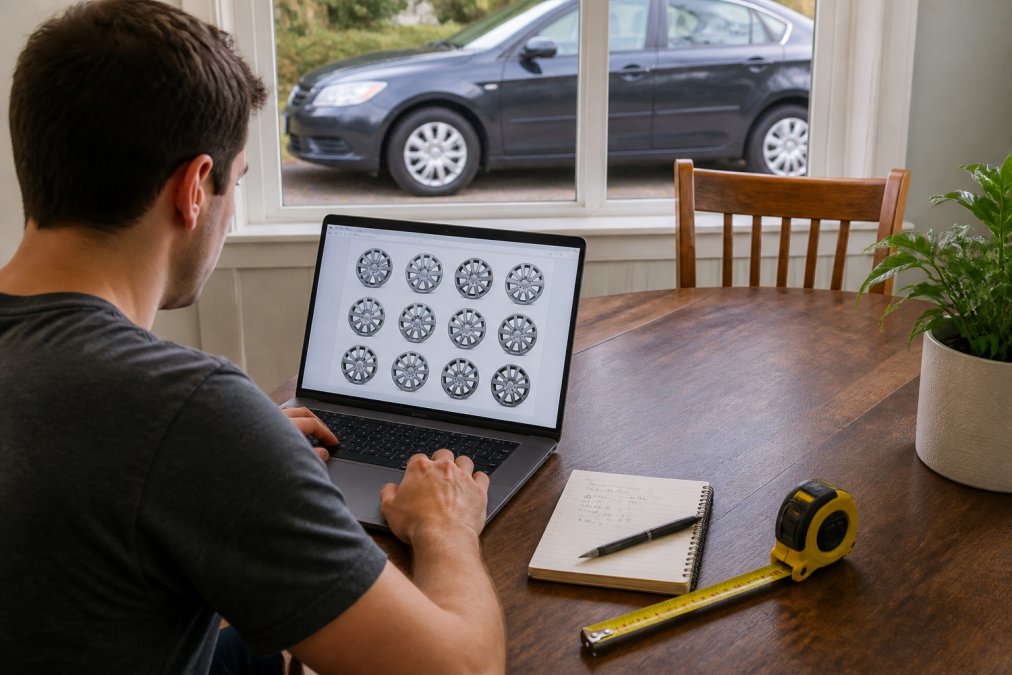
How to Measure Wheel Size for Hubcaps Before You Order
Getting the right fit starts with knowing your wheel diameter. Measure across the wheel from edge to edge, excluding the tire, and note the result in inches. Most passenger vehicles fall between 14 and 18 inches.
Three details determine whether a hubcap fits:
- Wheel diameter in inches, measured at the rim's outer edge
- Retention type your wheel uses, either snap-on or bolt-on
- TPMS clearance if your valve stem sits close to the rim edge
Write those numbers down before you browse. It saves returns later.
Wheel Covers vs. Hubcaps: What You're Actually Buying
Wheel covers are decorative discs that snap onto steel wheels, while hubcaps is the older term for the same product category. The distinction matters less than the construction underneath. Both cover the wheel face, hide lug nuts and brake dust, and give a bare steel wheel the appearance of an alloy rim.
What separates a good cover from a bad one is how it attaches. Snap-on covers grip the rim's edge with retention clips. Bolt-on versions secure under the lug nuts, which holds firmer at highway speed but takes longer to install. Neither is universally better. Bolt-on suits wheels that see frequent car washes and rough roads. Snap-on wins on convenience when you swap between summer and winter setups.
Protection That Pays for Itself: Road Hazards, Debris, and Curb Scuffs
Wheel covers shield the wheel face from grit, dust, road splash, and light scratches, according to WheelCovers.Com's guide to wheel cover protection. That protection extends the life of the steel underneath and keeps brake dust from baking onto the surface.
Curb scuffs are the most common damage. One misjudged parallel park can gouge a bare steel wheel, and repairing that costs far more than replacing a plastic cover. A Tesla owner documented installing rim covers specifically to prevent curb rash on expensive wheels while creating the impression of a larger wheel size, without affecting the warranty (Tesla Owners Online forum discussion).
Aerodynamics and Fuel Efficiency: Do Wheel Covers Increase MPG?
Aerodynamic wheel covers can improve vehicle efficiency by more than 7% at highway speeds, based on Ioniq Forum efficiency testing at 110 km/h. The mechanism is drag reduction: a smooth cover presents less turbulent surface area than an open steel wheel, so the vehicle pushes through air with less resistance.
That 7% figure came from controlled winter testing, and real-world results vary with speed, tire pressure, and driving style. The gain concentrates at highway speeds where aerodynamic drag dominates. City drivers will notice far less.
Electric vehicle owners have the strongest incentive here. Range anxiety makes every efficiency point valuable, and the aerodynamic wheel covers market reached $1.8 billion in 2026 with projections to hit $3.4 billion by 2036 (Fact.MR aerodynamic wheel covers market report).
Where to Buy Factory Replacement Hubcaps for Older and Newer Vehicles
Factory replacement hubcaps are available online for vehicles spanning roughly three decades, from 1990s trucks to current models. The challenge is matching original equipment styling, not finding the part at all.
A Toyota owner demonstrated the cost advantage of buying used original equipment wheel covers online rather than ordering new from a dealership, getting durable parts that held up without the dealership markup (Toyota Nation owner thread). That approach works because online suppliers stock discontinued styles that dealerships stopped carrying years ago.
| Buying Channel | Selection | Fitment Help | Typical Wait |
|---|---|---|---|
| WheelCovers.Com | Over 1 million hubcaps and wheel covers | Year, make, and model lookup | 2-5 days shipping |
| Local auto parts store | Dozens of styles | Counter staff guesswork | Same day |
| Dealership | Current models only | Exact OEM match | Order and wait |
| Salvage yard | Whatever arrived | You measure yourself | Hours of searching |
For older Chevy trucks, 1990s imports, and discontinued trims, online inventory is often the only realistic source.
Online vs. Local: Pricing, Fitment, and Selection Compared
Online pricing can be competitive, and comparison shopping takes minutes instead of phone calls. Local stores win on one thing only: you can hold the part before paying.
Fitment support is where the gap widens. WheelCovers.Com lets you enter your year, make, and model and returns only covers that fit. Local counter staff often work from a generic catalog and hand you something close enough, which is how people end up with covers that rattle at 60 mph.
Materials and Durability: ABS Plastic, Retention Clips, and Winter Road Salt
Wheel covers live in a punishing environment: UV exposure, temperature swings from below zero to over 100 degrees Fahrenheit, road salt, gravel, and the constant flex of retention clips gripping a spinning wheel. The material and hardware you choose determine whether a cover lasts one winter or ten years.
ABS Plastic: The Industry Standard
Acrylonitrile butadiene styrene (ABS) dominates the wheel cover market for good reason. It resists impact without shattering, holds paint and chrome finishes well, and doesn't corrode when exposed to road salt or moisture. A quality ABS cover flexes slightly on impact rather than cracking, which matters when a piece of road debris strikes at 70 mph.
Alternative Materials: Metal, Polypropylene, and Chrome-Plated Steel
Not all covers are ABS. Here's how the alternatives compare:
| Material | Corrosion Resistance | Impact Resistance | Weight | Typical Use |
|---|---|---|---|---|
| ABS plastic | Excellent | Very good | Light | WheelCovers.Com's covers |
| Polypropylene | Excellent | Good | Lightest | Budget covers |
| Chrome-plated steel | Poor (chips expose rust) | Moderate | Heavy | OEM-style replacements |
| Aluminum | Good | Moderate | Moderate | Premium aftermarket |
| Stainless steel | Excellent | Excellent | Heaviest | High-end and commercial |
Chrome-plated steel covers look sharp when new but chip easily. Once the chrome layer breaks, rust spreads under the finish and lifts it in sheets. Polypropylene is cheaper than ABS but more brittle in cold weather. Aluminum resists corrosion but dents rather than flexes. Stainless steel is the most durable option but adds unsprung weight and costs significantly more.
Retention Clips: The Weakest Link
The cover itself rarely fails first. The retention clips do. Retention clips are crucial for securing wheel covers.
Winter Road Salt: The Real Test
Road salt attacks bare steel and cheap metal covers, causing corrosion that spreads under the finish. ABS plastic ignores salt entirely, which is why plastic covers dominate in northern states. But salt isn't the only winter threat. Ice buildup inside the wheel can push a cover outward, and freeze-thaw cycles can work a marginally seated cover loose.
Environmental Impact: ABS vs. Metal
For eco-conscious buyers, the material choice has an environmental dimension that most buying guides ignore. ABS plastic is petroleum-based and not biodegradable, but it's also recyclable in many municipal programs and requires less energy to produce than aluminum or stainless steel. Metal covers have higher embodied energy but are more likely to be recycled at end of life. Neither option is perfectly sustainable, but ABS covers that last a decade have a lower annual environmental cost than metal covers replaced every few years due to rust.
Installation, Returns, and What to Check Before You Click Buy
Installation is generally straightforward. Here's the process, step by step, plus safety and return considerations.
Step-by-Step DIY Installation Guide
Snap-On Covers (5 minutes per wheel)
- Clean the wheel. Wipe the rim edge with a damp cloth to remove brake dust and grit. Debris between the clip and rim prevents full seating.
- Locate the valve stem cutout. Every cover has a notch or hole for the valve stem. Align it before applying any pressure.
- Start at the top. Press the cover onto the rim at the 12 o'clock position first, seating the top clips.
- Work around the edge. Move to 3 o'clock, then 6, then 9, pressing firmly until you hear or feel each clip snap into place.
- Test the seal. Grab the cover at two opposite edges and try to rock it. A properly seated cover won't move. If it shifts, one or more clips aren't engaged.
Bolt-On Covers (15 minutes per wheel)
- Loosen lug nuts. Break each lug nut loose with a lug wrench before jacking the vehicle. Do not remove them yet.
- Raise and support the vehicle. Use a jack and jack stands rated for your vehicle's weight. Never work under a vehicle supported only by a jack.
- Remove lug nuts. Set them aside in a container so they don't roll away.
- Position the cover. Align the cover's lug holes with the wheel studs and press it flush against the wheel face.
- Reinstall lug nuts. Thread them by hand first to avoid cross-threading, then tighten in a star pattern to the manufacturer's torque specification.
- Lower the vehicle. Remove jack stands and lower the jack. Recheck lug nut torque after 50 miles of driving.
Safety: Brake Cooling and TPMS Interference
A common concern is whether wheel covers block airflow to the brakes. Wheel covers are generally designed to allow adequate airflow for most passenger vehicles in normal driving conditions. If you drive aggressively, tow frequently, or live in mountainous terrain where brakes work hard, consider covers with larger ventilation openings.
TPMS sensors are another consideration. Most sensors mount to the valve stem inside the tire, so a cover with a valve stem cutout doesn't interfere. Some older systems use band-mounted sensors inside the wheel, which covers also don't affect. The only interference risk is if a cover's retention clips press against a valve stem or sensor housing. Check clearance before installing.
Returns: What to Check Before You Click Buy
Before ordering, confirm four things:
- Wheel diameter matches the product listing exactly
- Retention type matches your wheel (snap-on or bolt-on)
- Return policy covers fitment issues, not just defects
- Seller stocks your specific year, make, and model
The return policy question matters. A cover that arrives in the wrong diameter is useless. Look for a policy that explicitly covers fitment, not just manufacturing defects.
Preventing Loss: Retention Tips
Even a properly installed cover can come off if clips lose tension or the cover isn't fully seated. Check covers after the first 50 miles of driving, then every few weeks. If a cover feels loose, remove it and inspect the clips. A clip that's bent or rusted won't hold at highway speed. Replacing a cover is cheaper than replacing a wheel, but losing one on the highway is a hazard to other drivers. Treat retention as a safety issue, not just a cosmetic one.
Frequently Asked Questions
Are wheel covers worth it?
For most drivers, yes. Wheel covers protect the wheel face from road splash, brake dust, and curb scuffs while giving the vehicle a cleaner appearance. They are budget-friendly compared to replacing rims or wheels. Aerodynamic designs can also improve efficiency by more than 7% at highway speeds, based on testing at 110 km/h. If your steel wheels are exposed or your factory hubcaps are damaged, covers are a low-cost fix.
Do wheel covers increase MPG?
They can. Aerodynamic wheel covers smooth airflow over the wheel face and reduce drag. Testing at 110 km/h in clear winter conditions showed an efficiency gain of more than 7%. Real-world results depend on your vehicle, speed, and cover design. If you drive an EV or a highway-heavy commute, the fuel efficiency benefit is worth factoring into your decision alongside aesthetic appeal and wheel protection.
How do I ensure I am buying the correct size wheel cover online?
Measure the wheel diameter at the bead seat, not the tire. Use a tape measure across the wheel face where the tire meets the rim. Check your tire size on the sidewall (for example, 215/60R16 means a 16-inch wheel). Confirm the cover's fitment notes match your vehicle's year, make, and model. Retention clips and snap-on designs vary, so verify the mounting style before ordering.
What should I look for when comparing online wheel cover retailers?
Check the return policy, fitment tools, and material specs. A retailer with a large inventory and a vehicle lookup tool reduces the risk of ordering the wrong size. Look for ABS plastic construction and retention clip quality. Nationwide shipping and clear return terms matter if the cover does not fit or look right.