

Sep 29, 2026
Why Choose OEM Style Wheel Covers: A 2026 Guide
Table of Contents
- OEM vs Aftermarket Hubcaps: What Actually Matters
- How to Identify OEM Wheel Covers Before You Buy
- Why OEM Style Wheel Covers Protect Resale Value
- Aerodynamic Efficiency: The EV Angle Most Buyers Miss
- Wheel Cover Installation Tips for a Factory-Look Fit
- Common Pitfalls of Cheap Aftermarket Replacements
- Frequently Asked Questions
Last Updated: September 20, 2026
OEM vs Aftermarket Hubcaps: What Actually Matters
The case for OEM style wheel covers comes down to two things that aftermarket sellers rarely guarantee: fitment accuracy and material consistency. According to AutoPartex's 2026 market pricing analysis, original equipment covers run roughly $40 to $120 per cover, and that premium buys tighter tolerances, better plastics, and finishes that survive more than a season. This guide from WheelCovers.Com breaks down what separates a factory-spec cover from a lookalike, and where the money actually goes.
OEM style wheel covers are replacement hubcaps manufactured to factory original equipment specifications for a specific wheel diameter, hub profile, and retention system. They match the part your vehicle shipped with, not a universal approximation of it.
That distinction matters more in 2026 than it did a decade ago. EV adoption is pushing demand toward covers engineered for lower drag and clean aesthetics, a shift documented in Nexdigm's wheel covers market outlook. Meanwhile, the aerodynamic wheel covers segment was valued at $1.8 billion in 2026 and is projected to reach $3.4 billion by 2036, per Fact.MR's aerodynamic wheel covers market report. Cheap covers that whistle at highway speed or pop off at the car wash aren't a bargain. They're a recurring cost.
Fitment Accuracy and Retention Systems
Fitment accuracy is the single biggest differentiator, and it's mechanical, not cosmetic. Factory covers are built to a specific wheel diameter and hub profile, then secured with a retention system matched to that wheel: clip tension calibrated to the rim, or a hubcap retention system that seats against the wheel hub itself.
Aftermarket universal-fit covers rely on adjustable clips that grip a range of rims. That flexibility is the problem. A clip tuned to fit six different wheels fits none of them perfectly, and lug nut retention schemes vary enough between models that "one size fits most" is a gamble.
What most guides miss is that a loose cover doesn't just fall off. It flexes at speed, wears the clip arms, and can scuff the wheel rim on its way out.
Material Quality and Finish Durability
Material quality separates a cover that lasts five years from one that lasts one winter. Factory-spec covers typically use ABS plastic formulated for impact resistance and UV stability, with a finish applied in a controlled process rather than sprayed on afterward.
That shows up as corrosion resistance and finish durability. Aftermarket covers cut costs with thinner plastic and single-stage paint. The failure mode is predictable: finish peeling at the edges, then color fading, then cracks at the clip mounts.
- ABS plastic: resists road debris strikes without cracking
- Multi-stage finish: holds color match through UV exposure and repeated washing
- Reinforced clip mounts: keep tension instead of fatiguing
How to Identify OEM Wheel Covers Before You Buy
Identifying true OEM wheel covers takes about five minutes and saves a return shipment. Look for a part number stamped or molded on the back of the cover, confirm the wheel diameter matches your tire sidewall marking, and check that the clip pattern matches your rim.
Part Number Verification and Wheel Diameter Checks
Part number verification is the step buyers skip, and it's the one that prevents wrong-fit orders. Every factory cover carries an identifier on its reverse side. Photograph it, then match it against your vehicle's year, make, model, and trim.
Wheel diameter is the second check. Your tire sidewall reads something like 235/45R18, where the 18 is the diameter in inches. A cover built for a 17-inch wheel will not seat on an 18-inch rim no matter how similar it looks in a listing photo.
- Part number on the back of the cover matches your vehicle
- Tire sidewall diameter matches the cover's stated size
- Clip count and spacing match your rim
- Finish and spoke pattern match the other three wheels
Why OEM Style Wheel Covers Protect Resale Value
Resale value is where OEM style wheel covers quietly pay for themselves. A vehicle with four matching, factory-correct covers reads as maintained. A vehicle with mismatched or missing covers reads as neglected, and buyers price that in.
Aesthetic consistency across all four wheels signals the owner cared about details. That perception carries into the negotiation. Trade-in appraisers and private buyers both scan the wheels early, because mismatched covers often hint at deferred maintenance elsewhere.
Contrarian take: some shoppers dismiss large plastic hubcaps as cost-cutting rather than engineering, a sentiment visible in enthusiast forums. That criticism misses the point for commuter vehicles. A factory cover protects the wheel rim from road debris and curb contact at a fraction of the cost of an alloy replacement, and it does so while matching the design language the manufacturer intended.
Aerodynamic Efficiency: The EV Angle Most Buyers Miss
Aerodynamic performance has moved from a niche concern to a primary purchase driver, and it's the angle most buying guides skip entirely. On an EV, wheel covers are not decoration. They're part of the drag equation.
Flat, closed-face designs smooth airflow across the wheel opening. That reduces turbulence and, at highway speed, extends range. Manufacturers of EVs have leaned into this deliberately, which is why so many electric models ship with solid-disc covers rather than open-spoke designs.
Aftermarket manufacturers claim their covers don't hurt range. However, owners often prioritize OEM for guaranteed fitment, citing concerns about rim damage and range impact over the customization aftermarket options offered.
That's the trade-off in plain terms. Aftermarket versatility buys you design freedom. Factory-spec fitment buys you the aero profile the vehicle was actually engineered around.
| Priority | Best Choice | Why |
|---|---|---|
| Factory originality | OEM style covers | Exact-match fitment, correct finish |
| Range and efficiency | OEM style covers | Aero profile matched to the vehicle |
| Aesthetic customization | Aftermarket covers | Broader design options |
| Lowest upfront cost | Aftermarket covers | Lower per-cover price |
Wheel Cover Installation Tips for a Factory-Look Fit
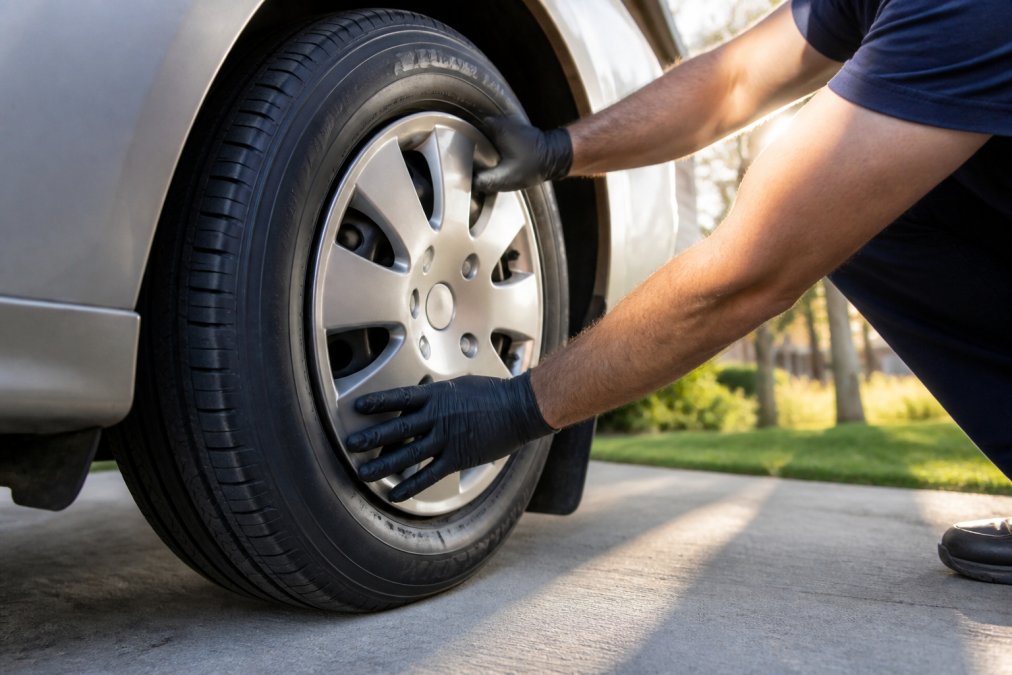
A factory-look fit starts with alignment, not force. Seat the cover's valve stem cutout over the valve stem first, then work around the rim pressing the clips in sequence rather than striking one point.
Installation ease varies by retention type. Clip-on covers need even pressure around the circumference. Bolt-on retention uses the lug nuts, so torque them in a star pattern to the factory specification for your vehicle.
- Align the valve stem cutout before applying any pressure
- Press around the rim in a circle, not at a single point
- Confirm all clips are seated by tugging the cover edge gently
- Re-check tension after the first 100 miles of driving
If a cover resists seating, stop. Forcing it usually means the diameter or clip pattern is wrong, and you'll bend a clip arm that can't be straightened.
Common Pitfalls of Cheap Aftermarket Replacements
Cheap replacements fail in four predictable ways, and every one of them traces back to skipped engineering. Knowing the failure modes makes the decision easier, and knowing which ones are merely annoying versus genuinely unsafe changes how you weigh the price.
- Finish peeling: thin single-stage paint lifts at the edges within months
- Clip fatigue: soft plastic loses tension and covers release at speed
- Color mismatch: covers that look right in a listing photo read wrong against the other three wheels
- Poor fitment: universal clips scuff the rim during installation and removal
The first three are cosmetic or inconvenient. The fourth is where safety enters the conversation, and it is the part most buying guides leave out.
A wheel cover that does not seat evenly adds uneven mass at the outer edge of the wheel. At low speed you may never notice.
Frequently Asked Questions
What are the primary benefits of choosing OEM style wheel covers?
OEM style wheel covers deliver exact-match fitment, factory-specified clip tension, and finish durability that generic aftermarket options often lack. They protect the wheel rim from road debris and maintain aesthetic consistency with the vehicle's original design. For EV owners, aero-focused OEM covers can also support range by reducing drag. The higher material and manufacturing standards of OEM covers are reflected in their pricing. If you want a factory look without dealership markup, an OEM-style replacement from a specialist supplier is the practical route.
Do OEM style wheel covers fit better than generic aftermarket options?
Yes. OEM style covers are manufactured to factory specifications for specific wheel diameters and hubcap retention systems. That means clip tension is calibrated to the wheel, reducing the risk of vibration, rattling, or loss at speed. Aftermarket universal-fit covers rely on adjustable clips that can loosen over time. Users often prioritize OEM for guaranteed fitment even when aftermarket brands claim no range impact. Always verify your wheel diameter and part number before ordering.
How do OEM style wheel covers affect the resale value of a vehicle?
Factory-original appearance supports resale value because buyers and appraisers expect visual consistency. Missing or mismatched hubcaps signal neglect and can lower offers. Replacing lost covers with OEM style wheel covers restores the factory look at a fraction of the cost of new alloy wheels. For older vehicles, correct OEM-style covers can make the difference between a clean trade-in and a deduction for cosmetic wear. Keeping the original part number on file also helps future buyers verify authenticity.
Are OEM style wheel covers more durable than standard aftermarket hubcaps?
Generally, yes. OEM covers use ABS plastic formulations and corrosion-resistant coatings tested to factory standards. Aftermarket covers vary widely: some use thinner plastic that cracks in cold weather or finish that peels within a year. The upfront cost of OEM covers reflects that material quality. If you drive in areas with road salt or temperature swings, the durability gap matters. Inspect clip tension and finish quality before buying any replacement.