

Oct 05, 2026
Why Buy Wheel Covers From Specialists: 2026 Buyer's Guide
Table of Contents
- Why Buy Wheel Covers From Specialists in 2026
- What Wheel Covers Actually Do (And What They Don't)
- How to Identify a Wheel Cover Before You Buy
- Wheel Cover Size Guide: Measuring Diameter and Fitment
- Wheel Cover Fitment: Retention Clips, Wheel Diameter, and Vehicle Compatibility
- Where to Buy Factory Replacement Hubcaps: Specialists vs General Retailers
- Wheel Covers vs Hubcaps vs Wheel Skins: What's the Difference?
- Quality Assurance, Warranty Terms, and Total Cost of Ownership
- Specialist Advice for Non-Tesla Vehicles, Older Models, and Commercial Use
- Conclusion: When a Specialist Is Worth It
- Frequently Asked Questions
Last Updated: October 5, 2026
Why Buy Wheel Covers From Specialists in 2026
Aerodynamic wheel covers are a growing category, with one market estimate putting the global segment at USD 1.8 billion in 2026 and projecting USD 3.4 billion by 2036 (Fact.MR aerodynamic wheel covers market estimate). That growth reflects something practical: drivers lose hubcaps, damage them on curbs, and need exact replacements, not approximations. This guide from WheelCovers.Com explains why buy wheel covers from specialists rather than general retailers, and what a specialist actually does differently.
The core argument is simple. A wheel cover is a fitment part, not a generic accessory. It has to match a specific wheel diameter, retention system, and finish. General sellers treat it as a shelf item. Specialists treat it as a compatibility problem to solve before the order ships.
Below, we break down what covers actually do, how to identify and measure one, how fitment works, and where the specialist advantage shows up in warranty terms, returns, and total cost.
What Wheel Covers Actually Do (And What They Don't)
Wheel covers are decorative and protective discs that snap onto a steel wheel to improve its appearance and shield the wheel face from road debris. They are not structural components, and they do not affect how the vehicle handles.
Here is where expectations usually go wrong. Many buyers assume a cover will transform efficiency. A Car and Driver test of Tesla Model 3 aero wheel covers found that the covers improved efficiency by an average of 3.4% across test speeds of 50, 70, and 90 mph. That is a real but modest gain, and it applies to a specifically aerodynamic design, not to every cover on the market.
Appearance, Protection, and Aerodynamics
Three benefits get conflated constantly, and separating them matters when you are deciding what to buy.
- Appearance: The primary function for most buyers. A matching cover restores the factory look after a loss or curb strike.
- Protection: A cover takes the scratches, dirt, and moisture exposure so the wheel face beneath does not. The cover is the sacrificial layer.
- Aerodynamics: A smooth cover design can reduce wind drag and air resistance slightly, which may support driving range and mileage on some vehicles. The effect is design-dependent.
There is a contrarian view worth stating plainly: in many cases wheel covers are primarily cosmetic, and the aerodynamic benefit is small. Buyers who expect a meaningful range jump from a generic cover will be disappointed. Buyers who want a clean wheel face and protection from daily wear and tear get exactly what they paid for.
How to Identify a Wheel Cover Before You Buy
Identifying a wheel cover means matching its physical characteristics, diameter, retention style, and finish, to the wheel it sits on. Get those three right and the part fits. Skip them and you are guessing.
The identification process is short, and it is the step most general retailers leave entirely to the customer.
- Measure the wheel diameter, not the old cover. Covers are sized to the wheel.
- Count the spokes or note the pattern if you want a factory-matching look.
- Check the retention type, which is either a clip-on edge or a bolt-on style that uses the lug nuts.
- Note the finish, such as chrome, silver-painted, or a machined look, so a replacement matches the other three wheels.
- Photograph the wheel with the cover removed so you have a reference if you need help confirming compatibility.
Wheel Cover Size Guide: Measuring Diameter and Fitment
The wheel cover size guide comes down to one number: the wheel diameter, measured in inches across the wheel's outer edge. A cover labeled for that diameter is the correct starting point.
Measure across the wheel, edge to edge, at the widest point where the tire bead seats. Do not measure the tire, and do not measure the old cover. Wheel diameter is a fixed specification, while a cover can deform over time.
| What You Measure | Where to Measure | Why It Matters |
|---|---|---|
| Wheel diameter | Across the steel wheel's outer edge | Determines the cover size you order |
| Retention type | The cover's inner edge or lug area | Decides clip-on versus bolt-on fitment |
| Finish style | The existing covers on the vehicle | Keeps all four wheels visually matched |
| Wheel face profile | The shape of the wheel's center | Affects whether the cover seats flush |
Common wheel diameters include 14, 15, 16, 17, and 18 inches. If your measurement lands between sizes, re-measure before ordering. A half-inch error is the most common cause of a cover that will not seat.
Wheel Cover Fitment: Retention Clips, Wheel Diameter, and Vehicle Compatibility
Wheel cover fitment depends on three things working together: the retention clips, the wheel diameter, and vehicle compatibility for that specific model year. All three must match, or the cover will rattle, sit proud, or come off at speed.
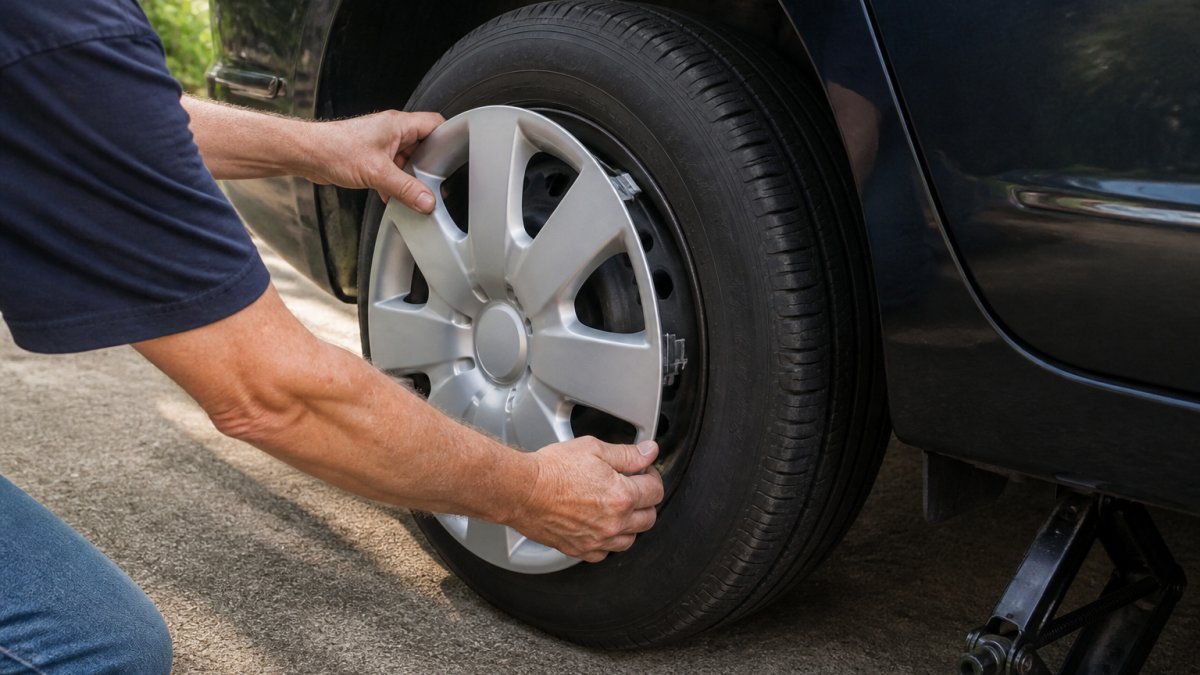
Retention clips are the small tabs around the cover's inner circumference that grip the wheel's outer edge. They are the part that fails first. Plastic clips can become brittle with age and cold, and once a clip snaps, the cover is on borrowed time. This is where material choice starts to matter, and where a specialist's fitment data earns its keep.
Wheel diameter we covered above. Vehicle compatibility is the layer on top: the same diameter wheel can take different covers depending on the model year, trim, and whether the vehicle came with factory wheels or aftermarket rims. A reliable fitment check confirms all three before you order, which is precisely the step a specialist performs and a general marketplace does not.
Where to Buy Factory Replacement Hubcaps: Specialists vs General Retailers
Where to buy factory replacement hubcaps comes down to a trade-off between convenience and certainty. General retailers and marketplaces offer speed and a low headline price. Specialists offer verified fitment, deeper inventory, and terms that protect you when something does not match.
Most competing guides stop at that sentence. The useful version is a repeatable fitment-checking process you can run against any seller before money changes hands, plus an honest look at what a wrong order actually costs.
A Fitment-Checking Process You Can Run Before Ordering
A reliable fitment check confirms four things in order. Skip a step and you are guessing.
- Wheel diameter. Measure the steel wheel's outer rim edge to edge, in inches, not the tire and not the old cover. Common diameters are 14, 15, 16, 17, and 18 inches.
- Wheel design and face profile. Note the spoke count or pattern and the shape of the wheel's center. A cover that matches diameter but not profile can sit proud or fail to seat flush.
- Retention system. Confirm whether the wheel takes a clip-on cover that grips the outer edge or a bolt-on style that secures at the lug nuts. These are not interchangeable.
- Vehicle compatibility. Confirm the model year and trim. The same diameter wheel can take different covers across model years, and factory wheels versus aftermarket rims change the answer again.
A seller who can confirm all four from your VIN or a photo of the bare wheel is doing a fitment check. A seller who asks only for the diameter is not.
What a Wrong Order Actually Costs
Total cost of ownership for a wheel cover is not the sticker price. It is the price divided by how long the cover lasts and how easily it can be replaced if it fails. A wrong order adds three costs that a low headline price hides:
- Return shipping, which on a single cover can approach the price of the cover itself.
- Restocking fees, which some marketplace sellers apply even when the listing was inaccurate.
- Time, including a second measurement, a second order, and another wait.
A cheap cover that arrives wrong and cannot be returned cleanly costs more than a correctly fitted cover with defined warranty terms. That is the real comparison, and it is why specialist suppliers compete on certainty rather than headline price.
How the Channels Actually Differ
| Buying Channel | Fitment Confidence | Inventory Depth | Returns and Warranty |
|---|---|---|---|
| General retailer | Low, no model-level check | Common sizes only | Store policy varies |
| Online marketplace | Variable, listing-dependent | Broad but unverified | Often seller-specific |
| Specialist supplier | High, model-level fitment | Deep, including older models | Defined terms and support |
A general retailer stocks what sells broadly, which means common sizes and popular styles, and the person helping you may have no way to confirm your specific model year. A marketplace adds another layer of uncertainty: the listing may be accurate, or it may be a universal-fit part described loosely.
Specialists work the other way around. WheelCovers.Com, for example, carries an inventory of over 1 million hubcaps, wheel covers, wheel skins, and trim rings, built over nearly 50 years in the business. That depth is the difference between "we might have it" and "we have your part." It also means you are not sifting through salvage yards or hoping a universal part will do.
Wheel Covers vs Hubcaps vs Wheel Skins: What's the Difference?
The terms are used interchangeably in everyday speech, but they describe different products. Hubcaps is the traditional name for a full cover that snaps over a steel wheel. Wheel covers is the broader modern term for the same category. Wheel skins are a distinct product: a thin overlay that adheres to or clips over an existing alloy wheel to change its appearance without replacing it.
Wheel simulators and trim rings round out the category. Simulators mimic the look of a more expensive wheel, while trim rings add a polished edge to a plain steel wheel. Each has a different installation method and a different use case.
- Hubcaps and wheel covers: Full coverage, clip-on or bolt-on, best for steel wheels.
- Wheel skins: Overlay product, best for changing the look of an existing alloy wheel.
- Wheel simulators: Appearance-focused, best for fleet and commercial vehicles wanting a uniform look.
- Trim rings: Accent piece, best for adding a finished edge to basic wheels.
Knowing which product you actually need prevents the most expensive mistake in this category: buying a cover when a skin was the right part.
Quality Assurance, Warranty Terms, and Total Cost of Ownership
Quality assurance and warranty terms are where the specialist argument gets concrete. Total cost of ownership for a wheel cover is not the sticker price; it is the price divided by how long the cover lasts and how easily it can be replaced if it fails.
Most guides treat "quality" as a single word. It is actually four separate things you can inspect or ask about, and each one fails differently.
The Four Quality Factors That Decide Lifespan
- Material and construction. Plastic hubcaps are more affordable but may not withstand harsh weather or road debris as well as metal options, per WheelCovers.com guidance on hubcap buying mistakes. ABS and similar plastics dominate the category; metal covers and trim rings trade weight and cost for stiffness.
- Retention strength. The clips are the part that fails first. Plastic clips can become brittle with age and cold, and once a clip snaps, the cover is on borrowed time. Ask how the retention system is designed and whether replacement clips are available.
- Finish durability. Chrome, silver-painted, and machined-look finishes age at different rates. Painted finishes can chip at the edges; chrome can pit where road salt and moisture collect. A finish that matches the other three wheels matters as much as how long it lasts.
- Fit precision. A cover that seats flush puts less stress on the clips than one that sits proud. This is why the fitment check in the previous section is also a durability step, not just a compatibility step.
What a Warranty Actually Covers
Warranty language varies widely, and the differences matter more than the length. When you compare terms, look for four things:
- What is covered. Fitment defects, finish defects, and clip failure are often treated separately, and some warranties cover only one.
- What is excluded. Road damage, curb strikes, and normal wear are commonly excluded, which is reasonable but worth knowing before you rely on the warranty.
- How a claim is resolved. Replacement, refund, or store credit are very different outcomes.
- Who pays shipping. A warranty that requires you to ship the failed cover back at your cost can erase much of its value on a low-priced part.
The Total Cost of Ownership Math
Two factors drive the math. Material durability determines lifespan, and return policy determines your downside if fitment is wrong. A cheap cover that fails in a season and cannot be returned costs more than a correctly fitted cover with defined warranty terms.
A practical way to compare two options is to ask three questions of each seller:
- What happens if the cover does not fit?
- What does the warranty cover, and who pays return shipping on a claim?
- Can I buy a single replacement cover later, or only a set?
A seller who cannot answer all three clearly is telling you something. That is the real total cost comparison, and it is why specialist suppliers compete on certainty rather than headline price.
Specialist Advice for Non-Tesla Vehicles, Older Models, and Commercial Use
Specialist inventory matters most for the vehicles general retailers ignore. Older models, less common trims, and commercial fleets are exactly where broad-market sellers thin out and specialists hold stock.
A 1990s truck, for example, may need an OEM-style cover that matches the original finish. General retailers rarely carry parts for vehicles that old. A specialist with deep inventory and model-level fitment data can confirm the match rather than guess. The same applies to commercial vans and fleet vehicles, where a uniform appearance across dozens of wheels is a business requirement, not a preference.
For electric vehicles, the fitment question is the same as any other car, but the aerodynamic angle gets more attention. Aero-focused cover designs can reduce wind drag, and the Car and Driver test showed a measurable efficiency gain on one such design. The honest framing: the gain is real but modest, and it depends on the specific cover, not the category.
Conclusion: When a Specialist Is Worth It
A specialist is worth it when fitment certainty, inventory depth, and defined warranty terms matter more to you than saving a few dollars up front. That describes most buyers replacing a lost or damaged cover on a specific vehicle.
WheelCovers.Com has been family owned since 1979, carries over 1 million hubcaps, wheel covers, wheel skins, and trim rings, and ships nationwide with an easy online ordering process, so you skip the salvage-yard search entirely. Confirm your wheel diameter and retention type, then order the part that actually fits. Shop now at WheelCovers.Com and get the right cover the first time.
Frequently Asked Questions
Why should I buy wheel covers from a specialist instead of a general retailer?
Specialists stock exact-fit covers by vehicle model and wheel diameter, so you get the right retention clips and finish the first time. General retailers carry a handful of universal sizes that often need trimming or fall off. A specialist can also confirm factory replacement hubcaps match your original wheel face, and they handle warranty claims directly rather than routing you through a marketplace seller.
How do I find the right wheel cover for my vehicle?
Start by reading the tire sidewall. The number after 'R' is your wheel diameter in inches, such as 16 or 17. Then note your make, model, and year. If you are unsure how to identify a wheel cover already on the car, photograph the wheel face and send it in.
Are aftermarket wheel covers as good as factory replacements?
Quality aftermarket covers made from ABS plastic can match factory durability and appearance, but cheap universal covers often crack in cold weather or lose retention clips within a season. Look for covers that specify your exact wheel diameter and vehicle compatibility.
What should I check before ordering wheel covers online?
Confirm four things: wheel diameter in inches, retention clip type, finish or color match, and the seller's return policy. Measure your wheel across the face at the widest point, not the tire. Check that the listing names your specific model year. Finally, read the warranty and return window.