

Posted by Editorial Team on Oct 17, 2026
Is Professional Trim Ring Repair Worth It? A 2026 Guide
Table of Contents
- What Is a Trim Ring and Why It Matters
- Types of Trim Ring Damage and What Causes Them
- Professional Trim Ring Repair: How It Works
- Bent Trim Ring Repair: Can It Be Made Round Again?
- Trim Ring Replacement: When Repair Doesn't Make Sense
- Cost Comparison: Repair vs. Replacement
- How to Measure Wheel Size for Trim Rings
- Trim Ring Maintenance to Prevent Future Damage
- Making Your Decision: Repair or Replace?
- Frequently Asked Questions
Last Updated: October 16, 2026
What Is a Trim Ring and Why It Matters
A trim ring is a decorative metal ring that fits around the center of a wheel to enhance your vehicle's appearance. These rings come in stainless steel, chrome, and other finishes, and they're designed to give your wheels a polished, finished look. Whether your vehicle originally came with them or you added them later, trim rings are a straightforward way to upgrade your wheel's aesthetics without replacing the entire wheel.
At WheelCovers.Com, we've helped thousands of vehicle owners understand when professional trim ring repair makes sense and when replacement is the smarter choice. The decision isn't always obvious, especially if you've invested in quality trim rings or have sentimental attachment to your current set.
The real question most people face: Is it worth paying for professional repair, or should you just replace the damaged trim ring? The answer depends on several factors we'll break down here.
Types of Trim Ring Damage and What Causes Them
Trim ring damage falls into a few distinct categories. Understanding what type of damage you're dealing with helps determine whether repair is even possible.
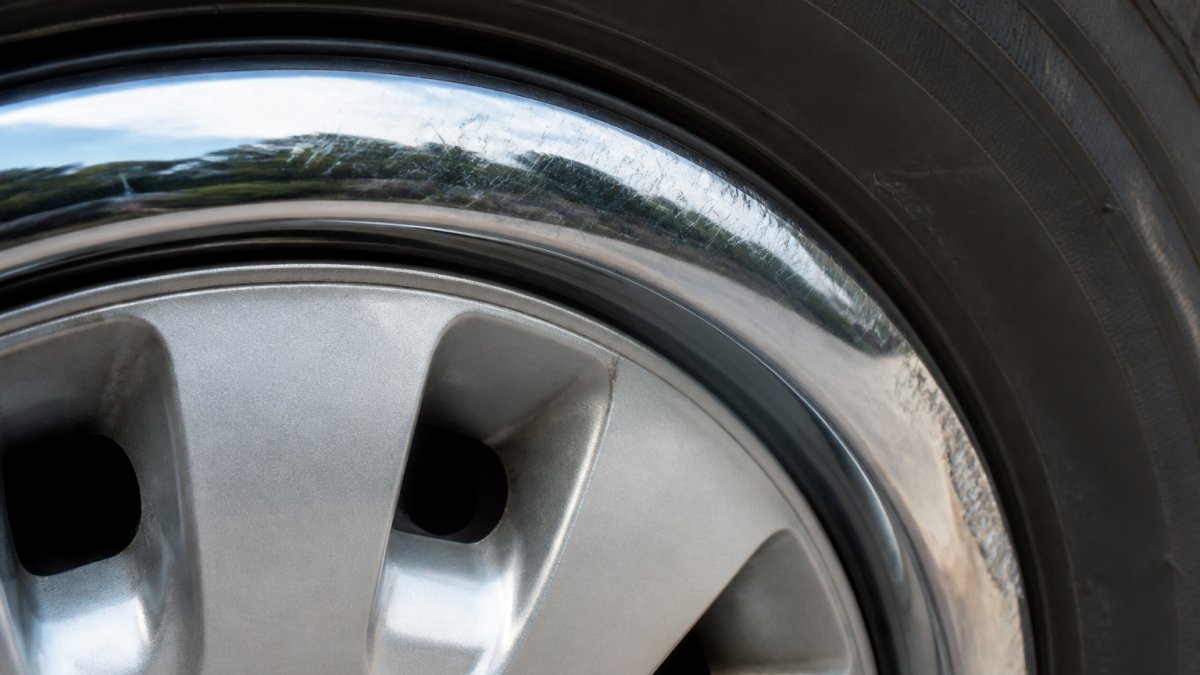
Scratches and surface scuffs are the most common form of damage. These occur when your vehicle brushes against a curb, parking barrier, or road debris. Surface-level scratches affect the finish but don't compromise the ring's structural integrity. A professional can often polish these out or refinish the affected area.
Dents and bent sections are more serious. Curb strikes and impacts can bend the metal ring out of its original round shape. This is where the question of repair versus replacement becomes critical. A bent trim ring may still sit on your wheel, but the structural deformation can affect how it fits and how it looks.
Broken clips and attachment points represent another category of damage. Trim rings attach to wheels using clips or mounting hardware. If these clips break during installation, removal, or impact, the ring won't stay secure on your wheel. This type of damage typically requires replacement rather than repair.
Rust and corrosion develop over time, especially in areas with road salt or high humidity. Stainless steel resists rust better than other metals, but no finish is completely immune. Corrosion weakens the metal and compromises the ring's durability.
Professional Trim Ring Repair: How It Works
Professional repair services typically involve assessment, refinishing, and structural correction. Here's what the process generally looks like.
A technician first examines your trim ring to determine the extent of damage. They assess whether the metal is bent beyond practical repair, whether the finish can be restored, and whether the attachment points are intact. This evaluation determines whether repair is feasible.
For surface damage, professionals use polishing compounds and emery cloth to remove scratches and restore the finish. The process involves careful abrasion to level the damaged area without removing too much material. For stainless steel rings, this can restore a near-original appearance.
For bent sections, some repair shops use specialized tools to carefully reshape the metal back to its original round form. This requires skill to avoid creating new damage or weakening the metal. Not all bent rings can be successfully straightened, some deformation is permanent.
Refinishing comes next. After repair work, the ring is cleaned, polished, and often treated with a protective coating to prevent future corrosion. The goal is to match the original finish as closely as possible.
Bent Trim Ring Repair: Can It Be Made Round Again?
A bent trim ring can sometimes be reshaped, but success depends on the severity of the bend and the metal's properties.
Minor bends, small dents that don't affect the overall circular shape, can often be worked out by a skilled technician. They use specialized tools to carefully press the metal back into shape from the inside, minimizing surface damage.
Severe bends that significantly distort the ring's shape are harder to fix. If the metal has been compressed or stretched significantly, reshaping it may create stress points that weaken the structure. A ring that's been badly bent might hold its shape temporarily after repair but fail again under pressure.
The real issue with bent trim ring repair is durability. Even if a technician successfully reshapes your ring, the metal has been stressed. It may be more prone to future damage. You're essentially betting that the repair will last as long as a replacement ring would.
Another consideration: the cost of professional bending repair can approach or exceed the cost of a replacement ring, depending on where you source your replacement. If the labor cost is high in your area, replacement often makes more financial sense.
Trim Ring Replacement: When Repair Doesn't Make Sense
Replacement is the right choice in several situations.
Structural damage beyond repair makes replacement necessary. If clips are broken, the ring is severely bent, or the metal is cracked, repair won't restore full function. A damaged ring won't stay secure on your wheel, and a loose ring creates a safety hazard.
Corrosion that's progressed too far weakens the metal. Surface rust can be polished away, but deep corrosion creates pits and thin spots that compromise strength. A corroded ring is more likely to crack or break under normal driving conditions.
Multiple damage points suggest replacement. If your trim ring has scratches, dents, and corrosion all at once, the cost of addressing each issue separately often exceeds replacement cost.
Sentimental or original value matters for some owners. If your trim ring came with a classic or collectible vehicle and has historical significance, repair preserves authenticity. But for standard modern vehicles, replacement is usually the practical choice.
The advantage of replacement is certainty. A new trim ring comes with no hidden damage, no weakened metal, and typically includes a finish guarantee. You know exactly what you're getting.
Cost Comparison: Repair vs. Replacement
Most articles on this topic dodge the numbers. Here is the direct comparison the query is actually asking for.
Typical repair cost ranges
Professional trim ring repair is usually quoted as a flat per-ring price rather than an hourly rate, because the work is small and self-contained. Across most markets, expect these ranges:
- Polish and refinish only (light scratches, dull finish): roughly $40 to $90 per ring.
- Dent or bend correction plus refinish: roughly $75 to $150 per ring, with badly distorted rings at the top of that band.
- Straightening plus re-plating or re-chroming: roughly $125 to $250 per ring, and often higher because plating shops have minimum batch charges.
- Mobile or on-vehicle service: add a trip or minimum-service charge, commonly $50 to $100, which can make a single-ring repair uneconomical.
Typical replacement cost ranges
- Aftermarket stainless steel or chrome trim ring: roughly $15 to $45 each for common diameters.
- OEM or vehicle-specific ring: roughly $40 to $120 each, sometimes more for low-volume fitments.
- Set of four: roughly $60 to $180 aftermarket, or $150 to $450 OEM.
- Mounting clips and hardware: roughly $5 to $20 per wheel if sold separately.
- Professional installation, if you do not remove wheels yourself: roughly $20 to $50 per wheel.
What actually drives your quote
Five variables move the number more than anything else:
- Damage severity. A scuff is a polishing job. A crease is a metalworking job. A crack is a replacement.
- Material and finish. Bare stainless steel polishes easily. Chrome, anodized, and painted finishes require re-plating or re-coating, which is a separate trade and a separate charge.
- Ring diameter and profile. Larger, deeper, or stepped profiles take longer to work and are harder to source as replacements.
- Labor market. Shop rates in dense metro areas run meaningfully higher than in rural areas for identical work.
- Turnaround. Rush work costs more; batch work costs less.
The break-even rule of thumb
A common pattern in this trade: if the repair quote is more than roughly half the delivered cost of a new ring of equivalent quality, replacement usually wins. If the quote is under about a third of replacement cost and the damage is cosmetic, repair usually wins. Between those two points, the deciding factors are durability and whether a matching replacement is even available.
The durability math
This is where the comparison gets honest. A polished-out scratch can last the remaining life of the ring. A straightened bend is a different story, the metal has already yielded once, and it tends to be more prone to re-damaging at the same spot. A re-plated finish can outlast the original if the prep work was done properly, but poor prep causes peeling within a season or two.
So the real comparison is not repair price versus replacement price. It is cost per year of service. Run that math before you decide.
| Scenario | Typical Repair Range | Typical Replacement Range | Usually Better |
|---|---|---|---|
| Light scratches, one ring | $40-$90 | $15-$45 aftermarket | Replacement, unless OEM match is hard to find |
| Moderate dent, one ring | $75-$150 | $40-$120 OEM | Depends on availability; often replacement |
| Full set, cosmetic refresh | $160-$360 | $60-$180 aftermarket | Replacement |
| Re-plating required | $125-$250+ | $40-$120 OEM | Replacement unless the ring is irreplaceable |
Consumer guidance on getting written auto repair estimates
How to Measure Wheel Size for Trim Rings
Getting the right trim ring size is essential for proper fit and appearance. Trim rings are sized to match your wheel diameter, and an incorrect size won't fit properly.
Your vehicle's wheel size is typically printed on the sidewall of your tire. You'll see a size designation like "17 inches" or "18 inches", this refers to the diameter of the wheel. Trim rings are sized to match this diameter.
You can also find your wheel size in your vehicle's owner manual or on a placard on the driver's side door jamb. The placard lists recommended tire and wheel sizes for your specific vehicle.
When ordering a replacement trim ring, confirm the exact diameter. A 16-inch trim ring won't fit a 17-inch wheel, and forcing it could damage both the ring and the wheel. Double-checking this detail prevents ordering errors and returns.
For vehicles with multiple wheel options (common with aftermarket upgrades), measure your current wheel diameter if you're unsure. A simple tape measure or ruler can verify the diameter. Measure from one edge of the wheel to the opposite edge, passing through the center.
Trim Ring Maintenance to Prevent Future Damage
Preventive care extends the life of your trim rings and reduces the likelihood of needing repair or replacement.
Regular cleaning removes road salt, brake dust, and contaminants that accelerate corrosion. Wash your wheels monthly with mild soap and water, then dry thoroughly. For stainless steel, occasional polishing with a soft cloth keeps the finish bright and helps you spot early corrosion.
Protective coatings add a barrier against corrosion. Some owners apply automotive wax or clear protective spray to their trim rings. These coatings are especially valuable if you live in an area with road salt or high humidity.
Careful driving prevents impact damage. Slow down when navigating tight parking situations, and be aware of curbs and barriers. Even small adjustments to driving habits reduce the frequency of curb strikes.
Seasonal maintenance matters in harsh climates. If you live where road salt is used in winter, rinse your wheels more frequently during those months. The extra effort prevents salt accumulation that leads to rust.
Proper installation ensures trim rings stay secure. If your rings aren't fitting snugly or seem loose, have them checked. A loose ring is more likely to get struck or damaged during normal driving.
Making Your Decision: Repair or Replace?
The rest of this article gives you the inputs. This section turns them into a decision you can make in about five minutes.
Step 1: Score the damage
Answer each question yes or no.
- Is the damage cosmetic only (scratches, dull finish, light scuffing)?
- Is the ring still perfectly round when laid flat on a clean surface?
- Are all mounting clips and attachment points intact?
- Is the corrosion surface-level, with no pitting or thin spots?
- Is the finish a type a local shop can actually reproduce (bare stainless, polished aluminum)?
Four or five yes: repair is a reasonable candidate. Two or three yes: get quotes on both paths. Zero or one yes: replace.
Step 2: Score the replacement side
- Is a matching replacement available in the correct diameter and profile?
- Is the replacement OEM, or a quality aftermarket equivalent?
- Does the replacement include mounting hardware?
- Can you install it yourself, or is installation included in the price?
If a matching replacement is easy to get and inexpensive, the burden of proof shifts to repair. If the ring is difficult to source, repair becomes more attractive even at a higher price.
Step 3: Apply the value test
Ask what the ring is worth to you specifically:
- Functional value: does it hold the wheel's appearance together, or is it a minor cosmetic detail?
- Vehicle value: on a well-kept vehicle, a clean set of rings supports resale presentation. On a high-mileage daily driver, it rarely moves the needle.
- Personal value: if the ring is original to the vehicle or otherwise meaningful to you, that is a legitimate reason to repair, just be honest that you are paying for sentiment, not economics.
Step 4: Vet the provider before you authorize anything
This is the step most people skip, and it is where bad outcomes come from. Before you hand over a ring, ask:
- Can I see before-and-after photos of similar work? Not stock images, their actual jobs.
- What is your written estimate, and what could change it? A good shop names the contingencies up front.
- What is your workmanship warranty, and how long does it run? Get the term in writing.
- What finish will you apply, and how does it compare to the original? Ask specifically whether the finish is polished, plated, painted, or coated.
- What is the turnaround time, and do you need the wheel or just the ring?
- Are you insured, and what happens if the ring is damaged further in your care?
- Do you subcontract the finishing? If so, to whom, and does the warranty still apply?
Step 5: Understand what a repair can and cannot promise
A repair restores appearance and, in some cases, shape. It does not restore the metal to its original condition. Expect:
- Cosmetic repairs to last well, often for the remaining life of the ring.
- Straightened bends to be the weakest link, the same area is more likely to deform again.
- Re-plated finishes to last years if prep was done correctly, and to peel within a season or two if it was not.
- No repair to fix a cracked or heavily pitted ring. Those are replacement cases, full stop.
Ask the shop directly: what is most likely to fail first on this repair, and why? The answer tells you more about their competence than any price quote.
The quick decision table
| Situation | Recommended Path |
|---|---|
| Light scratches, ring still true, replacement easy to source | Replace, cheaper and simpler |
| Light scratches, replacement hard to source or expensive | Repair |
| Moderate dent, replacement available at reasonable cost | Replace |
| Moderate dent, ring is original or hard to source | Repair, with realistic durability expectations |
| Broken clips or cracked metal | Replace, repair is not viable |
| Deep corrosion or pitting | Replace |
| Sentimental or original-equipment value | Repair, if the shop can do the work |
| Multiple damage types on one ring | Replace |
The one-sentence version
Repair is worth it when the damage is cosmetic, the ring is difficult or expensive to replace, and you have found a shop that will put its estimate and its warranty in writing. In every other case, replacement is the better use of your money.
Frequently Asked Questions
Can a bent trim ring be made round again?
Yes, professional repair shops can reshape most bent trim rings back to their original form using specialized tools and techniques. The success depends on the severity of the bend and the material. Stainless steel and aluminum rings typically respond well to reshaping. However, if the ring has cracked or fractured during the bending, repair may not be possible, and replacement becomes the better option.
How do you tell if a trim ring will fit your wheel?
Measure your wheel's diameter in inches (typically found on the sidewall of your tire or your vehicle's manual) and check the trim ring's specifications for matching size. You'll also need to verify the bolt pattern and center bore diameter. Most trim rings come with fitment guides for specific vehicle makes and models. WheelCovers.Com's extensive inventory includes fitment tools to help you confirm compatibility before ordering.
What is the typical cost difference between professional trim ring repair and replacement?
Professional repair costs depend on damage severity, material, and labor rates in your area. Replacement trim rings vary widely based on material, finish, and whether you choose original equipment or aftermarket options. For current pricing on replacement trim rings, contact WheelCovers.Com directly for a quote based on your specific vehicle.
How long does a repaired trim ring last?
A professionally repaired trim ring can last several years with proper maintenance, though durability depends on the repair type and your driving conditions. Polishing and refinishing typically hold up well, while reshaped rings may be more susceptible to re-bending if exposed to similar curb impacts. Replacement trim rings generally offer longer-term durability since they're new with no prior damage history. Regular cleaning and careful parking can extend the lifespan of either repaired or replacement rings.
If you're leaning toward replacement, WheelCovers.Com offers a vast inventory of original and custom trim rings with nationwide shipping. Our nearly 50 years of experience means we understand what fits your vehicle and what delivers the appearance you're looking for. Browse our selection, find your exact wheel size, and get a replacement trim ring that restores your wheels to their best look.