

Posted by Editorial Team on Oct 12, 2026
Is Buying Car Parts Online Worth It in 2026?
Table of Contents
- The Real Cost of Buying Car Parts Online
- Buying Car Parts Online vs. In-Store Shopping
- How to Check Car Part Compatibility Before You Order
- OEM vs. Aftermarket Parts: Which Delivers Better Value
- Spotting Counterfeit and Low-Quality Parts Online
- Evaluating Seller Reputation and Marketplace Trust
- Understanding Online Auto Parts Return Policy and Warranty
- Delivery Time and Vehicle Downtime: Hidden Costs
- Is Online Shopping Worth It for Your Situation?
- Frequently Asked Questions
Last Updated: October 11, 2026
The Real Cost of Buying Car Parts Online
Buying car parts online sounds straightforward: search, compare prices, order, and wait for delivery. But the real cost extends beyond the sticker price. Shipping fees, taxes, return costs, and potential vehicle downtime create a more complex financial picture than most people consider upfront.
The automotive parts e-commerce market has grown substantially. According to Square.parts' 2026 Automotive Aftermarket E-Commerce forecast, the aftermarket-parts e-commerce market was projected to reach approximately $23 billion in 2025 when excluding third-party marketplaces, and $44.6 billion when including them. This growth reflects genuine consumer demand, but it also means more options, and more opportunities to make costly mistakes.
When evaluating whether buying car parts online is worth it, you need to account for every expense: the part itself, shipping, potential taxes, and the cost of being without your vehicle if something arrives damaged or incompatible.
Buying Car Parts Online vs. In-Store Shopping
Online shopping trades immediate availability and hands-on inspection for broader selection, price comparison, and the ability to research before committing.
Research from Hedges & Company's 2018 Digital Influence on Retail Auto Parts Sales study found that 93% of auto parts buyers research online before purchasing, whether they ultimately buy online or in a physical store. This suggests that online research is now standard practice, but the final purchase channel remains split between digital and brick-and-mortar.
In-store advantages:
- Immediate pickup and installation
- Visual inspection of fitment and quality
- Expert staff guidance on compatibility
- No shipping delays
- Easier returns and exchanges on the spot
Online advantages:
- Broader product selection
- Price comparison across multiple sellers
- Detailed customer reviews and ratings
- Ability to research specifications at your own pace
- Nationwide access to inventory
How to Check Car Part Compatibility Before You Order
Ordering the wrong part means return shipping, restocking fees, and vehicle downtime. Verify compatibility before checkout.
Using Your VIN for Exact Fitment
Your Vehicle Identification Number (VIN) is the most reliable way to confirm fitment. Many online retailers offer VIN-based fitment tools that instantly show compatible parts.
Find your VIN on your vehicle registration, insurance documents, or the driver's side dashboard. Enter it into the retailer's fitment checker to display only compatible parts.
Verifying Year, Make, Model, and Part Number
If a VIN tool isn't available, verify your vehicle's year, make, model, and part number against the product listing and your vehicle's documentation.
Review compatibility tables carefully, a part may fit 2015-2018 models but not 2019 and newer despite looking identical. Part numbers often include year-specific variants.
OEM vs. Aftermarket Parts: Which Delivers Better Value
Original Equipment Manufacturer (OEM) parts are made by your vehicle's manufacturer. Aftermarket parts are produced by third-party suppliers and may be generic replacements or brand-specific alternatives.
OEM parts guarantee exact fitment and often come with manufacturer backing. They're typically more expensive but carry less compatibility risk for critical components.
Aftermarket parts vary widely in quality. Some are excellent and cost significantly less. Others are cheap alternatives that wear out quickly. The price difference can be substantial, but quality inconsistency is a real concern. Reading customer reviews for specific aftermarket brands helps identify which ones deliver reliable performance.
For wheel covers and hubcaps, aftermarket options often provide excellent value. The choice depends on your budget and whether you prioritize exact original appearance or broader style flexibility.
The key is researching the specific brand you're considering. A well-reviewed aftermarket part from a reputable supplier often outperforms a cheaper generic alternative, even if both carry the "aftermarket" label.
Spotting Counterfeit and Low-Quality Parts Online
Counterfeit auto parts are easier to sell online than through traditional retail channels. A counterfeit part may look identical to the real thing but fail prematurely or not fit properly. Low-quality parts present similar risks, they're technically real products, but they're manufactured to a lower standard.
According to D&R Car Care's guidance on purchasing auto parts online, counterfeit auto parts are easy to sell online and may put drivers at risk. This is particularly true for parts sold through third-party marketplaces where seller verification can be inconsistent.
Red Flags for Counterfeit or Low-Quality Parts
Red flags include:
- Prices significantly lower than competitors (too good to be true usually is)
- Sellers with few or no customer reviews
- Poor product photos or vague descriptions
- Misspelled brand names or generic packaging
- Sellers offering multiple unrelated product categories
Concrete Steps to Verify Seller Legitimacy
Check seller authorization status. Visit the manufacturer's official website for an "authorized dealers" or "where to buy" section. If your seller isn't listed, contact the manufacturer directly. Unauthorized sellers may void warranty coverage.
Review seller history and ratings across platforms. Search the seller's name on Google, the Better Business Bureau (BBB), and industry forums for complaint patterns. A seller with 4.8 stars across 500+ reviews is far more trustworthy than one with 4.9 stars across 12 reviews.
Examine product packaging and labeling. Counterfeit packaging often has blurry printing, inconsistent fonts, missing batch numbers, or generic labeling. Compare received packaging to official product images on the manufacturer's website. Legitimate retailers provide clear, high-resolution photos before purchase.
Verify part numbers and specifications match. Counterfeiters often use similar but incorrect part numbers. Before ordering, confirm the part number against your vehicle's documentation, the manufacturer's catalog, or your current part. Cross-reference the listing's specifications (dimensions, fitment, connector type) with the manufacturer's official specs. If the listing doesn't provide detailed specifications, ask the seller for them before purchasing.
Check for manufacturer verification seals or certifications. Some manufacturers include holograms, QR codes, or serial numbers that can be verified on their website. If the product listing mentions these security features, verify them after receiving the part. Legitimate retailers will explain how to authenticate these features.
Watch for suspiciously low prices. If a part is priced significantly below competitors, compare against multiple established retailers and contact the manufacturer to verify authorization.
Established retailers provide clear product specifications, detailed photos, transparent seller information, and stand behind their products with warranty coverage and straightforward return policies.
Evaluating Seller Reputation and Marketplace Trust
Where you buy matters as much as what you buy. Established retailers with long track records carry less risk than unknown sellers on third-party marketplaces.
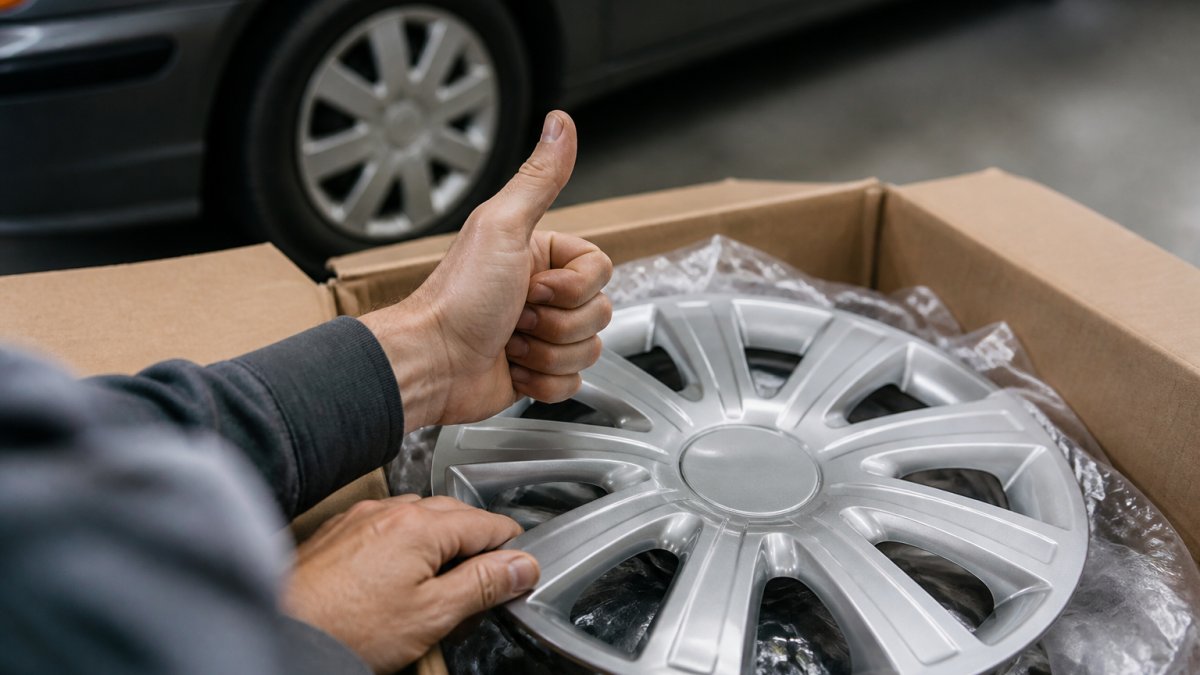
Check seller ratings and read recent customer reviews before purchasing. Look for patterns: Do customers consistently mention fitment accuracy? Do they report receiving damaged parts? How responsive is the seller to complaints? A seller with 4.8 stars across 500+ reviews is far more trustworthy than one with 4.9 stars across 12 reviews.
Marketplace platforms like Amazon and eBay provide seller feedback systems, but these vary in reliability. Third-party marketplaces also introduce additional complexity: the platform isn't responsible for the actual part quality, only for mediating disputes. A direct purchase from an established retailer often provides better accountability.
Verify that the seller is authorized to sell the brand you're purchasing. Some manufacturers restrict sales to authorized dealers only. Buying from an unauthorized seller may mean the warranty isn't valid, or the part isn't genuine.
Understanding Online Auto Parts Return Policy and Warranty
Before clicking "buy," understand the return policy and warranty terms. These vary significantly between retailers and can determine whether a mistake becomes a minor inconvenience or a costly loss. More importantly, return costs and restocking fees can completely eliminate any price advantage you gained by shopping online.
Return Policy Essentials and Hidden Costs
Return windows and conditions:
- How many days do you have to return an item? (30 days is standard; some retailers offer 60 or 90 days)
- Must the part be unused and in original packaging, or can you return it after installation?
- Are there any restocking fees, and if so, what percentage?
- Who pays for return shipping, the retailer or you?
Some retailers offer free returns within 30 days with prepaid return labels. Others charge restocking fees of 10-20% and require you to pay return shipping. These costs can eliminate any price advantage you gained by shopping online.
Core charges and core returns: For parts like alternators, starters, batteries, and transmissions, many retailers charge a "core charge", an upfront deposit you pay when ordering. When you return the old part, you get the core charge refunded. If you don't return the old part, you lose the core charge. This is standard practice, but it means your actual out-of-pocket cost is higher than the advertised price until you return the core. Factor this into your total-cost calculation.
Warranty Coverage: What's Actually Protected
Manufacturer warranty:
- Does the part come with a manufacturer warranty, and for how long? (1 year, 2 years, lifetime?)
- What does the warranty actually cover? (defects only, or does it include fitment issues?)
- Does the warranty transfer if you're not the original purchaser?
Seller warranty or extended warranty:
- Does the retailer offer an extended warranty option?
- What's the cost, and what additional coverage does it provide?
- How do you file a warranty claim, and how long does the process take?
A part with a 1-year manufacturer warranty and free returns is far more valuable than a part with no warranty, even if the upfront price is higher. The warranty protects you against premature failure. The return policy protects you against compatibility mistakes.
Worked Example: Total Cost Comparison
Let's compare the real total cost of buying a part online versus in-store. Assume you need a replacement alternator:
Online purchase scenario:
- Part price: $89.99
- Shipping: $12.50 (standard, 5-7 business days)
- Sales tax (varies by state, assume 7%): $7.14
- Subtotal: $109.63
- Scenario A (successful purchase): Total cost = $109.63
- Scenario B (incompatible part, must return): Return shipping cost (you pay): $15.00 + restocking fee (15% of part price): $13.50 = $28.50 additional cost. Total cost: $138.13 (plus 10-14 days of vehicle downtime)
In-store purchase scenario:
- Part price: $104.99
- Sales tax (7%): $7.35
- Total cost: $112.34
- Instant availability, no shipping wait, easy in-store return if incompatible
In this example, online shopping saves $2.71 if the part is correct. But if the part is incompatible or defective, the return costs ($28.50) make the online purchase $25.79 more expensive than the in-store option. The online savings only materialize if you get the fitment right the first time.
Comparing Return Policies Across Retailers
Return policies vary widely. Before ordering, compare:
| Policy Element | Best Case | Worst Case | What to Look For |
|---|---|---|---|
| Return window | 90 days | 14 days | At least 30 days; 60+ is better |
| Return shipping | Free (prepaid label) | You pay full cost | Prepaid labels reduce friction |
| Restocking fee | None | 20-25% | None or under 15% |
| Condition requirement | Unused or installed | Unused only | Installed returns accepted |
| Refund timeline | 5-7 business days | 30+ days | Fast refunds reduce cash-flow impact |
Understanding these terms before purchasing eliminates surprises later and helps you calculate whether the online price advantage is real.
When Warranty and Return Policies Make Online Worth It
Online buying becomes clearly worthwhile when:
- The retailer offers free returns with a 60+ day window
- The part carries a manufacturer warranty of at least 1 year
- There are no restocking fees
- You've verified fitment carefully (reducing return risk)
- The price difference exceeds the cost of potential return shipping
Conversely, online buying becomes risky when:
- The retailer has a 14-day return window and charges restocking fees
- The part has no warranty
- You're uncertain about fitment
- The price savings are less than $20-30 (the cost of a return)
The most successful online shoppers read the return policy and warranty terms before adding anything to their cart. They factor these terms into their total-cost calculation, not just the advertised price.
Delivery Time and Vehicle Downtime: Hidden Costs
Shipping delays create real costs that aren't reflected in the final price. If your vehicle is off the road waiting for a part, that downtime has financial consequences: missed work, rental car costs, or mechanic labor charges if someone else installs the part.
Standard shipping typically takes 5-10 business days. Expedited shipping costs more but reduces downtime. For critical parts, the expedited shipping cost is often worth it. For aesthetic parts like wheel covers, standard shipping may be acceptable.
Factor in processing time. Some retailers ship within 24 hours. Others take 3-5 business days to process before the carrier picks up your order. This processing time isn't always clearly stated, so check the product page or contact the seller before ordering.
Consider also the risk of damage during shipping. Parts arrive damaged occasionally, requiring another return and reorder. This extends your downtime further. Retailers with strong packaging and low damage rates reduce this risk.
Is Online Shopping Worth It for Your Situation?
The answer depends on your specific circumstances. Online shopping works best when you have time, when you know exactly what part you need, and when the price savings justify the wait. It works poorly when your vehicle is immobile and you need a solution today.
| Situation | Best Option | Why |
|---|---|---|
| Vehicle off road, need immediate solution | In-store | Instant availability and installation |
| Specific part, time to research and compare | Online | Better selection and price comparison |
| Rare or hard-to-find part | Online | Nationwide inventory access |
| Uncertain about fitment | In-store | Expert guidance and inspection |
| Budget-conscious, flexible timeline | Online | Price savings justify the wait |
| Concerned about counterfeit parts | Established online retailer | Reputation and warranty protection |
Online buying is worth it when the total cost (part + shipping + taxes) is lower than in-store options, and when you have time for delivery. It's not worth it when you're paying rush shipping, dealing with incompatible parts, or losing productivity while your vehicle sits idle.
The most successful online shoppers verify fitment carefully, research seller reputation, understand return policies, and factor in all costs before deciding. They also recognize that the cheapest option isn't always the best option when you account for returns, downtime, and quality.
Buying car parts online offers real advantages: broader selection, price comparison, and the ability to research at your own pace. But success requires careful attention to fitment, seller reputation, and total cost. At WheelCovers.Com, we've built our business on making online parts shopping straightforward and reliable. With over 1 million hubcaps and wheel covers in inventory and nearly 50 years of industry experience, we've simplified the process of finding exact-fit replacements without the hassle of traditional salvage yards. Whether you're shopping for wheel covers, hubcaps, or other vehicle accessories, our nationwide shipping and quality commitment ensure you get the right part, delivered reliably to your door.
Frequently Asked Questions
Is it cheaper to buy car parts online?
Online shopping can offer lower purchase prices and wider selection, but total cost depends on shipping fees, taxes, and delivery speed. A local retailer may cost less when you factor in fast delivery and zero shipping. Compare the full price, including delivery time and return costs, rather than just the listed price. Aftermarket parts online are often cheaper than OEM parts, but quality and fitment vary by seller.
How do I know if an online car part will fit my vehicle?
Always verify fitment before ordering. Enter your vehicle's year, make, model, and VIN into the retailer's compatibility tool. Confirm the part number matches your vehicle's specifications. Check product descriptions for fitment details and read customer reviews from owners of the same model. If unsure, contact the seller directly, reputable online retailers provide fitment support before purchase.
Are online auto parts as good as parts from a local store?
Quality depends on the part type and seller, not the shopping channel. OEM parts from authorized online retailers match dealership quality. Aftermarket parts vary widely, some are reliable, others are low-quality. Online sellers with strong customer reviews and clear return policies tend to stock better products. Local stores offer immediate availability and personal advice, but online retailers often have larger selection and competitive pricing on quality items.
Can I return car parts if they do not fit?
Return policies vary by seller and part type. Many online retailers accept returns within 30 days if the part is unused and in original packaging. Some charge restocking fees or require the buyer to cover return shipping. Check the return policy before ordering, reputable sellers clearly state their terms. Dealerships and local stores typically have stricter return policies. Verify the policy matches your needs, especially for expensive or hard-to-find parts.