

Posted by Editorial Team on Oct 18, 2026
Hubcap Return Policy: What to Know Before You Buy
Table of Contents
- Why a Hubcap Return Policy Decides Where You Buy
- What a Standard Hubcap Return Window Looks Like
- How to Measure Hubcap Size Before You Order
- Returning Hubcaps That Do Not Fit: A Step-by-Step Process
- The Hubcap Exchange Policy: Swapping Size or Style
- Condition Rules: Unused, Original Packaging, and Proof of Purchase
- Return Shipping, Restocking Fees, and Refund Deductions
- Damaged, Defective, or Lost Hubcaps: Warranty vs. Return
- Custom Orders and Final-Sale Wheel Covers
- Conclusion
- Frequently Asked Questions
Last Updated: October 18, 2026
Why a Hubcap Return Policy Decides Where You Buy
A hubcap return policy is the set of rules a seller uses to accept, inspect, and refund or replace a wheel cover you bought and no longer want or cannot use. At WheelCovers.Com, we have watched buyers learn this the hard way for nearly 50 years: the part arrives, it is the wrong size or style, and only then do they read the fine print.
That order is backwards. Check the policy before you order, and the return becomes a routine swap instead of a fight.
Here is what most guides get wrong. They treat every return as a "didn't like it" case. In reality, hubcap returns split into distinct scenarios, and each one follows different rules:
- Fitment failures. The cover does not seat on the wheel.
- Condition disputes. The seller says the part was installed.
- Damage in transit. The box arrived crushed.
- Custom orders. Made-to-order finishes and non-stock styles.
Below, we walk through each scenario, the timelines that apply, and the exact steps to get a clean refund.
What a Standard Hubcap Return Window Looks Like
Most sellers set a 30-day return period, counted from the delivery date. Some allow less. A few allow more for unopened items. The window is the deadline for the seller to receive your return request, not the date you ship it, so read that sentence twice.
What you should confirm before ordering:
- Request deadline. When must you contact the seller?
- Ship-back deadline. How many days after approval must the box be in transit?
- Condition requirement. Does the cover need to be unused and uninstalled?
- Packaging requirement. Is original packaging required, or just protective packaging?
- Refund method. Original payment method, store credit, or exchange only?
A common mistake is assuming the window resets if you email on day 29 and ship on day 35. Many sellers deny the return at that point, even though you did everything in good faith.
Counting Days From Delivery, Not Order Date
Delivery date is the anchor. A cover ordered on the 1st and delivered on the 8th has a window that starts on the 8th, not the 1st. That one-week gap matters when you are near the edge of the window.
Keep the delivery confirmation. It is your proof of when the clock started. If a package is marked delivered but never arrived, that is a separate claim, not a return, and you should contact the seller immediately.
How to Measure Hubcap Size Before You Order
The fastest way to avoid a return is to measure correctly the first time. Hubcap sizing comes down to three numbers and one style match, and getting any of them wrong is the most common cause of returns.
Measure the wheel, not the old cover. A worn or bent cover can read slightly off. Use a tape measure across the flat face of the wheel where the cover seats.
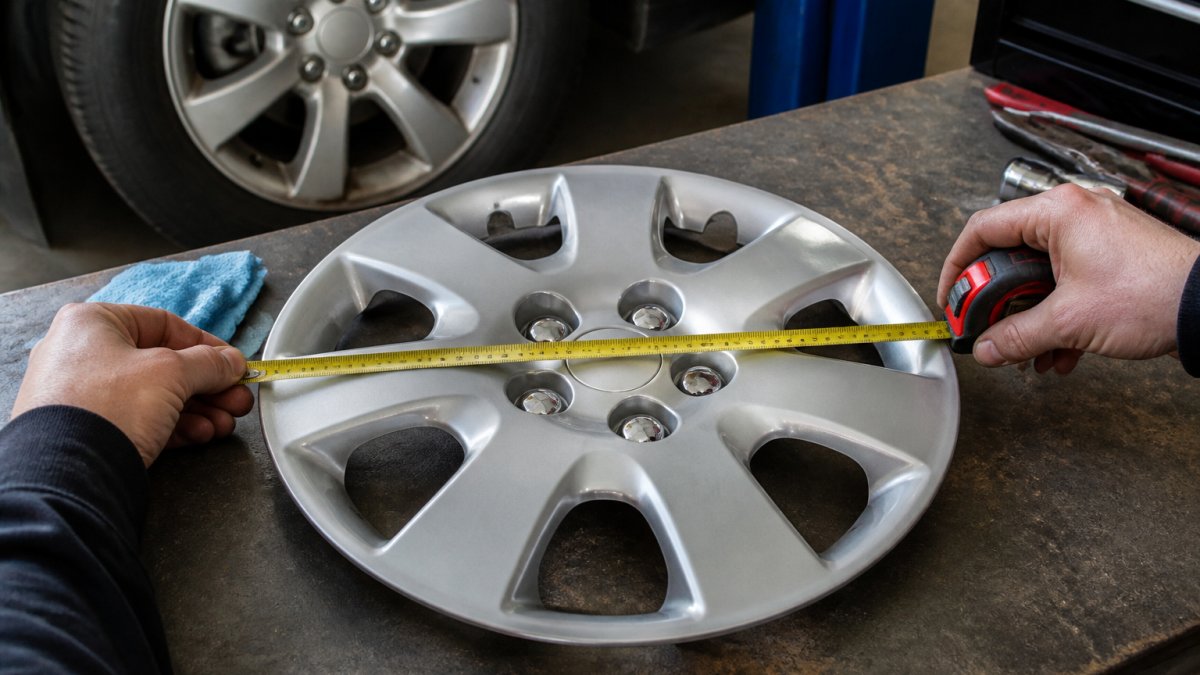
Diameter, Retention Ring, and Style Matching
Diameter is the wheel size the cover is built for, usually stamped on the tire sidewall as part of the tire size. A 16-inch wheel takes a 16-inch cover.
Retention ring is the lip on the back of the cover that grips the wheel. Steel wheels and alloy wheels use different retention designs, and a cover built for one will not hold on the other.
Style matching covers the finish, spoke pattern, and center cap look. This is where "it fits but it looks wrong" returns come from. Match the style to the trim level of your vehicle, not just the model year.
Returning Hubcaps That Do Not Fit: A Step-by-Step Process
Returning hubcaps that do not fit follows a predictable path at most sellers. The steps below are the sequence that keeps a fitment return clean and fast.
- Stop before installing. Test-fit only. Do not seat the cover fully or drive with it.
- Contact customer service within the return window and request a return authorization.
- Provide your order number and proof of purchase, plus photos of the cover and the wheel.
- Describe the fitment issue precisely. "Will not seat on the retention ring" is stronger than "does not fit."
- Wait for approval and shipping instructions before you send anything back.
- Pack the cover in its original packaging with all included hardware.
- Ship with tracking and keep the receipt until the refund posts.
Skipping step 1 is the mistake that kills fitment returns. Once a cover has been driven on, most sellers treat it as used, and used covers usually fall outside the return policy.
The Hubcap Exchange Policy: Swapping Size or Style
A hubcap exchange policy lets you swap a cover for a different size or style instead of taking a refund. Exchanges are usually the better outcome for fitment and style mismatches, because you still end up with the part you actually need.
Exchanges typically follow the same window and condition rules as returns. The difference is what happens after approval:
- You ship the original cover back.
- The seller ships the replacement once the return is received or approved.
- Any price difference is charged or refunded.
- Outbound shipping on the replacement may be charged separately.
Ask one question before choosing an exchange: is the replacement in stock? A backordered exchange can leave you waiting weeks, while a refund lets you source the part elsewhere.
Condition Rules: Unused, Original Packaging, and Proof of Purchase
Condition rules decide whether a return is accepted at all. Most sellers require the cover to be in unused condition, in original packaging, with proof of purchase. Those three requirements cover the majority of denied returns.
What "unused" usually means in practice:
- No road miles on the cover.
- No scratches, scuffs, or curb rash.
- No bent retention tabs or clips.
- No adhesive residue or drilled holes.
Original packaging matters because it protects the finish in transit. If you threw the box out, ask the seller whether protective packaging is acceptable. Some allow it; some do not.
Proof of purchase means your order number or receipt. A bank statement alone is often not enough, because it does not show which item was purchased.
Return Shipping, Restocking Fees, and Refund Deductions
Return shipping is the cost that surprises buyers most, and it is the number that decides whether a return is even worth doing. A cover that cost little to buy can cost a meaningful share of that amount to send back, especially once you add packaging and insurance. Before you assume the refund equals what you paid, read the policy line by line and total up every deduction.
Common deductions include:
- Return shipping cost, either deducted from the refund or paid by you upfront at the counter.
- Restocking fees, applied to certain items or to opened packaging.
- Original outbound shipping, which is often non-refundable even when the item is defective.
- Missing hardware charges, if clips, retention hardware, or center caps are not returned.
- Oversize or dimensional charges, since a boxed wheel cover can trip carrier size thresholds.
How Terms Differ by Purchase Channel
This is where most guides stop, and where buyers get burned. The same cover bought through different channels can carry completely different return terms, so compare the channel, not just the product.
| Purchase Channel | Typical Return Window | Who Pays Return Shipping | Restocking Fee Pattern | Key Watch-Out |
|---|---|---|---|---|
| Large online marketplace | Often 30 days from delivery | Buyer, unless item is defective | Rare, but marketplace-funded refunds may exclude shipping | Third-party sellers set their own rules; check the seller, not the marketplace banner |
| Specialist wheel-cover retailer | Commonly 30 days, sometimes shorter on closeouts | Buyer on change-of-mind; seller on defects | May apply to opened or installed items | Fitment and condition rules are usually stricter and more clearly written |
| Dealership parts counter | Varies widely; often shorter than retail | Buyer in most cases | Common on special-order parts | Special-order and non-stock covers are frequently non-returnable |
| In-store purchase | Store policy, often 30 days with receipt | Not applicable | Rare | No shipping cost, but receipt and original packaging rules still apply |
A common pattern is that the channel with the lowest upfront price has the least forgiving return terms. A marketplace listing may look cheaper until you price the return label and discover the seller charges a restocking fee on opened packaging. A specialist retailer may cost more but publish clear fitment and condition rules you can check before ordering.
Estimating the True Cost of a Return
You do not need an exact quote to make a good decision. Estimate the total cost of a return before you commit:
- Weigh and measure the boxed cover. A single cover in original packaging is usually a manageable parcel; a set of four can cross into oversize territory.
- Check the seller's return-label terms. Some issue a prepaid label and deduct the cost; others require you to buy postage and file for reimbursement.
- Add insurance and tracking. Cheap return postage without tracking is a common reason refunds get denied when the package goes missing.
- Compare the total against the refund. If the deductions approach the value of the cover, an exchange or a resale may make more sense than a return.
When the Seller Should Cover the Cost
If the cover is defective, damaged in transit, or the seller shipped the wrong part, the cost burden usually shifts to the seller. In those cases, ask for a prepaid return label and confirm in writing that no restocking fee will apply. Keep that confirmation with your order records. If a seller insists you pay return shipping on a defective item, escalate through the marketplace or the payment method you used before you ship anything back.
Damaged, Defective, or Lost Hubcaps: Warranty vs. Return
A damaged or defective cover is usually a warranty claim, not a return, and the distinction decides who pays and how long you have. Returns are governed by the seller's return window and condition rules. Warranty claims are governed by the product warranty and typically skip restocking fees and return shipping charges. Mixing the two up is the most common reason a legitimate claim gets denied.
Return, Defect Claim, or Warranty Claim?
Use this quick sort before you contact anyone:
- Return. You changed your mind, ordered the wrong size or style, or the cover does not fit. The clock runs on the return window, and condition rules apply.
- Defect claim. The cover arrived with a manufacturing flaw, a bent retention ring, a finish defect, or missing hardware. Report it promptly and keep the packaging.
- Warranty claim. The defect shows up after installation, such as peeling finish, cracking, or a retention failure under normal use. Warranty terms and time limits apply.
- Lost hubcap after installation. This is usually an installation or fitment issue, not a return. Check whether the seller offers any coverage; many do not, which is why the pre-order fitment check matters so much.
Evidence and Packaging Checklist for a Successful Claim
Sellers approve claims faster when the evidence is complete on the first contact. Build the file before you call:
- Photograph the damage before opening the packaging further. Shoot the shipping box, the label, the padding, and the cover from multiple angles.
- Keep all packaging, including the outer box, inner padding, and any hardware bags. Discarding the box is a common reason transit damage claims fail.
- Save your order record. Order number, confirmation email, and the listing or product page as it appeared when you bought.
- Note the delivery date and time. The delivery scan is your proof of when the clock started and when the damage would have occurred.
- Describe the defect precisely. "Retention ring bent at the 3 o'clock position, will not seat" is stronger than "damaged."
- Do not install the cover. Installation usually converts a transit damage claim into a used-item return, and the claim gets denied.
- Ship back with tracking and keep the receipt until the replacement or refund posts.
Reporting Windows and Escalation
Transit damage claims often carry a shorter reporting window than the standard return period, sometimes just a few days from delivery. Report the damage the day the box arrives, even if you have not decided whether you want a replacement or a refund. If the seller stalls, escalate in this order: the seller's supervisor, the marketplace resolution center if you bought through one, then your payment method's dispute process. Keep every message and photo in one folder so the escalation is a matter of forwarding records, not re-explaining the problem.
Custom Orders and Final-Sale Wheel Covers
Custom products are the category where the return policy tightens the most. Custom wheel covers, custom finishes, and made-to-order styles are commonly sold as final sale, because the seller cannot resell a part built for one buyer.
Before you order a custom product, confirm:
- Whether the item is returnable at all.
- Whether an exchange is allowed for fitment issues.
- Whether a warranty still applies to defects.
- What the production lead time is, since a long lead time can push you past the return window on a related stock item.
For stock covers, the standard return policy applies. For custom orders, assume final sale unless the seller says otherwise in writing.
Conclusion
The real challenge with hubcap returns is not the paperwork. It is ordering the right part the first time, so the return never happens. Measure the wheel, match the retention ring and style, test-fit before installing, and keep the box until you are sure.
That is how we approach it at WheelCovers.Com. Our inventory of over 1 million hubcaps, wheel covers, wheel skins, and trim rings covers original and custom parts for vehicles old and new, backed by nearly 50 years in the business and nationwide shipping. Our team can help you confirm fitment before you order, so the part that arrives is the part that fits.
Get started with WheelCovers.Com and find the right cover for your vehicle the first time.
Frequently Asked Questions
What should I check in a hubcap return policy before ordering?
Read four things before you buy: the length of the return window and whether it starts at the order date or delivery date, the condition requirements (unused, original packaging, proof of purchase), who pays return shipping, and whether a restocking fee applies. Also confirm whether custom or special-order wheel covers are final sale. A hubcap return policy that hides these details in a separate FAQ page is worth a second look, because you will need them if a wheel cover arrives with the wrong retention ring or a damaged finish.
Can I return hubcaps if they do not fit my vehicle?
Most sellers accept returns for fitment issues as long as the hubcap is unused and in its original packaging, but the window is often shorter than for defects. Before ordering, confirm the seller's policy on returning hubcaps that do not fit, and test-fit the wheel cover without fully seating the retention ring. If the diameter or clip pattern is wrong, stop and start a return request rather than forcing it on, since bent clips or scratched faces can be treated as customer damage and reduce your refund eligibility.
How do I know what size hubcaps to buy?
Measure the wheel's hubcap seating diameter, not the tire. Run a tape measure straight across the widest point of the wheel opening where the old hubcap sat, and note the result in inches. Check your owner's manual or the tire sidewall for the wheel size as a cross-check. If you are replacing a lost hubcap, the original equipment part number stamped on the back of a remaining cap is the most reliable guide. Getting this measurement right is the single biggest factor in avoiding a return.
Do I have to pay return shipping for hubcaps?
It depends on why you are returning the item. When a hubcap arrives damaged, defective, or is the wrong part the seller shipped, most retailers cover return shipping and issue a prepaid label. For buyer's-remorse returns such as ordering the wrong size or changing your mind, the customer usually pays shipping both ways, and some sellers deduct a restocking fee. Confirm the shipping terms before you order, and keep the original box so the wheel cover can travel back without extra packaging costs.