

Posted by Editorial Team on Oct 12, 2026
How to Make Stock Wheels Look Better: 9 Methods
Table of Contents
- Why Stock Wheels Matter to Your Vehicle's Appearance
- Assess Your Wheels: Damage, Material, and Condition
- How to Clean Factory Wheels Properly
- How to Paint Stock Wheels: A Step-by-Step Process
- Wheel Covers for Stock Wheels: A Non-Paint Alternative
- 16 Inch Wheel Covers and Other Sizing Options
- Finish Options: Paint, Plasti Dip, and Removable Coatings
- Common Mistakes to Avoid When Refinishing Stock Wheels
- Maintenance and Durability: Keeping Your Wheels Looking New
- Frequently Asked Questions
Last Updated: October 11, 2026
Why Stock Wheels Matter to Your Vehicle's Appearance
Your wheels are the first thing people notice about your car. Stock wheels don't have to stay boring. Many vehicle owners think their factory wheels are stuck looking plain forever. That's not true. You can transform how stock wheels look better with simple methods that cost less than you'd expect.
Whether you drive a sedan, truck, or SUV, your wheels define your vehicle's character. A fresh set of stock wheels can completely change how your car looks on the road.
The good news? You don't need expensive custom wheels to make a real difference. This guide shows you exactly how to make stock wheels look better using methods that work for most vehicles.
Assess Your Wheels: Damage, Material, and Condition
Before you start any project, look at what you're working with. Stock wheels come in different materials. Some are steel wheels. Others are cast wheels or alloy wheels. Each material responds differently to refinishing.
Check your wheels for damage. Look for curb rash, scratches, or rough spots. Small scratches are easy to fix. Deep damage needs more work. Run your hand along the surface. Feel for rough areas that need sanding.
Steel wheels are durable but can rust. Cast wheels are heavier but strong. Alloy wheels are lighter but more delicate. Knowing your wheel material helps you pick the right finish. This decision changes your entire approach.
Take photos of your wheels from different angles. This helps you see the damage clearly. It also gives you a before-and-after record of your work.
How to Clean Factory Wheels Properly
Clean wheels are the foundation for any refinishing project. Dirt and brake dust stick to your wheels constantly. You must remove all of this before painting or applying any coating.
Start with warm water and a stiff brush. Scrub each wheel thoroughly. Get into the spaces between the spokes. Brake dust hides in these areas. Use a degreaser for stubborn grime. Let it sit for a few minutes, then scrub again.
Rinse with clean water. Dry completely with a microfiber cloth. Any moisture left behind will cause problems later. Wet wheels won't accept primer or paint properly.
For heavily soiled wheels, use a pressure washer on low setting. Keep the nozzle at least 12 inches away. High pressure can damage the wheel surface.
How to Paint Stock Wheels: A Step-by-Step Process
Painting stock wheels is the most popular way to make stock wheels look better. The process takes patience, but the results are worth it. You can do this in your driveway or garage.
Prepare Your Workspace and Gather Materials
Set up your workspace carefully. Choose a clean, dry area away from wind and dust. Dust particles settle on wet paint and ruin the finish. A garage with good ventilation is ideal.
Gather your materials before you start:
- Drop cloth or plastic sheeting
- Masking tape and paper
- Sandpaper (100-grit, 150-grit, 220-grit)
- Self-etching primer
- Wheel paint (urethane or epoxy finish)
- Clear coat
- Spray gun or spray cans
- Gloves, safety glasses, and respirator
- Cleaning cloth and degreaser
Lay down your drop cloth to protect the ground. Cover nearby objects. Overspray travels farther than you think.
Remove, Mask, and Sand the Wheels
Remove one wheel at a time. This prevents confusion and keeps your workspace organized. Never work on all four wheels simultaneously.
Mask off the tire and valve stem with tape and paper. You only want to paint the wheel, not the rubber. Tape the edges where the wheel meets the tire.
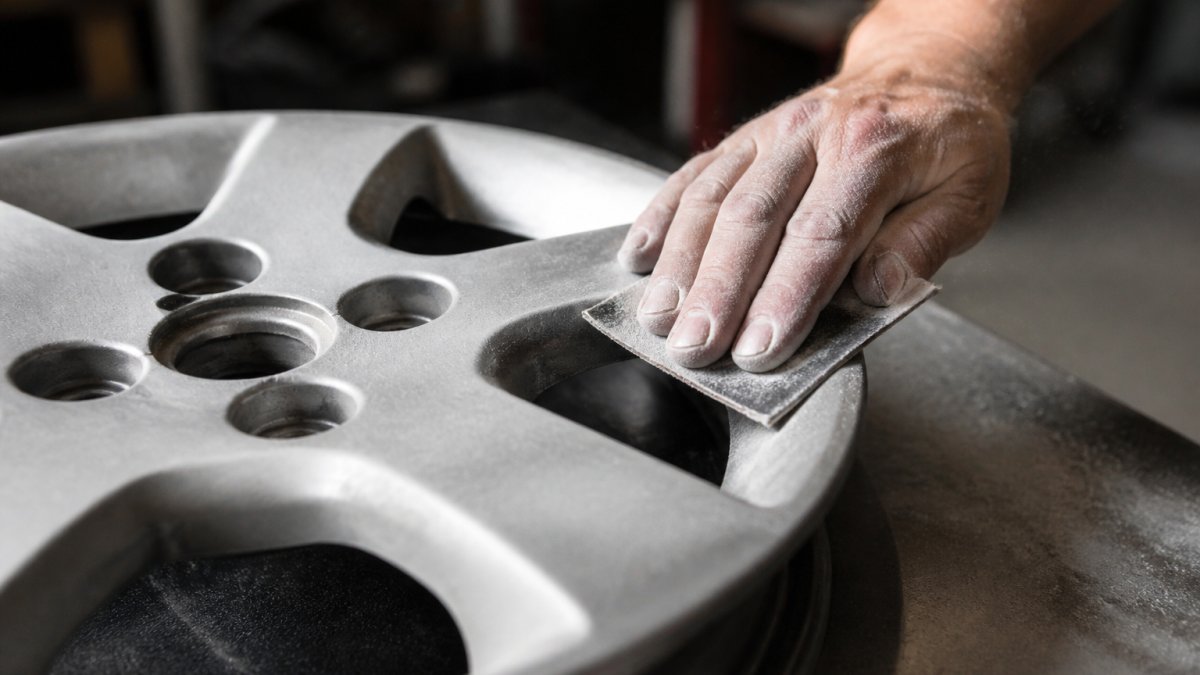
Sand the wheel surface with 100-grit sandpaper. This removes the factory finish and creates texture for primer to grip. Sand in circular motions, covering the entire wheel face. Don't miss the edges and crevices.
Wipe away all dust with a damp cloth. Let it dry completely. Sand again with 150-grit sandpaper for a smoother surface. This second sanding removes scratches from the first pass.
Final sand with 220-grit sandpaper. This prepares the surface for primer. Wipe clean again and let dry.
Apply Primer and Paint Coats
Self-etching primer bonds directly to metal. Spray a thin, even coat. Hold the can 8-10 inches from the wheel. Use smooth, overlapping strokes. Let primer dry completely between coats.
Apply two coats of primer minimum. Three coats is better. Each coat should be light and even. Heavy coats drip and look uneven.
Once primer is dry, apply your wheel paint. Use the same technique as primer. Light, even coats work better than one thick coat. Two to three coats of paint is standard. Let each coat dry before applying the next.
For a metallic finish, the paint itself provides the color. For solid colors, a urethane finish gives durability. Epoxy finish is also excellent for wheels.
Seal with Clear Coat and Cure
Clear coat protects your paint from UV damage and road salt. Apply two coats of clear coat using the same technique. Light, even strokes. Let each coat dry before the next.
The curing process matters. Don't drive the car for at least 24 hours after painting. Ideally, wait 48 hours. The paint hardens during this time. Driving too soon can damage the finish.
Keep the wheels clean during curing. Avoid washing for at least one week. Harsh chemicals and water pressure can damage fresh paint.
Wheel Covers for Stock Wheels: A Non-Paint Alternative
Not everyone wants to paint their wheels. Beyond wheel covers, there are several non-paint methods to improve stock wheel appearance.
Deep Cleaning and Detailing is often overlooked but transforms how wheels look. Brake dust accumulates on wheel surfaces and dulls their appearance significantly. Use a dedicated wheel cleaner (not general car wash soap) and a stiff brush to scrub spoke crevices, barrel edges, and the wheel face thoroughly. For stubborn buildup, let the cleaner sit for 5-10 minutes before scrubbing. A clean wheel looks newer and shinier instantly, often eliminating the need for refinishing. Follow with a wheel sealant or tire shine to enhance the appearance further.
Center Caps and Lug Nuts are small details with outsized visual impact. Replacing factory center caps with polished stainless steel, chrome, or color-matched alternatives changes the wheel's focal point. Similarly, upgrading lug nuts from basic steel to polished, black, or colored options adds visual interest without touching the wheel surface itself. They work on any wheel material and are fully reversible.
Tire Appearance affects how wheels look more than many people realize. Faded, cracked, or dull tires make even clean wheels look worn. Apply tire shine (gel or spray) to restore a dark, glossy finish. For a more dramatic effect, use tire paint or tire dye to darken sidewalls or add a subtle sheen. Clean tires with a dedicated tire cleaner first to remove brake dust and grime. This simple step takes 15 minutes, yet dramatically improves overall wheel presentation.
Wheel Covers offer a quick, removable solution for readers who want an instant appearance change. They slip over your existing wheel and change its look without permanent modification. Quality covers made from durable composite materials or reinforced plastic last years and maintain their appearance with basic cleaning. The advantage is complete reversibility, remove them anytime without affecting the original wheel. Install them in minutes by hand. This makes wheel covers perfect for renters, people who change their vehicle frequently, or those who want to test a new look before committing to paint or other modifications.
Combination Approach yields the best results for non-paint styling. Start with deep cleaning and tire detailing. Add upgraded center caps and lug nuts. If you want additional visual impact, install quality wheel covers. This layered approach requires no specialized skills and can be reversed or adjusted at any time. Many vehicle owners find this combination rivals the appearance of painted wheels without the permanence or effort.
16 Inch Wheel Covers and Other Sizing Options
Wheel size determines which cover fits your vehicle. Most common sizes range from 14 inches to 20 inches. Your vehicle's door jamb or owner's manual shows your wheel size.
16 inch wheel covers are popular for sedans and compact cars. They're one of the most common sizes on the road. Many people search for 16 inch wheel covers because they fit so many vehicles.
If your vehicle uses 16 inch wheels, you have plenty of options. Styles include:
- Full wheel covers that hide the entire wheel
- Hubcaps that cover only the center
- Wheel skins that add a custom look
Measure your wheel carefully before ordering. The fit must be exact. A cover that's too large won't seat properly. One that's too small won't cover the wheel completely.
WheelCovers.Com makes finding your size simple. Enter your vehicle year, make, and model. Our system shows exactly what fits. We ship nationwide, so you get your covers fast.
Finish Options: Paint, Plasti Dip, and Removable Coatings
You have several choices for finishing your stock wheels. Each option has distinct pros, cons, durability profiles, and real-world performance characteristics that should guide your decision.
Paint (Urethane or Epoxy) is the most permanent solution. A properly applied urethane or epoxy finish typically lasts 3-5 years or longer with regular maintenance. Urethane paint is more forgiving during application and offers good UV resistance. Epoxy finishes are harder and more chemical-resistant, making them excellent for wheels exposed to road salt or harsh conditions. Paint requires thorough surface preparation (sanding, priming, multiple coats) and cures over 24-48 hours before the vehicle is driven. Once applied, you're committed to that color and finish. Touch-ups are possible but may show if not carefully blended. Paint is ideal if you plan to keep the same look long-term and want maximum durability against brake dust, road debris, and weather.
Plasti Dip is a removable, rubberized coating that peels off cleanly without damaging the underlying wheel. Application is straightforward, spray it on like regular paint, and it dries faster than traditional paint (typically 4-6 hours between coats). The main trade-off is durability: Plasti Dip fades noticeably within 12-18 months under regular sun exposure and chips more easily than paint when exposed to road debris or aggressive cleaning. It also requires reapplication sooner if you want to maintain a fresh appearance. Plasti Dip is best for temporary changes, seasonal styling, or if you rent your vehicle and want to restore wheels to original condition before moving.
Water-Based Removable Coatings are newer eco-friendly alternatives that bond to wheels without the permanence of paint. These typically last 6-12 months and peel off without residue. They offer a middle ground between Plasti Dip and paint in terms of durability and ease of removal. Application and drying times are similar to Plasti Dip. These coatings work well if you want flexibility and environmental considerations matter to you, though they are less widely available than Plasti Dip.
Wheel Covers require no surface preparation, no chemicals, and no curing time. Install them in minutes by hand. Quality covers made from durable composite materials or reinforced plastic can last 3-5 years and maintain their appearance with basic cleaning. The advantage is complete reversibility, remove them anytime without affecting the original wheel. Covers work best if you rent, change your vehicle frequently, or want to test a new look before committing to paint. Lower-quality covers crack, fade, and fit poorly within months, so material quality is critical.
Comparison Summary:
| Finish Type | Durability | Permanence | Prep Time | Application Difficulty | Cost Range | Best For |
|---|---|---|---|---|---|---|
| Paint (Urethane/Epoxy) | 3-5+ years | Permanent | 2-4 hours | Moderate | Varies by materials and labor | Long-term investment, maximum durability |
| Plasti Dip | 12-18 months | Removable | 30 minutes | Easy | Varies by product | Temporary styling, renters |
| Water-Based Removable Coating | 6-12 months | Removable | 30 minutes | Easy | Varies by product | Eco-conscious, flexible styling |
| Wheel Covers | 3-5 years | Fully removable | None | Very easy | Varies by style and quality | Quick changes, no commitment |
Consider your priorities before choosing. If permanence and durability matter most, paint is superior. If you want flexibility and reversibility, covers or Plasti Dip work best. If you change your vehicle or styling frequently, removable options protect your investment in the original wheels. If environmental impact influences your choice, water-based removable coatings offer a middle path.
Common Mistakes to Avoid When Refinishing Stock Wheels
Most people make the same mistakes when refinishing their wheels. Learning from them saves you time and frustration.
Skipping surface preparation is the biggest error. Rushing through sanding and cleaning ruins the final result. Paint won't stick properly. It peels and chips quickly. Take your time with prep work.
Applying thick coats causes drips and uneven coverage. Multiple thin coats work better than one thick coat. Patience during application prevents problems later.
Painting in wrong conditions creates problems. High humidity, cold temperatures, or dust all affect paint. Paint in a clean, dry space when temperatures are between 50-85°F.
Not letting coats dry completely leads to poor adhesion. Each coat needs full drying time. Rushing this step causes paint to crack and peel.
Using wrong primer for your wheel material wastes effort. Self-etching primer works best for metal wheels. It bonds directly to the surface. Regular primer won't stick as well.
Neglecting clear coat leaves your paint unprotected. UV rays fade paint quickly. Road salt and chemicals damage unprotected finishes. Always apply clear coat as the final step.
Driving too soon damages fresh paint. Wait at least 24 hours before driving. Better yet, wait 48 hours. This lets the finish harden completely.
Maintenance and Durability: Keeping Your Wheels Looking New
Fresh wheels need care to stay looking good. Regular maintenance extends the life of your finish and keeps wheels looking sharp.
Wash your wheels every two weeks. Use mild soap and water. A soft brush removes brake dust without scratching. Dry with a microfiber cloth to prevent water spots.
Avoid harsh chemicals and high-pressure washers. These damage paint and coatings. Gentle cleaning works just as well and lasts longer.
Apply wheel sealant every six months. This protective layer shields paint from UV damage and road salt. It also makes wheels easier to clean.
Check for chips or scratches regularly. Small damage is easy to fix. Larger damage spreads if left untreated. Touch up minor chips with matching paint.
Avoid parking near construction or in areas with heavy salt spray. These environments age wheels faster. If you must park in harsh conditions, wash more frequently.
Proper tire pressure helps wheels last longer. Underinflated tires put extra stress on wheels. This can cause cracking over time. Check pressure monthly.
Making stock wheels look better transforms your vehicle's appearance without expensive custom wheels. Whether you paint them, apply Plasti Dip, or install quality wheel covers, your options are many. The right choice depends on your budget, skill level, and how permanent you want the change to be.
At WheelCovers.Com, we've helped vehicle owners upgrade their wheels for nearly 50 years. If you choose wheel covers instead of painting, we stock over 1 million options in every size and style imaginable. Our team makes finding the perfect fit for your vehicle simple and fast. Shop our full selection today and transform your wheels.
Frequently Asked Questions
Can I paint my stock wheels myself?
Yes. Painting stock wheels is a DIY-friendly project if you follow proper surface preparation and apply primer before paint. Clean the wheels thoroughly, sand away damage and rough areas, mask off the tire, apply self-etching primer, then spray on paint in thin coats with adequate drying time between each. A clear coat protects the finish. Most DIY jobs take 4-6 hours per wheel plus curing time. Professional refinishing is an option if you prefer a factory-quality finish.
What is the best way to clean factory wheels?
Clean factory wheels with a degreaser and stiff-bristled brush to remove brake dust and grime. Use hot water and a wheel-specific cleaner, then scrub all surfaces including the back and barrel. Rinse thoroughly and dry with a microfiber cloth to prevent water spots. For stubborn buildup, let the degreaser soak for 10-15 minutes before scrubbing. Clean wheels regularly to prevent corrosion and make refinishing easier if you choose to paint later.
Can wheel covers improve the look of stock wheels?
Wheel covers can significantly improve stock wheel appearance without paint or refinishing. They cover damage, curb rash, and worn finishes instantly. Covers come in various styles, finishes, and materials to match your vehicle's aesthetic. They're easier to install than painting, require no tools in most cases, and can be removed or swapped anytime. WheelCovers.Com offers a wide selection of original and custom covers, including 16-inch options, so you can find the exact fit for your vehicle.
How do I choose between painting stock wheels and using wheel covers?
Choose painting if your wheels are structurally sound but need color refresh or style upgrade, it's permanent and looks factory-finished. Choose wheel covers if you want quick results, reversibility, or to hide damage without refinishing. Painting takes more time and skill but costs less upfront than premium covers. Covers are faster, require no prep, and let you change the look later. Consider your wheel material (steel vs. alloy), extent of damage, and how long you plan to keep the vehicle.