

Posted by Editorial Team on Oct 20, 2026
Can You Drive Without a Hubcap? Safety & What to Know
Table of Contents
- Can You Drive Without a Hubcap? The Short Answer
- Is It Safe to Drive Without a Wheel Cover
- What Happens If a Hubcap Falls Off While Driving
- How Exposure Affects Your Wheels: Dust, Corrosion, and Wear
- Hubcap vs. Center Cap: Understanding the Difference
- What to Inspect After Your Hubcap Comes Off
- How to Measure Wheel Size for Hubcaps and Replacements
- When to Stop Driving and Seek Professional Help
- Finding the Right Replacement Hubcap for Your Vehicle
- Frequently Asked Questions
Last Updated: October 20, 2026
Can You Drive Without a Hubcap? The Short Answer
Yes, you can drive without a hubcap. A hubcap is a decorative cover, not a part required for your vehicle to operate. Your car will run fine without one.
But "can" and "should" are different questions. Driving without a hubcap exposes your wheel components to dust, moisture, and road debris. Over time, this exposure can lead to corrosion, rust, and visible wear on your wheel. The practical effects depend on your climate, how often you drive, and whether you're missing a full wheel cover or just a center cap.
At WheelCovers.Com, we help vehicle owners understand the real impact of missing wheel covers and find replacements that fit their exact model. Let's walk through what actually happens when a hubcap comes off, what you should inspect afterward, and when it's time to replace it.
Is It Safe to Drive Without a Wheel Cover
For the vast majority of vehicles, yes, it is safe to drive without a wheel cover in the short term. Your brakes, suspension, steering, and wheel bearings do not depend on the cover to function. The cover is a cosmetic and protective shell, not a load-bearing or safety-critical part.
But the honest answer is qualified, not absolute. Whether it is safe for your specific vehicle depends on three things: what kind of cover came off, what kind of wheel sits underneath, and what your owner's manual says.
Match the answer to the part that came off.
- Full wheel cover (what most people call a hubcap): Purely decorative on the overwhelming majority of passenger cars. Losing one has no effect on how the vehicle drives. Safe to continue.
- Center cap: A smaller disc that covers the hub opening in the middle of an alloy wheel. On most vehicles it is also decorative, but on some it seals the hub bore against moisture and road spray. Losing it is still not a driving hazard, but the exposed hub bore is worth inspecting sooner.
- Functional or load-rated cap: A small number of wheels use a cap that is part of a sealed hub assembly or that retains a locking mechanism. These are uncommon on passenger vehicles, but if your owner's manual calls the cap functional rather than cosmetic, treat a missing one as a maintenance item rather than pure cosmetics.
Check the owner's manual before you assume. Manufacturer language varies. Some manuals list wheel covers under appearance and trim, with no inspection or replacement interval. Others note that a missing center cap should be replaced to keep the hub bore clean. A few performance and heavy-duty vehicles specify that the cap must be in place for the wheel to be considered complete. The manual is the authoritative source for your model, and it takes two minutes to check.
Wheel design changes the exposure math.
- Steel wheels with full covers: The steel rim and lug nuts are exposed once the cover is gone. Steel rusts readily when road salt and moisture sit on bare metal, so the cosmetic downside compounds into a real maintenance issue over months, not days.
- Alloy wheels with center caps: The alloy face is already finished and corrosion-resistant. The main exposure is the hub bore and the lug area, which is a smaller surface. Alloy wheels tolerate a missing center cap far better than steel wheels tolerate a missing full cover.
- Aftermarket wheels: Fitment and cap design vary widely by manufacturer. If you are unsure whether your cap is decorative or functional, contact the wheel maker rather than guessing.
The short-term verdict. Driving temporarily while you wait for a replacement is fine on essentially any passenger vehicle. The risk is not sudden failure; it is gradual exposure. Road salt, moisture, and debris accumulate on bare metal, and in humid climates or winter road-salt conditions that exposure accelerates corrosion. If you plan to drive for weeks or months without a cover, the wear becomes noticeable and the eventual cleanup or repair costs more than the replacement would have.
What Happens If a Hubcap Falls Off While Driving
When a hubcap falls off while driving, it typically happens suddenly at highway speeds. The cap either works loose gradually or comes free due to impact with a pothole or curb. Once it separates, it falls to the road and is usually lost.
Most drivers don't notice immediately. You might feel a slight change in wheel vibration or hear a sound, but many people drive for miles without realizing the hubcap is gone. The wheel itself continues to function normally.
The real concern is what caused the cap to fall off in the first place. A loose hubcap often signals that the wheel itself may be loose. This is rare but serious. If you notice your hubcap missing:
- Pull over safely at the next opportunity
- Inspect your wheel for damage or loose lug nuts
- Check that the wheel sits flush against the brake rotor
- Listen for any grinding or unusual noises
If everything looks secure and you hear no strange sounds, you can continue driving. Schedule a replacement hubcap at your convenience.
How Exposure Affects Your Wheels: Dust, Corrosion, and Wear
An exposed wheel hub collects dust and road debris quickly. Within days, you'll see a visible buildup of brake dust and dirt on the bare metal.
Moisture is the bigger threat. When water combines with road salt or industrial pollutants, it triggers oxidation on bare steel or aluminum. This process starts immediately but becomes visible after weeks. Rust appears as orange or brown discoloration on the wheel surface.
The timeline depends on your environment:
- Dry climates: Corrosion develops slowly; you may see visible rust after 4-8 weeks
- Humid regions: Rust appears within 2-3 weeks
- Coastal areas or winter climates with salt: Corrosion accelerates dramatically; visible damage within 1-2 weeks
Once corrosion starts, it spreads. Rust weakens the metal and can affect the wheel's structural integrity if left unchecked for months. The wheel cover's job is to prevent this exposure entirely.
Hubcap vs. Center Cap: Understanding the Difference
These terms are often used interchangeably, but they describe different parts. Understanding the distinction matters when you're shopping for a replacement.
A hubcap is a full wheel cover that snaps or clips onto the wheel center. It covers the entire hub area and lug nuts. Most vehicles have hubcaps, and they're purely decorative. Hubcaps come in many styles and finishes to match your vehicle's appearance.
A center cap is a smaller, round cover that sits in the very middle of the wheel. It covers only the wheel's center hub. Some vehicles have a center cap instead of a full hubcap. Others have both: a center cap in the middle and a larger wheel cover around it.
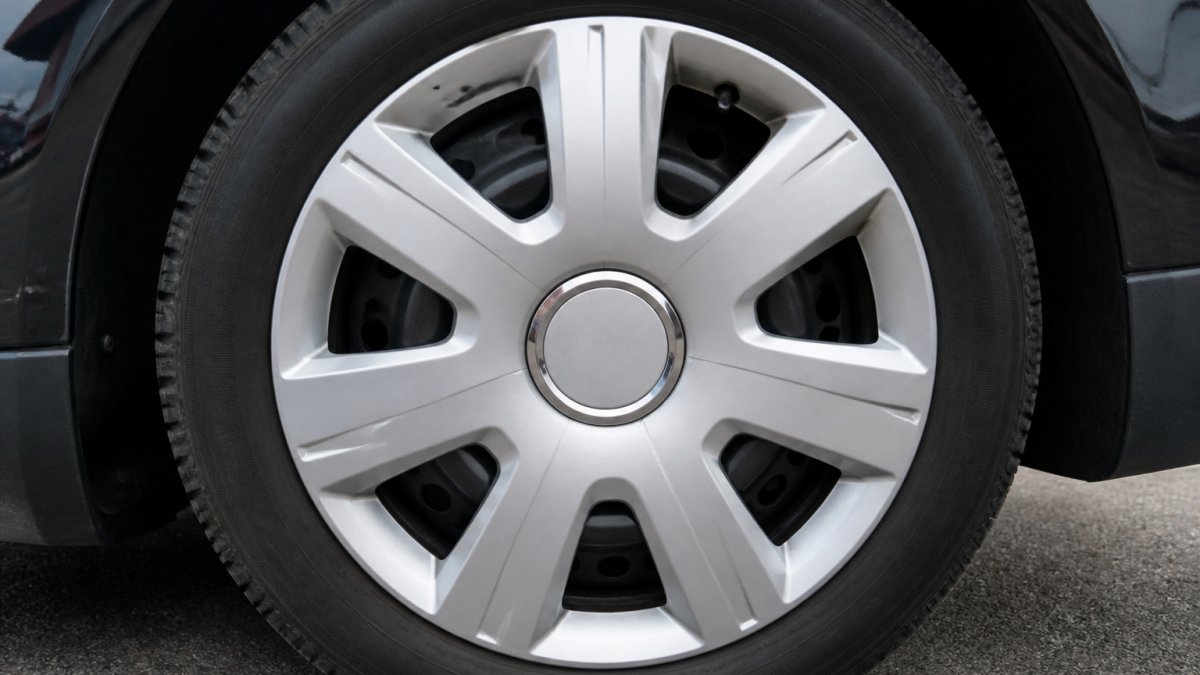
The difference matters because:
- Hubcaps protect more of the wheel and lug nut area
- Center caps protect only the center hub
- Replacement costs differ, center caps are usually less expensive
- Fit is specific, you need the exact type for your vehicle
Check your vehicle's owner manual or look at a photo of your current wheel to determine which type you have. When you order a replacement from WheelCovers.Com, we help you identify the exact fit for your make, model, and year.
What to Inspect After Your Hubcap Comes Off
A missing cover is a good excuse for a two-minute wheel check. You are looking for two things: damage that may have caused the cover to come off, and damage that happened when it separated. The checklist below tells you not just what to look at but what each result means and whether it changes your driving decision.
1. Lug nuts. Grab each lug nut and try to rock it. It should not move at all. A lug nut that turns by hand or feels loose is a stop-driving condition, not a schedule-it-for-later condition. Loose lug nuts can progress to a lost wheel. If more than one is loose, do not drive the vehicle; have it towed or inspected where it sits.
2. Wheel studs and bolts. Count them. Most passenger wheels have five, some have four or six. A missing or visibly damaged stud is a stop-driving condition. A stud that is present but shows fresh galling or thread damage is a schedule-inspection condition.
3. Wheel surface. Scan the face and rim for cracks, bends, and dents. A hairline crack anywhere in the wheel is a stop-driving condition. A bend or dent on the rim lip that you can feel with a finger is a schedule-inspection condition, especially if the tire is losing air or the wheel vibrates.
4. Hub bore and center area. With the cover off, look at the circular opening in the middle of the wheel. It should be clean and dry. Fresh grease, oil, or a wet-looking film around the hub bore can indicate a failing bearing seal or a leaking hub, which is a schedule-inspection condition and worth mentioning to a mechanic.
5. Brake rotor, visible behind the wheel. The rotor should sit flat and show no deep grooves, heavy discoloration, or grinding marks. Light surface rust after rain is normal and burns off with driving. Deep scoring, blue heat discoloration, or metal-on-metal grinding sounds are stop-driving conditions.
6. The cover itself, if you recovered it. Look at the retention clips or tabs on the back of the cover. Broken or bent clips explain why it came off and tell you whether the cover can be reused or must be replaced. A cover that lost clips will not stay on even if it looks fine from the front.
7. A slow-speed drive check. In a safe area, drive slowly and listen. The wheel should feel smooth with no wobble, pulsing, or new noise. Any new vibration, pulling to one side, or grinding means stop and inspect further before resuming normal driving.
How to read your findings.
- All clear: No loose fasteners, no cracks, no vibration. You can drive normally while you arrange a replacement cover.
- Cosmetic only: Surface rust, dirt buildup, or a scuffed cover. Drive normally; clean the wheel and replace the cover when convenient.
- Schedule inspection: A bent rim lip, a damp hub bore, or a damaged stud. Drive gently, avoid highway speeds, and book a mechanic visit soon.
- Stop driving: Loose or missing lug nuts, a cracked wheel, a missing stud, metal-on-metal brake noise, or new vibration. Do not continue; get professional help.
If everything on the list checks out, you can drive safely while waiting for a replacement cover. If anything lands in the stop-driving column, treat the missing cover as a symptom rather than the problem and have the wheel inspected before you drive further.
How to Measure Wheel Size for Hubcaps and Replacements
Getting the right hubcap means knowing your wheel size. Hubcaps are not one-size-fits-all. They're designed for specific wheel diameters and bolt patterns.
Your wheel size is stamped on the wheel itself. Look at the sidewall of your tire or the wheel's inner edge. You'll see a code like 17x7 or 16x6.5. The first number is the diameter in inches. The second is the width.
However, hubcap size depends on the hub opening, the circular area the cap covers. This varies even among wheels of the same diameter. You need to measure the hub opening itself.
To measure your hub opening:
- Find the center of your wheel where the hubcap attaches
- Measure the diameter of the circular opening (the hole the cap fits into)
- Write down this measurement in inches
- Check your vehicle's year, make, and model
When you shop at WheelCovers.Com, enter your vehicle information and we show you the exact hubcaps that fit. You can also call or use our online chat to confirm fitment before ordering. We carry over 1 million hubcaps in stock, so the right fit is available.
When to Stop Driving and Seek Professional Help
Most missing hubcaps don't require immediate professional attention. But certain situations demand a mechanic's inspection before you drive further.
Stop driving and get professional help if:
- You notice vibration or wobbling in the wheel
- You hear grinding, clicking, or unusual noises from the wheel area
- The lug nuts are loose or missing
- You see cracks or severe bends in the wheel
- The brake rotor shows damage or discoloration
- The wheel pulls to one side or the vehicle feels unstable
These signs indicate a problem beyond a missing hubcap. A mechanic can diagnose whether the wheel itself is damaged, if the bearing is failing, or if suspension components need attention.
For a simple missing hubcap with no other issues, you don't need professional help. You can order a replacement and install it yourself, most hubcaps snap on in seconds without tools.
Finding the Right Replacement Hubcap for Your Vehicle
Once you've confirmed your wheel is safe to drive, it's time to find the right replacement. The process is straightforward if you have the right information.
Gather these details:
- Vehicle year, make, and model
- Wheel diameter (usually 14", 15", 16", 17", or 18")
- Hub opening measurement (in inches)
- Current hubcap style or photo of your wheel
With this information, you can search online for compatible hubcaps. WheelCovers.Com specializes in exact-fit replacements for virtually every vehicle. Our inventory includes original equipment manufacturer (OEM) hubcaps that match your factory wheel, as well as custom options if you want to change your wheel's appearance.
The advantage of shopping with WheelCovers.Com is that we've been in this business since 1979. Our database includes vehicles from classic models to current year releases. We verify fitment before you order, so you get the right hubcap the first time.
A missing hubcap is a minor inconvenience, but it's one you don't have to live with. Your wheel will function fine without it, but protection from corrosion and weather is worth the small investment in a replacement. If you're unsure about your wheel size or need help finding the exact fit for your vehicle, WheelCovers.Com makes the process simple. Browse our selection of original and custom hubcaps, enter your vehicle information, and we'll show you options that fit perfectly. Get started today and restore your wheel's appearance and protection.
Frequently Asked Questions
Is it safe to drive without a hubcap?
Yes, you can drive safely without a hubcap since it is a decorative cover, not a structural component required for vehicle operation. However, driving without one exposes your wheel hub and fasteners to dust, moisture, and road debris, which may accelerate corrosion and rust over time. The practical risk depends on weather conditions and how long you drive without one. If the missing part is a functional center cap rather than a decorative hubcap, consult your vehicle's owner manual or a mechanic before continuing to drive.
What should you check after a hubcap falls off?
Inspect the exposed wheel hub, lug nuts or wheel bolts, and surrounding components for damage or debris. Look for signs of corrosion, loose fasteners, or bent metal. Check that all lug nuts are tight and secure. If you notice any damage, loose components, or if the missing part is actually a center cap (which may have a functional purpose), stop driving and have a mechanic evaluate the wheel before continuing. Clean away any dirt or moisture to prevent rust from developing.
What is the difference between a hubcap and a center cap?
A hubcap is a decorative cover that fits over the entire wheel hub and lug nuts, primarily for appearance. A center cap is a smaller cover that sits at the very center of the wheel and may serve functional purposes on some vehicles, such as protecting the wheel bearing or lug nut access. Center caps are sometimes required for proper wheel operation, while hubcaps are purely cosmetic. Check your owner manual to determine which type your vehicle has and whether it is necessary for safe operation.
How do I measure my wheel size to find the correct hubcap?
Measure the diameter of your wheel in inches from edge to edge (common sizes are 14, 15, 16, 17, 18 inches). Check your vehicle's owner manual or the sidewall of your tire for the wheel size specification. You can also look at the existing hubcap or wheel cover for size markings. Visit your vehicle's manufacturer specifications online or contact a tire shop for confirmation. Once you have the correct diameter, you can match it to the appropriate hubcap or wheel cover for your specific make and model.