

Posted by Editorial Team on Nov 01, 2026
Do Aero Wheel Covers Affect Tire Pressure?
Last Updated: November 2, 2026
Quick Summary
Aero wheel covers do not change the air pressure inside a tire, because they sit outside the tire and never touch its air chamber. Their only practical effect is that they can make the valve stem harder to reach for checking tire pressure. Check pressure with the tires cold, and remove the cover if the stem cannot be reached.
- Covers sit outside the tire and do not add or remove air.
- Check tire pressure when tires are cold, since warm tires read higher.
- Compare readings with the pressure on the driver's door placard.
- Remove the cover if the valve stem cannot be reached with an air chuck.
- Temperature, punctures, and valve problems cause pressure changes, not covers.
Table of Contents
- What Aero Wheel Covers Are and How They Sit on the Wheel
- Do Aero Wheel Covers Change Your Actual Tire Pressure?
- Checking Tire Pressure With Wheel Covers Installed
- How to Inflate Tesla Tires With Aero Wheel Covers Installed
- Tire Pressure Monitoring System Wheel Covers: Sensor Clearance and Alerts
- Causes of Pressure Changes Besides Wheel Covers
- Aero Wheel Covers and Electric Vehicle Range
- Safety Checks and Your Next Step After Installing Covers
- Frequently Asked Questions
What Aero Wheel Covers Are and How They Sit on the Wheel
Aero wheel covers are smooth, shallow caps that fit over the face of a wheel to make it look cleaner and to reduce airflow turbulence around the rim. Most attach with plastic clips, and some use a locking ring or a center cap that snaps into place. WheelCovers.Com offers a large inventory of hubcaps, wheel covers, wheel skins, and trim rings.
The main question for most owners is simple: do these covers change how the tire behaves? They sit outside the tire and do not touch the tire's inner air chamber. Any effect on pressure would have to come from access to the valve stem or from heat and airflow, not from the cover pressing on the tire itself.
Watch out: a cover that does not seat fully can rub against the wheel or the brake area, so check the fit before you drive.
Do Aero Wheel Covers Change Your Actual Tire Pressure?
No supplied evidence shows that aero wheel covers change the air pressure inside a tire. A cover does not add or remove air, and it does not seal the tire. The only practical concern reported by owners is access: covers can make the valve stem harder to reach for an air hose or a gauge.
Checking Tire Pressure With Wheel Covers Installed
The safest approach is to check pressure when the tires are cold, meaning the car has sat for a few hours or driven only a short distance. Warm tires read higher, so a reading taken after highway driving can look wrong.
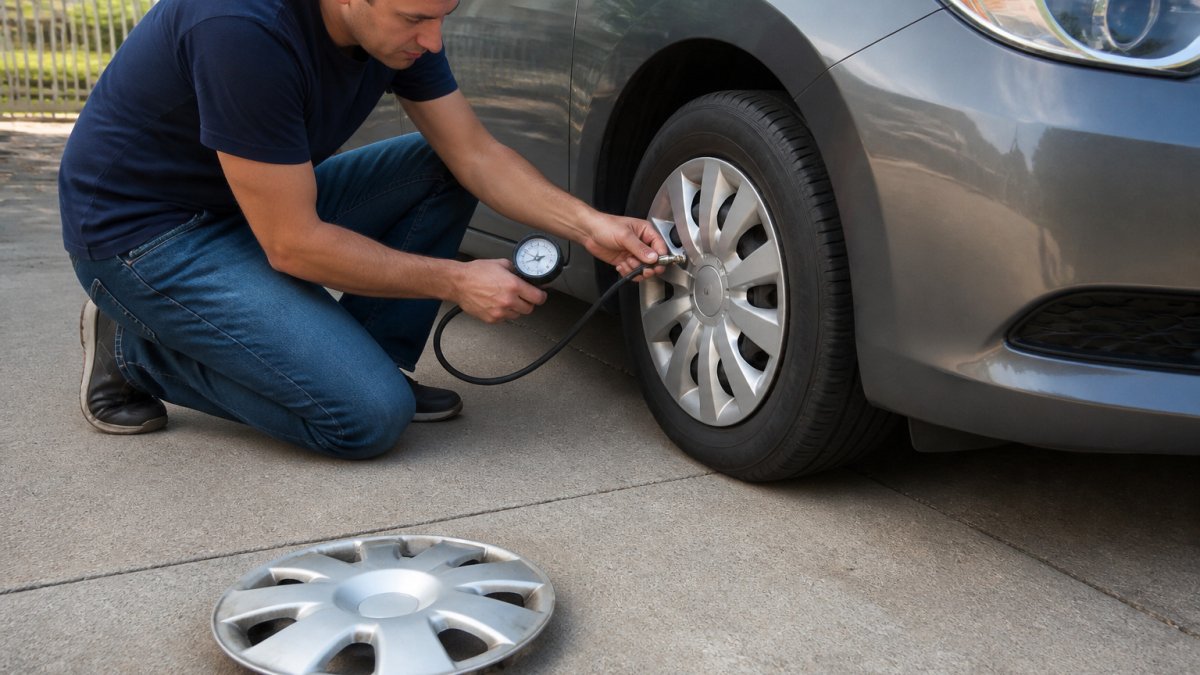
- Check each tire, including the spare if you keep one
- Use a reliable gauge, not just the dashboard display
- Compare readings against the pressure on the driver's door placard
- Recheck after any cover removal or reinstallation
Reaching the Valve Stem Without Removing the Cover
Many owners reach the valve stem through the cover opening. Some covers have a small access hole near the stem, while others need a gap made by the cover's clip design. Use a flexible or angled chuck if the stem sits deep behind the cover edge. Work slowly so you do not crack the cover.
When Removal Is Necessary
Sometimes you must take the cover off. If the stem is fully hidden or the cover blocks the air chuck, remove the cover before inflating. Use a proper center cap removal tool, to release snap-in center caps without scratching the finish. Reinstall the cover firmly once the tire is set.
How to Inflate Tesla Tires With Aero Wheel Covers Installed
Tesla owners often ask whether covers must come off before filling tires. The process depends on the wheel design and the cover fit.
- Park on level ground and let the tires cool.
- Locate the valve stem through the cover opening or gap.
- Attach an angled air chuck to reach the stem.
- Inflate to the pressure listed on the door placard.
- Recheck with a gauge and reinstall the cover.
If the stem cannot be reached, remove the cover rather than forcing the chuck. Forcing it can crack the cover or damage the stem.
Tire Pressure Monitoring System Wheel Covers: Sensor Clearance and Alerts
Many vehicles use a tire pressure monitoring system, or TPMS, with the sensor typically mounted inside the wheel near the valve stem. That placement matters here: the sensor lives on the inside of the wheel, while an aero cover sits on the outside face. The cover cannot read, block, or recalibrate the sensor through the wheel, so a cover by itself does not change the pressure a TPMS reports. What a cover can do is complicate the maintenance that keeps the system accurate.
What the Sensor Actually Senses
A direct TPMS sensor is a small battery-powered unit strapped to the drop center of the wheel or clamped to the valve stem. It measures pressure and temperature inside the tire cavity and broadcasts over radio frequency to a receiver in the vehicle. Because the sensor is sealed inside the tire, no external cover can alter its reading. If your dashboard shows 32 psi, the cover did not create that number, the air in the tire did.
Indirect systems, used on some vehicles, infer pressure from wheel-speed sensors tied to the anti-lock brake system. These systems compare relative rotational speed across wheels. A cover that is loose, unbalanced, or rubbing can change rotational behavior enough to trigger a false warning, which is one of the few legitimate cover-to-TPMS interactions.
Clearance Checks Before You Drive
Before you trust a newly installed cover, confirm three clearances:
- Valve-stem clearance: the stem and its cap should sit clear of the cover's inner surface, with no pressure on the stem body.
- Sensor housing clearance: on stem-mounted sensors, the sensor body sits just inside the rim; a cover that clamps too deep can pinch the stem from the outside.
- Clip and retention clearance: clips should seat in the wheel windows without contacting the stem or the sensor strap.
A cover that presses on the valve stem is the one scenario worth taking seriously. Sustained pressure on a stem can crack the rubber, and a cracked stem leaks, which is a real pressure loss, just not one the cover caused by magic.
Diagnosing a TPMS Light After a Cover Change
If the TPMS light comes on within a few drives of installing covers, work through this order:
- Check all four tires cold with a handheld gauge and compare to the door-jamb placard.
- If one tire is low, inspect that valve stem and cap for damage or a slow leak before touching the cover.
- If pressures are correct, confirm each cover is fully seated and not rubbing.
- If the light persists with correct pressure and secure covers, the issue is likely sensor battery, sensor registration, or a system reset, not the cover.
What Covers Do Not Do to TPMS
Covers do not block radio signals from an in-wheel sensor, do not require sensor reprogramming, and do not change the pressure threshold at which the light triggers. If a shop tells you a cover needs a TPMS relearn, that is a red flag, the cover is outside the system entirely.
Causes of Pressure Changes Besides Wheel Covers
If a tire is losing air after you install covers, the cover is almost never the cause. Pressure changes come from physics, leaks, and maintenance, and knowing the mechanism helps you stop blaming the wrong part.
Temperature: The Biggest Everyday Variable
Tire pressure moves with temperature at roughly 1 psi for every 10°F change in ambient temperature. A tire set to 35 psi on an 80°F afternoon can read near 32 psi on a 50°F morning without leaking a single molecule of air. That is normal behavior, not a defect, and it is the single most common reason owners think something changed overnight.
Driving adds heat, too. A tire that reads 35 psi cold can climb several psi after 30 minutes at highway speed. This is why every manufacturer specifies cold pressure, measured after the vehicle has sat for at least three hours or been driven less than a mile.
Slow Leaks: Where Air Actually Escapes
When pressure drops over days or weeks rather than overnight, suspect a leak. Common sources, roughly in order of frequency:
- Punctures: a nail or screw in the tread can seal at first and weep later.
- Valve cores: a core that is loose or contaminated leaks slowly; a quick tighten with a valve-core tool often fixes it.
- Valve stems: cracked rubber stems, common on older vehicles, leak at the base.
- Bead seating: a wheel that took a hard hit can lose bead seal without visible damage.
- Curb damage: bent wheel lips create slow leaks that are easy to miss.
The standard diagnostic is a soapy-water test: spray the valve, the bead, and the tread, and watch for bubbles. A tire shop can submerge the wheel for a definitive answer.
Valve Caps and Covers
A missing or loose valve cap lets dirt into the core and can allow a slow weep. Caps are not pressure seals on their own, but they protect the primary seal. If your cover hides the stem, check the cap is present and snug every time you check pressure, it is easy to lose one behind a cover and never notice.
Underinflation and Rolling Resistance
Underinflated tires flex more, generate more heat, and increase rolling resistance, which costs fuel or range. Properly inflated tires help fuel economy, and underinflation accelerates tire wear. That is the real efficiency story, not the covers, which cannot change pressure on their own.
A Simple Diagnostic Order
When pressure looks wrong after a cover install, work in this order:
- Recheck cold with a known-good gauge.
- Compare all four tires, one low tire points to a leak; all four low points to temperature.
- Soap-test the suspect valve and bead.
- Only then inspect the cover for stem contact.
Most pressure changes come from temperature, leaks, and valve condition rather than from the covers themselves. The table below summarises the main causes and what to check.
| Cause | Typical effect | What to check |
|---|---|---|
| Temperature | About 1 psi per 10°F change | Compare readings taken cold |
| Punctures | Slow leak over days | Soap-test the tread |
| Loose valve core | Slow leak at the valve | Tighten with a valve-core tool |
| Cracked valve stem | Leak at the stem base | Inspect rubber stem |
| Bead seating | Leak after a hard hit | Soap-test the bead |
| Curb damage | Slow leak from bent lip | Inspect the wheel lip |
| Missing valve cap | Dirt and weep at the core | Confirm cap is present and snug |
Aero Wheel Covers and Electric Vehicle Range
Owners of electric vehicles often buy aero covers to improve efficiency. Results vary with the wheel, the speed, and the test method. Because pressure affects rolling resistance, a test run on a tire that is underinflated can give misleading efficiency numbers.
For a fair comparison, check that all tires have the same pressure in each test, and run tests under similar conditions. At WheelCovers.Com, we recommend keeping notes on pressure, temperature, and speed so you can judge any range change honestly.
Safety Checks and Your Next Step After Installing Covers
After any cover install or removal, do a short safety check before driving:
- Confirm each cover is seated and the clips are fully locked
- Make sure no cover touches the brake caliper or rubs the wheel
- Check tire pressure cold and match the door placard
- Watch the TPMS light for the first few drives
- Listen for rattles or vibration at highway speed
If a cover feels loose or the stem is hard to reach, stop and adjust before continuing. Your next step is simple: check your current pressure, confirm your cover fit, and if you need replacement or compatible covers, browse the WheelCovers.Com catalog. Shop Now to find styles that match your vehicle.
Frequently Asked Questions
Do aero wheel covers affect tire pressure?
Based on the available research, aero wheel covers do not appear to change tire pressure directly. Covers can make the valve stem harder to reach on some wheels, which is an access problem rather than a pressure effect. Pressure itself is set by the air in the tire, so checking it with a gauge at the valve stem is the reliable way to confirm the reading. If a cover blocks access, remove it or use a long-nose gauge and adapter before adding air.
Can you check tire pressure without removing aero wheel covers?
In many cases yes, but it depends on the wheel design. Some covers have a small opening or a removable section that exposes the valve stem, while others require the cover to come off. Use a pressure gauge with a flexible hose or angled head if the stem is recessed. Always check pressure when the tires are cold, since driving warms the air and raises the reading. If you cannot reach the stem safely, remove the cover rather than forcing it.
Can you inflate a tire with an aero wheel cover installed?
Some owners inflate their tires with the covers on, using a flexible air hose and an angled chuck. Others find the cover blocks the chuck and must remove it first. Avoid pressing hard against the cover, because it can crack or pop off its clips. Check the pressure after inflating, and confirm the cover seats properly once you finish. Removing the cover for this step is the safest approach if access is tight.
Do aero wheel covers improve electric vehicle range?
Wheel covers are aerodynamic accessories that can affect efficiency, though results vary. However, range tests can be skewed by tire pressure, so a difference should not be attributed to covers alone unless pressure was held constant. Keep your tires at the recommended cold pressure during any comparison. Results will vary by vehicle, wheel, tire combination, and driving conditions.
