

Posted by Editorial Team on Oct 26, 2026
Which Wheel Covers Work Best for High-Mileage Fleet Trucks?
Last Updated: October 25, 2026
Quick Summary
Wheel covers high mileage fleet trucks improve fuel efficiency by 2-3% when properly fitted and retained, with aerodynamic designs reducing drag around wheel wells at highway speeds. Stainless steel center-cap fastened covers deliver the best lifecycle value for long-haul operations, while quick-release designs suit fleets requiring frequent wheel service.
- Aerodynamic wheel covers can save 300-800 gallons annually per truck depending on efficiency gains and mileage
- Stainless steel covers last the truck's operational life; canvas covers require replacement every 2-3 years
- Fitment must match exact wheel diameter, axle position, and hub configuration or covers will rattle loose and fail
- Center-cap fasteners with multiple lug-nut connections offer superior retention; quick-release mechanisms need weekly inspection
- Payback period ranges from under one year to two years depending on purchase cost, fuel price, and efficiency gains
Table of Contents
- What Makes Wheel Covers Essential for High-Mileage Fleet Trucks
- How Aerodynamic Wheel Covers for Trucks Reduce Fuel Consumption
- Comparing Wheel Cover Styles and Materials for Fleet Operations
- Understanding Truck Wheel Cover Fitment for Your Fleet
- Fleet Truck Wheel Cover Maintenance and Inspection
- Ensuring Truck Wheel Cover Retention During Long-Haul Routes
- Lifecycle Costs and Fuel Savings for Fleet Operators
- Selecting the Right Wheel Covers for Your Fleet's Operating Conditions
- Finding Your Fleet's Ideal Wheel Cover Solution
- Frequently Asked Questions
What Makes Wheel Covers Essential for High-Mileage Fleet Trucks
For fleet operators running high-mileage operations, wheel covers high mileage fleet trucks aren't just about appearance, they're a measurable efficiency investment. A set of aerodynamic wheel covers can improve vehicle efficiency by 3.4% across various test speeds, according to WheelCovers.com analysis of aerodynamic efficiency. That translates to real fuel savings over thousands of miles annually.
The challenge fleet managers face is straightforward: high-mileage trucks accumulate wear, and exposed wheel components create unnecessary aerodynamic drag. The difference comes down to understanding which cover styles actually perform, how they fit your specific axle configuration, and whether they'll survive long-haul routes without failing.
Most guides treat wheel covers as a simple purchase. The reality is more nuanced. Your steer wheels have different requirements than drive or trailer wheels. Quick-release designs solve some problems but create others. Material choice determines durability, maintenance burden, and long-term cost per mile.
How Aerodynamic Wheel Covers for Trucks Reduce Fuel Consumption
Aerodynamic wheel covers for trucks work by reducing drag around the wheel well and tire sidewall, areas that create significant air turbulence at highway speeds. The principle is simple: smoother airflow means less engine work to maintain speed.
Real-world testing shows measurable results. A test of Aero Tech Caps wheel covers reportedly showed 2.5% fuel savings, according to Transport Topics fleet efficiency testing. That's not a theoretical number, it's what one product achieved under tested conditions. FlowBelow's quick-release wheel-cover kits report approximately 0.93% efficiency gains, while some manufacturers claim up to 2-3% depending on configuration and driving conditions.
The variation matters. A 2.5% improvement on a truck averaging 6 miles per gallon running 120,000 miles annually saves roughly 800 gallons per year, a significant operational cost reduction. A 0.93% improvement saves closer to 300 gallons. Over a five-year fleet lifecycle, that difference compounds.
What most operators miss is that aerodynamic efficiency depends on complete coverage. Partial installations, covering only the drive axle, for example, deliver partial results. MVTS used its certified testing process to assess aerodynamic wheel caps and mud flaps for total fuel efficiency, demonstrating that integrated approaches outperform isolated solutions, according to Work Truck Online fleet testing methodology.
Comparing Wheel Cover Styles and Materials for Fleet Operations
Not all wheel covers deliver the same durability or performance. Fleet operators need to evaluate three primary dimensions: material, design, and fitment compatibility.
Stainless Steel vs. Canvas Covers
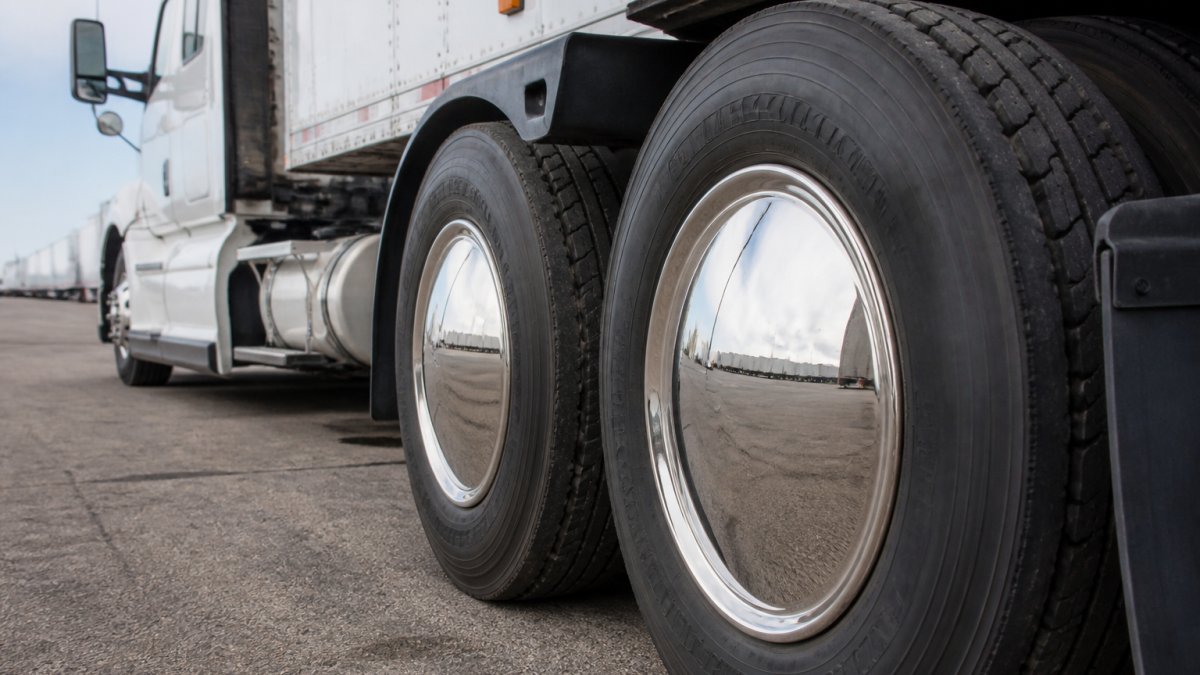
Stainless steel covers offer maximum durability and require minimal maintenance. RST-Steel recommends stainless-steel covers sized for 22.5-inch or 19.5-inch rims as offering the strongest long-term value for most heavy-duty trucks. These withstand road salt, extreme temperatures, and repeated impact from debris without corrosion or degradation.
Canvas covers cost less upfront but demand regular inspection and replacement. They're lighter, reducing unsprung weight slightly, but they absorb moisture, can tear during high-speed travel, and typically need replacement every 2-3 years depending on climate and route conditions.
For high-mileage operations, stainless steel wins on lifecycle cost despite higher initial expense. A set of stainless covers installed once lasts the truck's operational life. Canvas requires budgeting for recurring replacement and labor.
Dome Covers and Low-Profile Designs
Dome covers sit higher above the wheel, creating more aerodynamic surface area but also more exposure to wind forces and road debris. They're visually prominent and perform well on steer wheels where they're less likely to encounter curbs or obstacles.
Low-profile designs hug the wheel more closely, offering better aerodynamic performance on drive and trailer axles but requiring precise fitment. A low-profile cover that doesn't seat properly can rattle, crack, or detach during long-haul routes.
Understanding Truck Wheel Cover Fitment for Your Fleet
Fitment is where most fleet purchasing decisions fail. A cover that doesn't match your specific wheel, axle, and truck configuration won't stay on, won't seal properly, and won't deliver the aerodynamic benefits you're paying for. The fastest way to reduce purchasing errors is to build a one-page fitment matrix before you request a single quote.
Build a Fitment Matrix Before You Buy
A working matrix has five columns: wheel diameter, wheel type (steel or aluminum), axle position (steer, drive, trailer), truck or trailer make/model year range, and cover style approved for that row. Populate it from the placard inside the driver's door jamb and from the wheel stamping, not from memory. Most heavy-duty tractors run 22.5-inch wheels, while many medium-duty and some trailer applications use 19.5-inch wheels; a cover sized for one will not seat reliably on the other. Offset and hub-piloted versus stud-piloted mounting also change which center-cap and fastener design will clear the hub.
| Axle position | Typical wheel size | Retention priority | Cover style that fits |
|---|---|---|---|
| Steer | 22.5 in. | High, curb and lateral loads | Center-cap with multi-lug fasteners |
| Drive | 22.5 in. | Medium, torque and vibration | Low-profile aero, center-cap or quick-release |
| Trailer | 22.5 in. or 19.5 in. | Medium, least stress, most aero benefit | Low-profile aero, quick-release |
Treat the table as a starting template, then confirm each row against the cover manufacturer's published fitment chart for your exact wheel part number. A cover that lists "22.5-inch" broadly may still not clear a specific hub or hand-hole pattern.
Steer Wheels vs. Drive and Trailer Wheels
Steer wheels operate at different speeds and angles than drive wheels. They encounter sharper turns, higher lateral forces, and more exposure to curbs and obstacles. Steer wheel covers need aggressive retention, typically center-cap designs with multiple lug-nut fasteners.
Drive wheels, which handle engine torque transmission, spin at constant speeds and rarely turn sharply. They tolerate lower-profile, aerodynamic designs. Trailer wheels experience the least stress and can support the most aggressive aerodynamic shapes.
Mixing cover styles across axles is common but counterproductive. A fleet running dome covers on steer wheels and low-profile designs on drive wheels creates visual inconsistency and maintenance complexity. Standardization, one cover style across the entire fleet, simplifies inventory, training, and replacement logistics.
Quick-Release Kits for Tractor and Trailer Configurations
Quick-release designs solve a real problem: wheel access during pre-trip inspections and tire maintenance. FlowBelow describes its tractor and trailer kits as aerodynamic, quick-release wheel-cover kits, allowing technicians to remove covers without tools in under two minutes.
The trade-off is retention. Quick-release mechanisms rely on spring tension or friction clips. At highway speeds over rough roads, they're more prone to vibration-induced loosening than permanent installations. Regular inspection is mandatory. A cover that detaches at 65 mph becomes road debris and a safety hazard.
For fleets with frequent tire service or blowout-prone routes, quick-release makes sense. For long-haul operations with minimal wheel access, permanent installations deliver better security and lower maintenance burden.
Standardizing a Mixed Fleet
If your fleet runs more than one tractor or trailer model, standardize by axle position rather than by truck. Pick one approved cover per axle position, confirm it fits every wheel part number in that position, and record the part number in your maintenance system. When a new tractor or trailer enters the fleet, the fitment matrix tells you immediately whether it can take the standard cover or needs an exception. This single step prevents the most common failure mode: a well-intentioned buyer ordering one "universal" cover that fits half the fleet and rattles loose on the other half.
Fleet Truck Wheel Cover Maintenance and Inspection
High-mileage operation demands proactive maintenance. Wheel covers accumulate road salt, brake dust, and debris that corrode fasteners and degrade seals.
Monthly inspections should check:
- Fastener tightness (lug nuts, center caps, mounting clips)
- Visible cracks or deformation
- Seal integrity around edges
- Debris accumulation in wheel wells
Stainless steel covers need quarterly cleaning with mild detergent to prevent salt buildup. Canvas covers need monthly inspection for tears or moisture intrusion. Quick-release mechanisms need testing to ensure clips engage fully.
Most fleet failures happen because inspection becomes irregular. When a cover detaches, the impact damages the wheel, hub, or brake components, turning a $300 cover maintenance item into a $3,000 repair. Preventive inspection costs nothing compared to reactive replacement.
Ensuring Truck Wheel Cover Retention During Long-Haul Routes
Retention failure during long-haul routes creates three problems: lost efficiency (no aerodynamic benefit), safety risk (detached covers become road hazards), and secondary damage (impact to wheels, hubs, or adjacent components).
Retention depends on three factors: fastener design, installation quality, and cover fit tolerance.
Fastener design matters most. Center-cap designs with multiple lug-nut fasteners offer superior retention. Single-clip or friction-fit designs are convenient but inherently less secure. For high-mileage fleets, center-cap fastening is non-negotiable.
Installation quality determines whether fasteners remain tight. Improper installation, over-tightening, cross-threading, or misalignment, causes fasteners to loosen within hours of highway driving. Professional installation or detailed technician training is essential.
Cover fit tolerance is the third variable. A cover sized for 22.5-inch wheels won't fit 19.5-inch wheels reliably. Mixing wheel sizes across a fleet requires matching cover inventory precisely. This is where many fleets stumble: they assume one cover fits all wheels, then experience high failure rates.
Lifecycle Costs and Fuel Savings for Fleet Operators
Fleet economics require comparing total cost of ownership, not just purchase price. The problem with most wheel-cover payback claims is that they hide the assumptions. Below is a transparent model you can run with your own numbers, followed by the qualitative costs that never show up in a fuel-savings pitch.
A Payback Model You Can Audit
The calculation has four inputs: annual miles per truck, baseline fuel economy in miles per gallon, your blended diesel price per gallon, and the efficiency improvement you are willing to credit. The formula is:
Annual gallons saved = (annual miles ÷ baseline MPG) × efficiency improvement Annual dollar savings = annual gallons saved × fuel price per gallon
Worked example with clearly stated assumptions: 120,000 miles per year, 6.0 MPG baseline, an assumed efficiency improvement of 2.0%, and a diesel price of $4.00 per gallon.
- Baseline annual gallons: 120,000 ÷ 6.0 = 20,000 gallons
- Gallons saved at 2.0%: 20,000 × 0.02 = 400 gallons
- Annual savings: 400 × $4.00 = $1,600 per truck
Change any input and the answer moves. At 1.0% improvement the same truck saves about 200 gallons, or $800 per year. At 3.0% it saves about 600 gallons, or $2,400 per year. That is why you should insist on a tested efficiency figure for the specific product and configuration, and why you should not credit a manufacturer's best-case number as your planning number.
Purchase and Operating Costs Beyond Fuel
Fuel is only one line. The total cost of ownership also includes:
- Purchase price per set, quoted per truck
- Installation labor (professional installation or technician time)
- Replacement parts, clips, fasteners, center caps, which wear independently of the cover
- Cleaning labor and consumables over the service life
- Replacement frequency, which drives both parts and labor
- Downtime if a cover fails and damages a wheel, hub, or brake component
Stainless steel covers generally carry a higher purchase price but a longer service life and lower cleaning burden. Canvas covers cost less upfront but absorb moisture, can tear at speed, and typically need replacement every 2-3 years depending on climate and route. The lifecycle comparison only becomes meaningful when you plug your own purchase quotes, labor rate, and replacement interval into the model above.
Payback in Plain Terms
Payback period = total installed cost per truck ÷ annual fuel savings per truck. Using the worked example's $1,600 annual savings, a set that costs $1,200 installed pays back in under a year; a set that costs $1,500 installed pays back in about eleven months. If your efficiency assumption drops to 1.0%, those paybacks stretch to roughly 18 months and 22 months respectively. Run the division with your own quotes rather than accepting a ratio from any article, including this one.
What the Model Cannot Tell You
The fuel-savings model does not capture retention risk. A cover that detaches at highway speed becomes road debris and a safety hazard, and the resulting wheel or hub damage can dwarf the fuel savings. It also does not capture inspection labor, which rises with quick-release designs that need regular fastener checks. Treat the payback calculation as the first filter and the durability and inspection discussion as the second, a cover that pays back on paper but fails in service is not a saving.
Selecting the Right Wheel Covers for Your Fleet's Operating Conditions
Operating conditions determine which cover style will actually work for your fleet.
Long-haul trucking (70%+ highway miles): Stainless steel, center-cap fastened covers. Retention and durability matter more than convenience. Quick-release designs are unnecessary.
Regional or mixed-duty (40-60% highway): Quick-release stainless steel. Frequent wheel service justifies the retention trade-off. Inspect fasteners weekly.
Urban or short-haul (less than 40% highway): Canvas or low-profile designs acceptable. Aerodynamic efficiency gains are lower, so cost control becomes the priority. Replacement every 2-3 years is manageable.
Fleet standardization across operating profiles reduces complexity. If you run 30 long-haul trucks and 20 regional units, running the same cover standard across both simplifies inventory and training.
Finding Your Fleet's Ideal Wheel Cover Solution
The best wheel covers high mileage fleet trucks balance three priorities: aerodynamic efficiency, retention reliability, and maintenance burden.
Start with your fuel baseline. Calculate your fleet's current fuel consumption per mile. A 2-3% efficiency improvement is real money, run the numbers for your specific mileage and fuel costs. If you're operating 50 trucks at 120,000 miles annually, that improvement justifies a significant investment.
Next, audit your wheel access requirements. If your fleet requires frequent tire service, quick-release designs solve a genuine problem. If wheels are accessed only for seasonal maintenance, permanent installations are more reliable.
Finally, evaluate your maintenance capacity. Stainless steel covers demand less oversight than canvas, but they require correct installation and periodic fastener checking. Canvas covers demand more frequent inspection but simpler replacement.
WheelCovers.Com carries a broad range of wheel cover styles, materials, and fitments. Our nearly 50 years of experience and inventory of over 1 million parts mean we can match your specific truck model, wheel size, and axle configuration with covers designed to stay in place and deliver measurable efficiency gains. Whether you're standardizing across a large fleet or replacing damaged covers on individual units, we help you find the right fit without the complexity of salvage yards or generic suppliers.
Frequently Asked Questions
How much can aerodynamic wheel covers improve fuel economy for fleet trucks?
Reported fuel savings from aerodynamic wheel covers range from approximately 0.93% to 3.4% depending on the product, vehicle configuration, and operating conditions. A test of Aero Tech Caps showed 2.5% fuel savings. Because savings vary by design and real-world factors like speed and route, fleet operators should verify performance claims with the manufacturer and compare lifecycle payback against the total investment.
What wheel sizes do truck wheel cover fitment options typically support?
Stainless-steel covers are commonly sized for 22.5-inch or 19.5-inch rims, which are standard on heavy-duty trucks. Fitment depends on your truck's axle configuration: steer wheels, drive wheels, and trailer wheels may require different cover styles. Quick-release kits are available for tractor and trailer configurations to simplify installation and removal during maintenance or inspection.
Why is fleet truck wheel cover retention important during long-haul routes?
Wheel covers must stay secure during highway speeds and varying road conditions to prevent loss and maintain aerodynamic efficiency. Poor retention can result in covers detaching, creating safety hazards and reducing the fuel-saving benefits. Proper installation, regular pre-trip inspection, and quality retention systems ensure covers remain in place and deliver consistent performance across your fleet's annual mileage.
How do I check wheel covers for fit and retention during fleet maintenance?
Include wheel cover inspection in your pre-trip routine: visually confirm covers are seated properly on each wheel, check that lug nuts are tight and seals are intact, and ensure no covers are loose or damaged. For steer wheels, drive wheels, and trailer wheels, verify each is the correct style for its position. Quick-release designs allow faster removal for wheel access and reinspection without tools.
The real opportunity for fleet operators isn't choosing between options, it's moving from guessing to measuring. Start with a pilot installation on a subset of your fleet. Track fuel consumption before and after. Let the data guide your full-fleet decision. WheelCovers.Com can help you source the right covers, understand fitment requirements, and implement a standardized approach that delivers consistent results across your operation.
