

Oct 07, 2026
Best Budget-Friendly Wheel Covers 2026: Top Picks
Table of Contents
- Why Budget Wheel Covers Are Worth It in 2026
- Quick Comparison: Budget Wheel Covers at a Glance
- 16 Inch Wheel Covers: The Most Common Budget-Friendly Size
- Durable Wheel Cover Materials: Plastic vs. Metal
- Wheel Cover Styles for Different Vehicles
- How to Measure Wheel Size and Ensure Fitment
- Installation and Maintenance Tips for Long-Lasting Covers
- What Competitors Miss: Durability, Safety, and Environmental Impact
- Conclusion: Choosing the Best Budget-Friendly Wheel Covers for 2026
- Frequently Asked Questions
Last Updated: October 7, 2026
Why Budget Wheel Covers Are Worth It in 2026
A set of aero wheel covers can improve vehicle efficiency by 3.4% across various test speeds, according to Car and Driver's efficiency testing on Tesla Model 3 aero wheel covers. That single figure explains why the best budget friendly wheel covers 2026 has become one of the most searched phrases among EV owners and daily commuters alike. At WheelCovers.Com, we've spent nearly 50 years helping drivers find direct-fit replacements without paying dealership prices.
Here's the reality most buyers miss: a lost hubcap doesn't have to mean a trip to the dealer. Aftermarket covers deliver the same visual result for a fraction of the cost.
This guide breaks down sizes, materials, styles, and fitment so you can buy once and buy right.
Quick Comparison: Budget Wheel Covers at a Glance
Budget wheel covers fall into three broad categories, and each one suits a different driver. The table below summarizes how they compare on cost, durability, and best use case.
| Type | Material | Durability | Best For |
|---|---|---|---|
| Standard hubcaps | ABS plastic | Moderate | Daily drivers, older sedans |
| Wheel skins | ABS plastic | Moderate | Alloy-look upgrades on steel wheels |
| Wheel simulators | Chrome-plated plastic | High | Trucks, vans, fleet vehicles |
Plastic dominates the budget tier because plastic injection molding keeps production costs low without sacrificing fit. Metal covers resist curb rash better, but they dent rather than flex. For most drivers replacing a single lost cap, plastic is the practical answer.
16 Inch Wheel Covers: The Most Common Budget-Friendly Size
16 inch wheel covers represent the single largest slice of the replacement market. They fit the widest range of sedans, compact SUVs, and older domestic models, which means more inventory and better prices.
Measure your rim diameter before ordering. A 16-inch cover fits a 16-inch wheel, and nothing else. Hubcap sizing is not interchangeable, and a cover that is even half an inch off will not seat properly.
Research and Markets' Wheel Cover Global Market Insights Report projects continued growth in the wheel cover industry through 2030, driven largely by replacement demand rather than new-vehicle fitment. That's good news for budget shoppers: competition keeps prices low.
Durable Wheel Cover Materials: Plastic vs. Metal
Durable wheel cover materials come down to one trade-off: flexibility versus longevity. But the trade-off only makes sense once you understand how each material actually fails. A cover rarely dies from a single impact, it dies from UV exposure, thermal cycling, and vibration fatigue acting together over 12 to 24 months.
Here is how the four common budget materials behave in real ownership:
- ABS plastic: The industry standard for budget covers. ABS flexes on curb contact and snaps back, resists road salt, and holds color reasonably well when it includes UV stabilizers. Its weakness is heat: sustained pavement temperatures in summer can soften a thin ABS cover enough that it deforms at the retention clips, which is the number-one cause of a cover working loose at highway speed.
- Chrome-plated plastic: An ABS or polypropylene core with a vacuum-metallized or electroplated finish. The gloss looks closest to polished aluminum, but the plating is a thin layer. Once a rock chip or curb scrape breaches it, moisture wicks under the plating and the finish lifts in sheets. Heat resistance is better than bare ABS, but the cosmetic lifespan is often shorter.
- Steel: The most impact-resistant option and the one fleet operators still specify for vans and trucks. Steel resists curb rash better than any plastic, but it bends rather than flexes, so a hard hit leaves a permanent dent. It is also the heaviest option and the only one that rusts once the coating chips, a real concern in states that use road salt.
- Aluminum: Light, naturally corrosion-resistant, and the closest to a true alloy-wheel look. Aluminum dents easily and costs more than the plastic tier, which puts it at the edge of what most shoppers consider "budget."
The failure timeline most buyers never see
A common pattern reported in owner forums is a predictable three-stage decline for low-grade plastic covers:
- Months 1-6: Cover looks new. Retention clips still hold firm tension.
- Months 6-12: UV exposure causes slight yellowing or chalkiness on the face. Clips begin to lose spring tension from thermal cycling.
- Months 12-24: Hairline cracks appear at stress points near the clips or valve-stem cutout. A cover that has reached this stage can separate at highway speed without warning.
Quality ABS covers with UV stabilizers and metal-reinforced clips typically stretch that timeline well past 24 months. The difference is not the brand name, it is the material grade and the clip design.
Cost-per-year math
A budget set that needs replacing every 12 to 18 months usually costs more over three years than a mid-grade set that lasts the full period. Before buying, check two things: whether the listing specifies UV-stabilized ABS (not just "ABS"), and whether the retention system uses metal spring clips or molded plastic tabs. Molded tabs are the single most common failure point on many sets.
The long-term durability angle most guides skip
The durability question that almost no buying guide answers is how budget covers handle a full year of real-world stress: summer pavement heat, winter road salt, freeze-thaw cycles, and continuous high-speed vibration. The practical answer is that material grade and clip design matter far more than price tier. A UV-stabilized ABS cover with metal clips will typically outlast a chrome-plated cover with molded tabs, even when the chrome cover costs more up front.
Wheel Cover Styles for Different Vehicles
Wheel cover styles for different vehicles range from factory-matched originals to aggressive aftermarket designs. The right pick depends on what your vehicle already looks like.
Radial spokes suit sedans and crossovers. Five-spoke and multi-spoke patterns mimic alloy wheels convincingly. Chrome wheel simulators belong on trucks and vans, where they replicate the look of polished dual wheels.
For newer electric vehicles, Uberturbine-style covers have become one of the highest-value aesthetic upgrades, according to Yeslak's 2026 Tesla Model Y Juniper modification guide. The look is closer to a performance trim without the performance trim price.
Amazon product listings show a growing wave of 20-inch covers molded specifically to match 2025-2026 Tesla Model Y Juniper specifications, a sign that aftermarket makers are chasing 1:1 original molding rather than universal fitment.
How to Measure Wheel Size and Ensure Fitment
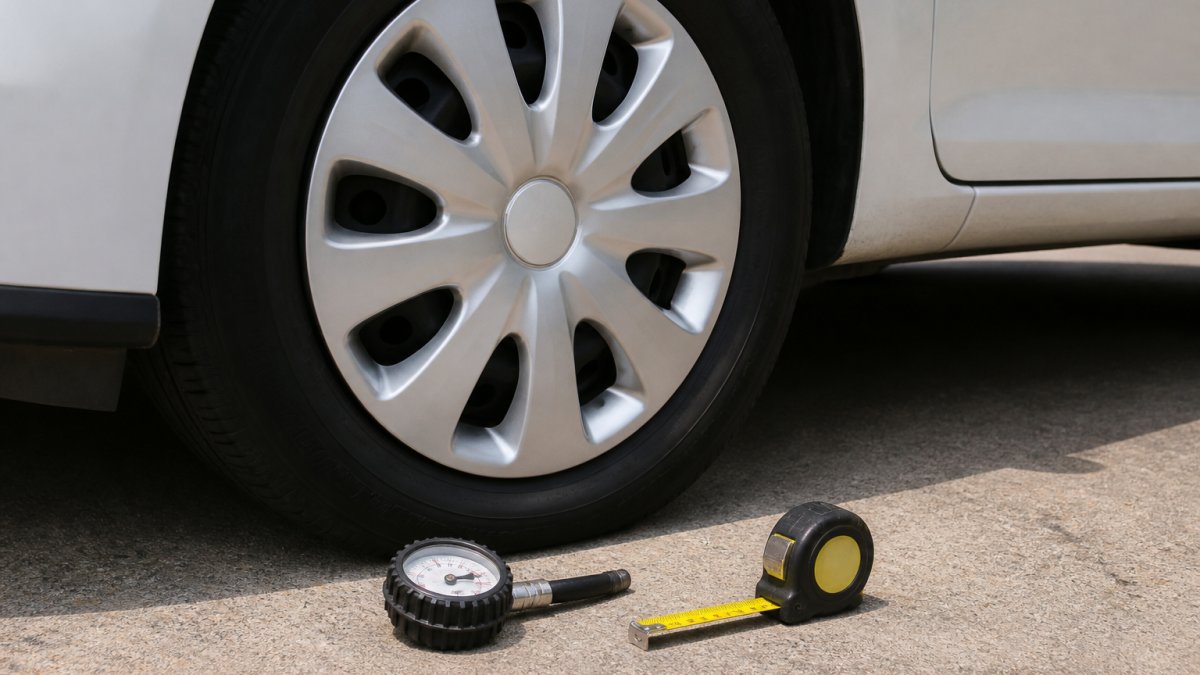
Wheel size is measured across the rim's bead seat diameter, not the outer edge of the tire. Get this wrong and no amount of installation effort will help.
What You'll Need:
- Tape measure or ruler
- Your vehicle's year, make, and model
- A photo of your current wheel
Step 1: Find the rim diameter [Time: 2 minutes] Measure from one inner bead seat straight across to the opposite bead seat. Round to the nearest inch.
Step 2: Check the sidewall [Time: 1 minute] Your tire's sidewall stamp shows the wheel diameter. A "225/60R16" tire sits on a 16-inch wheel.
Step 3: Confirm bolt pattern and center caps [Time: 2 minutes] Count the lug nuts and note the spacing. Some covers require specific center caps or trim rings.
Expected Result: You'll have an exact size, and the cover will seat with firm, even tension around the rim.
Installation and Maintenance Tips for Long-Lasting Covers
Snap-on installation takes minutes, but how you install and maintain the covers determines whether they last one season or five. This section covers the installation sequence, the maintenance routine, and the two safety questions most budget guides ignore: wheel balance and brake cooling.
Installation sequence that prevents vibration
- Clean the rim. Road grit trapped between the cover and the rim is the most common cause of a cover that will not seat evenly. Wipe the rim edge with a damp cloth and let it dry.
- Align the valve stem cutout first. Every cover has a notch or hole for the valve stem. Seat that point before pressing the rest of the cover on.
- Press around the circumference in a star pattern. Do not push one side all the way down before moving to the opposite side. Even pressure seats the retention clips without bending the cover face.
- Confirm tension by hand. Grip the cover edge and try to rock it. A properly seated cover moves less than a quarter inch. If it rocks more, one or more clips are not engaged.
- Recheck after the first 100 miles. New covers settle as the clips conform to the rim. A quick re-press after the first week catches most early loosening.
Maintenance routine
- Wash with mild soap and water; skip abrasive pads and stiff brushes.
- Apply a plastic-safe protectant to guard against UV fading, especially on ABS covers.
- Avoid pressure washing directly at the rim edge, high-pressure water can force grit under the clips.
- Recheck installation tension after the first 100 miles and again at the start of each season.
- Inspect the retention clips at every tire rotation. A cracked clip is the earliest warning sign of a cover about to fail.
Wheel balance and brake cooling
Wheel balance is unaffected by covers in most cases because a cover is light and sits close to the wheel center. But a cover that traps road debris or sits unevenly can create a vibration that feels like a balance problem. If you feel a shimmy after installation, reseat the cover before paying for a wheel balance.
Brake cooling is the more serious question. Solid-disc covers that block the airflow path to the brake rotor can reduce cooling on vehicles that see heavy braking, towing, mountain driving, or repeated hard stops. Most factory-style covers have vent openings designed for this reason. If you drive a performance vehicle or tow regularly, choose a cover with visible vent slots rather than a solid face, and never modify a cover by sealing its vents.
DIY repair and restoration
Most budget covers can be repaired rather than replaced, which is the angle almost no buying guide covers. Scuffed or faded covers are usually salvageable:
- Light scuffs: Wet-sand with 1500- to 2000-grit paper, then polish with a plastic compound.
- Faded or chalky ABS: Clean thoroughly, then apply a plastic restorer or a thin coat of plastic-compatible paint. Avoid standard spray paint, which can craze the ABS surface.
- Chrome-plated covers with lifted plating: Once plating lifts, repair is rarely worth the effort. Replacement is the practical choice.
- Cracked retention clips: A cracked clip cannot be reliably repaired. Replace the cover before it separates at speed.
A touch-up kit and an afternoon of work can extend a set of budget covers by a year or more, which is the single highest-return maintenance task in this category.
What Competitors Miss: Durability, Safety, and Environmental Impact
Most buying guides stop at appearance and price. That's a mistake, because three factors separate a good purchase from a regrettable one.
Long-term durability. Heat resistance and material grade determine how a cover holds up through summer pavement and winter road salt. Cheap plastics yellow and crack; quality ABS holds its color and shape.
Safety and compliance. A cover that separates at speed is a road hazard. Secure locking mechanisms and proper installation tension are not optional features, they're the difference between a safe upgrade and a liability.
Environmental impact. Cheap plastics that fail within a year end up in landfills. Buying a durable set once beats replacing a disposable set three times.
Automotive community discussion on Facebook documented a 2026 Tesla Model Y owner who swapped factory covers for aftermarket Uberturbine-style covers and reported a visual result closer to the Performance trim at a fraction of the cost. That's the value case in one sentence: the right budget cover closes most of the gap between trims.
Conclusion: Choosing the Best Budget-Friendly Wheel Covers for 2026
Finding the best budget friendly wheel covers 2026 comes down to three checks: correct rim diameter, quality material grade, and secure installation. Get those right and you'll match the factory look without the factory price.
WheelCovers.Com stocks over 1 million hubcaps, wheel covers, wheel skins, and trim rings, with nationwide shipping and an easy online ordering process that skips the salvage yard entirely. Our family-owned team has served vehicle owners since 1979.
Shop Now and find the exact fit for your vehicle, delivered to your door.
Frequently Asked Questions
What is the most durable material for wheel covers?
ABS plastic and aluminum are durable materials for budget wheel covers. ABS plastic offers good impact resistance and weatherproofing at a low cost, while aluminum provides better heat resistance and a premium look. According to industry research, plastic injection molding allows for complex designs and consistent fitment. For budget-conscious buyers, high-grade ABS plastic covers offer good longevity with proper care, and aluminum covers can last even longer.
How do I find the right wheel cover size for my vehicle?
Measure your wheel's rim diameter in inches, usually stamped on the tire sidewall (e.g., 16 inch). Wheel covers must match this diameter exactly. For a 16 inch wheel, you need 16 inch wheel covers. Also check the wheel's retention type (snap-on or bolt-on) and note any center cap requirements. Universal fitment covers may work but often lack a secure grip. For best results, use your vehicle's year, make, and model to find direct-fit covers.
Are universal wheel covers a good fit?
Universal wheel covers can fit multiple vehicles but often sacrifice secure fitment and durability. They rely on adjustable tension rings that may loosen over time, leading to poor performance or loss. Direct-fit covers, designed for specific models, offer better grip and a cleaner look. If you choose universal, look for models with a locking mechanism or enhanced installation tension. For daily driving, direct-fit covers are worth the slight extra cost.
How can I keep wheel covers from falling off?
To keep wheel covers secure, ensure they are the correct size for your rim and use covers with a strong retention system, such as snap-on clips or bolt-on rings. Clean the wheel surface before installation to remove debris. Check the covers periodically for looseness, especially after hitting potholes or curbs. Adding a small amount of silicone adhesive to the clips can improve grip, but avoid permanent adhesives if you need to remove them for tire changes.