

Posted by Editorial Team on Oct 28, 2026
Best Aftermarket Wheel Covers for Winter Driving Guide
Last Updated: October 28, 2026
Quick Summary
The best aftermarket wheel covers for winter driving are full hubcaps or trim rings sized to the exact wheel diameter and bolt pattern, with secure retention clips and a salt-resistant finish. Choose a design with drain paths so meltwater can escape, and check the clips at every seasonal change.
- Confirm the wheel diameter across the rim and the bolt pattern before buying.
- Press the cover on by hand; it should not spin or wobble.
- Recheck clips after the first 50 to 100 miles, since they can settle.
- Clear packed snow after storms to prevent it from refreezing under the cover.
- Remove covers at the end of the salt season, clean them, and let them dry fully.
Table of Contents
- Why Winter Changes the Wheel Cover Decision
- Wheel Cover Terms: Hubcaps, Wheel Skins, Simulators and Trim Rings
- Wheel Cover Size Guide: Matching Diameter and Bolt Pattern
- Wheel Covers for Steel Wheels in Cold Weather
- Wheel Cover Retention Clips and Secure Fit
- Wheel Covers for Winter Tires and Tire Clearance
- Snow, Ice, Road Salt and Corrosion: What Covers Can and Cannot Do
- Best Aftermarket Wheel Covers for Winter Driving: Picking by Use Case
- Booking Your Winter Wheel Cover Order at WheelCovers.Com
- Frequently Asked Questions
Why Winter Changes the Wheel Cover Decision
Winter is the season when wheel covers earn their keep, and also when they fail most often. Road salt, slush, and freeze-thaw cycles work on every exposed surface of a wheel, and the cover sits right in that path. WheelCovers.Com has spent nearly 50 years supplying wheel covers, hubcaps, and trim rings. The answer depends on the material, the fit, and how you use it.
Here is the core tension. A cover that looks sharp in July can trap water and grit against the wheel by February. Shiny finishes show corrosion quickly, and a loose cover can rattle, shed, or work its way off at speed. Winter driving adds stress that summer driving does not.
Look for covers that fit the wheel diameter and bolt pattern exactly, use a secure retention method, and have a finish that handles salt.
Wheel Cover Terms: Hubcaps, Wheel Skins, Simulators and Trim Rings
A hubcap, wheel cover, wheel skin, wheel simulator, and trim ring are terms used for wheel accessories.
Knowing the difference matters in winter. Full hubcaps cover more of the wheel and trap more water and salt, while skins and trim rings expose more of the wheel to road spray. Choose the form that matches your wheel type and how much exposure you can accept.
Wheel Cover Size Guide: Matching Diameter and Bolt Pattern
Size is the first thing to check. Wheel covers are sized by diameter, and the cover must match the diameter of the steel wheel.
Check the bolt pattern too. Your vehicle's owner manual, the tire placard, or the wheel itself lists this information. Measure the wheel diameter across the rim, not the tire.
Check the fitment details before you buy.
Wheel Covers for Steel Wheels in Cold Weather
Steel wheels are the most common home for winter covers, which is why steel-wheel covers dominate the category. Steel rusts when exposed to salt and moisture, so the cover's job is partly to shield the wheel face from that exposure.
Look for covers with a durable outer finish and a backing that resists moisture. Plastic covers handle cold temperatures without cracking, while cheap chrome-look finishes may flake or blister after one or two salted seasons. A simple check: run your thumb over the finish in a store or product photo. Rough edges and thin coating are warning signs.
Also consider how the cover interacts with the wheel. A cover that holds water against the wheel face can speed corrosion, so drainage matters. Some drivers remove covers during the worst salt season and reinstall them in spring.
Wheel Cover Retention Clips and Secure Fit
Retention is where many winter problems start. A cover that clips on loosely will vibrate loose on rough roads, and in freezing weather the clips can stiffen and crack. Good retention uses rim clips or lug-nut-mounted fasteners, and the best designs grip the rim edge firmly enough to hold through potholes.
Test the fit before you drive. Press the cover onto the wheel and turn it by hand. It should not spin freely or wobble. After the first 50 to 100 miles, recheck the clips, since they can settle. If a cover comes off at speed, stop and inspect the clips and rim contact point before you replace it.
Retention problems cause most winter wheel cover failures, so check these points before and after installation.
| Check | When | What to look for |
|---|---|---|
| Hand test | Before driving | Cover should not spin or wobble |
| Clip recheck | After first 50-100 miles | Clips may settle and loosen |
| Clip inspection | Each seasonal change | Stiff or cracked clips need replacing |
| Rattle or vibration | At speed | Sign the cover has shifted or trapped ice |
| Loose cover | Any time | Stop and inspect clips and rim contact |
Wheel Covers for Winter Tires and Tire Clearance
Confirm the cover is sized for the wheel it will be used with.
Tire clearance is equally important. Winter tires can be slightly wider or taller, and a cover that clears the stock tire may rub the sidewall or the brake caliper. Check brake clearance too, especially on compact cars where the caliper sits close to the rim. If the cover sits closer to the caliper than the original hubcap, reconsider it.
Snow, Ice, Road Salt and Corrosion: What Covers Can and Cannot Do
A wheel cover can dress up a plain steel wheel.
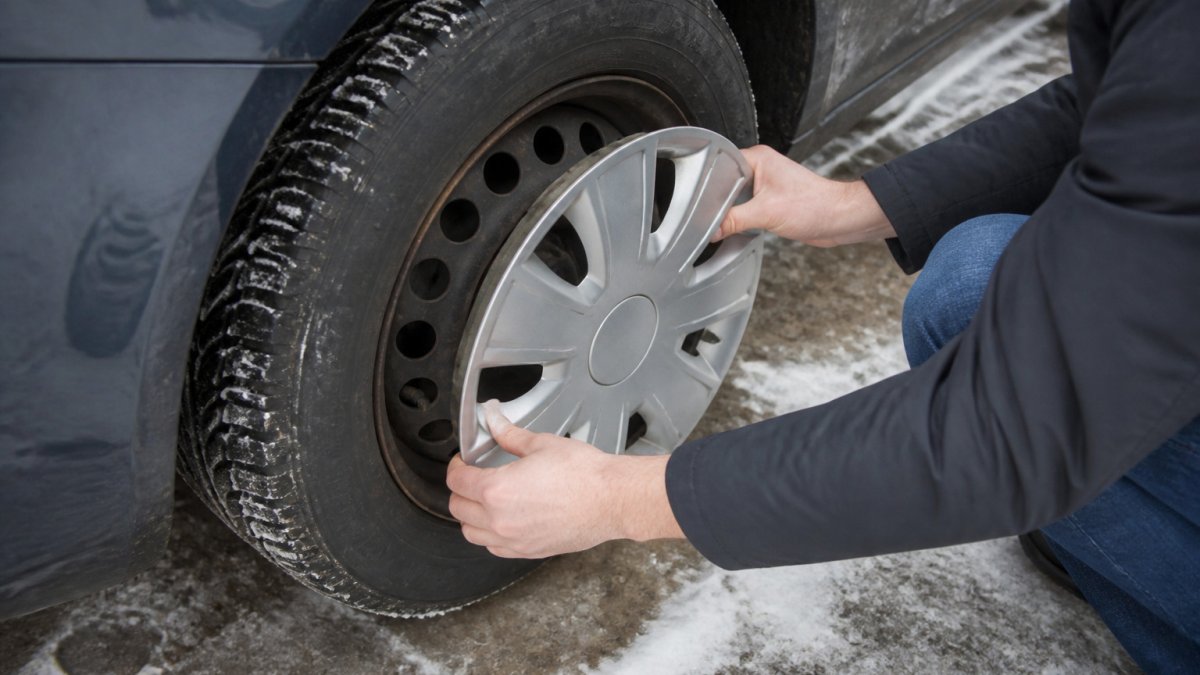
How buildup actually happens. Snow and slush thrown off the tire pack into the gap between the cover and the wheel face. When the vehicle sits overnight and temperatures drop below freezing, that packed snow refreezes. Ice expands as it forms, and the expansion pushes outward on the cover while the clips hold it in place. Over repeated freeze-thaw cycles, the cover can crack at the clip pockets, pop off the rim edge, or distort enough that it no longer seats. The same trapped moisture holds road salt against bare steel, which is where corrosion starts.
When buildup is most likely. The risk climbs in these conditions:
- Repeated freeze-thaw cycles, common in late fall and early spring when daytime slush refreezes at night.
- Deep, wet snow that packs rather than sheds.
- Full-coverage hubcaps with a closed back, which leave fewer paths for water to drain.
- Covers with worn or stiff clips that no longer hold the cover tight against the rim.
- Vehicles parked outside overnight, where meltwater refreezes in place.
Prevention that works. Clear packed snow from the wheel area after driving in storms, before it refreezes. A plastic ice scraper or a soft brush is enough; avoid metal tools that gouge the finish. After a salted trip, rinse the wheel area with plain water when temperatures allow, and let the cover dry before the next freeze. If you park outside, park with the covered wheels facing away from prevailing drift where practical.
Drainage and cover design. A cover that holds water against the wheel face speeds corrosion. Look for designs with drain paths or an open back that lets meltwater escape. Full hubcaps cover more of the wheel and trap more water and salt, while skins and trim rings expose more of the wheel to road spray but drain more freely. Neither form is universally better; match the form to how much exposure you can accept.
What covers cannot do. A cover will not stop corrosion on a wheel that is already rusting, and it will not protect a wheel whose finish has failed. When a cover is loose, cracked, or badly corroded, remove it. Driving with a damaged cover risks losing it at speed. In heavy snow and ice conditions, a plain wheel without a cover is often the safer choice.
Best Aftermarket Wheel Covers for Winter Driving: Picking by Use Case
The right cover depends on how you drive and how much exposure you can accept.
- Daily commuter in a snow belt: A full hubcap with strong retention clips and a salt-resistant finish. Favor a design with drain paths so meltwater escapes. Plan to clear packed snow after storms and rinse the wheel area after salted trips.
- Winter-only driver with a dedicated winter wheel set: A low-profile wheel skin or trim ring that keeps the look without trapping water. Confirm the cover is sized for the winter wheel, not the summer alloy set.
- Budget-focused buyer: A simple, correctly sized cover with a plain finish. Expect to replace it sooner than a premium cover, and check the clips at every seasonal change.
- Style-first owner in a mild climate: A decorative wheel cover that matches the car's look, with the understanding that salt exposure will shorten its life.
Fitment verification before you buy. Measure the wheel diameter across the rim from bead seat to bead seat, not the tire. Confirm the bolt pattern, often written as 5x114.3 or 5x4.5, and check that the center bore and lug hole positions line up. Give the year, make, model, and wheel size when you order. A quick check of the fitment details before you buy saves a return.
Retention checks that matter in winter. Press the cover onto the wheel and turn it by hand. It should not spin freely or wobble. After the first 50 to 100 miles, recheck the clips, since they can settle. In freezing weather, clips can stiffen and crack, so inspect them at each seasonal change and replace any that have lost tension.
Clearance checks. Winter tires can be slightly wider or taller, and a cover that clears the stock tire may rub the sidewall or the brake caliper. Check brake clearance too, especially on compact cars where the caliper sits close to the rim. If the cover sits closer to the caliper than the original hubcap, reconsider it.
When not to use covers. A balanced decision framework matters more than style-led recommendations. Skip covers when:
- A cover is loose, cracked, or missing clips.
- Heavy snow and ice are forecast and you cannot clear buildup regularly.
- The cover reduces brake clearance or traps water against a wheel that is already rusting.
- You hear new vibration or rattling at speed, which can signal a cover that has shifted or trapped ice.
Maintenance and seasonal removal. Remove covers at the end of the salt season, clean them with mild soap and water, and let them dry fully before storage. Inspect the wheel face for corrosion while the cover is off, and clean the rim edge so clips seat properly on reinstallation. Reinstall in the fall before the first salt truck, and recheck retention after the first week of winter driving.
Check WheelCovers.Com's website for current prices or request a quote. Confirm fitment and finish before you commit.
Booking Your Winter Wheel Cover Order at WheelCovers.Com
WheelCovers.Com carries a large inventory of original and custom hubcaps, wheel covers, wheel skins, and trim rings.
Shop Now on the WheelCovers.Com site.
Frequently Asked Questions
Are aftermarket wheel covers suitable for winter driving?
Suitability depends on the material, the finish and how the cover is retained.
What wheel covers fit over winter tire steel wheels?
Wheel covers for steel wheels are sized by diameter. Confirm the wheel diameter, then compare it with the cover's listed fitment.
How do I find the right wheel cover size for my vehicle?
Start with the wheel diameter in inches. Confirm the vehicle model and year against the product's listed fitment. When in doubt, check the fitment details before ordering.
Should wheel covers have openings for airflow?
Some wheel covers include vent openings that help reduce heat buildup around the brakes and prevent water from pooling behind the cover. Fully enclosed covers may look cleaner but can trap moisture and road grime, which matters more in winter. Choose a design that balances appearance with airflow, and inspect the wheel area regularly for moisture and corrosion.
