

Sep 29, 2026
Best Aerodynamic Wheel Covers for EVs
Table of Contents
- How Aerodynamic Wheel Covers Work
- Do Wheel Covers Actually Improve Range
- Key Materials and Design Factors
- How to Install Aero Wheel Covers
- EV Range Efficiency Tips Beyond Wheel Covers
- Durability, Maintenance, and Heat Dissipation
- Choosing the Right Aerodynamic Wheel Covers
- Frequently Asked Questions
Last Updated: September 18, 2026
How Aerodynamic Wheel Covers Work
Aerodynamic wheel covers reduce drag by smoothing airflow around wheels, minimizing turbulence and wind resistance, two major sources of energy loss at highway speeds.
Wheels create drag through their complex design; aerodynamic wheel covers create smooth surfaces that guide air past the wheel instead of allowing turbulent eddies, reducing the drag coefficient and energy needed to maintain speed.
Aerodynamic Wheel Covers Market Report documents how aerodynamic wheel covers have evolved from purely aesthetic accessories into genuine efficiency components. For electric vehicles especially, this matters because every kilowatt-hour counts. The smoother the airflow, the less your battery drains over a given distance.
Most aerodynamic wheel covers use clip-on or snap-on attachment methods and are made from durable polymers or Lexan.
Do Wheel Covers Actually Improve Range
Yes, aerodynamic wheel covers improve EV range, but the gains are modest and context-dependent. According to Dataintelo's Aero Wheel Cover Market Research, aerodynamic wheel covers contribute approximately 2% to 4% range improvement for electric vehicles. That's real, but it's not transformative.
Range gains depend on driving conditions: highway driving at consistent speeds shows the largest benefit (8-12 additional miles per charge), while city driving yields minimal gains (2-3 miles).
Real-world testing supports this range. Tesla's factory Aero Wheel caps reduce energy consumption by 3% at highway speeds, according to Performance Plus Tire's Wheel Aerodynamics for Electric Vehicles analysis. HALOBLK's HALODISC 2 design claims up to 10% efficiency gains, though independent verification of such claims remains limited.
Wheel covers help, but tire pressure, driving habits, and vehicle weight matter more for range optimization.
Key Materials and Design Factors
Lexan and polycarbonate offer durability and impact resistance but are heavier, increasing unsprung weight slightly. For most drivers, aerodynamic gains outweigh this penalty.
Polymer and plastic covers are affordable and lightweight but degrade faster under UV exposure.
Alloy covers are durable and lightweight but cost significantly more than polymer alternatives.
Smooth, curved surfaces promote laminar flow; aggressive styling sacrifices efficiency. Flat designs with minimal protrusions perform better aerodynamically.
Your vehicle's wheel bolt pattern and hub diameter must match the cover's mounting hardware precisely.
How to Install Aero Wheel Covers
Installation typically takes 15-30 minutes per wheel with basic tools.
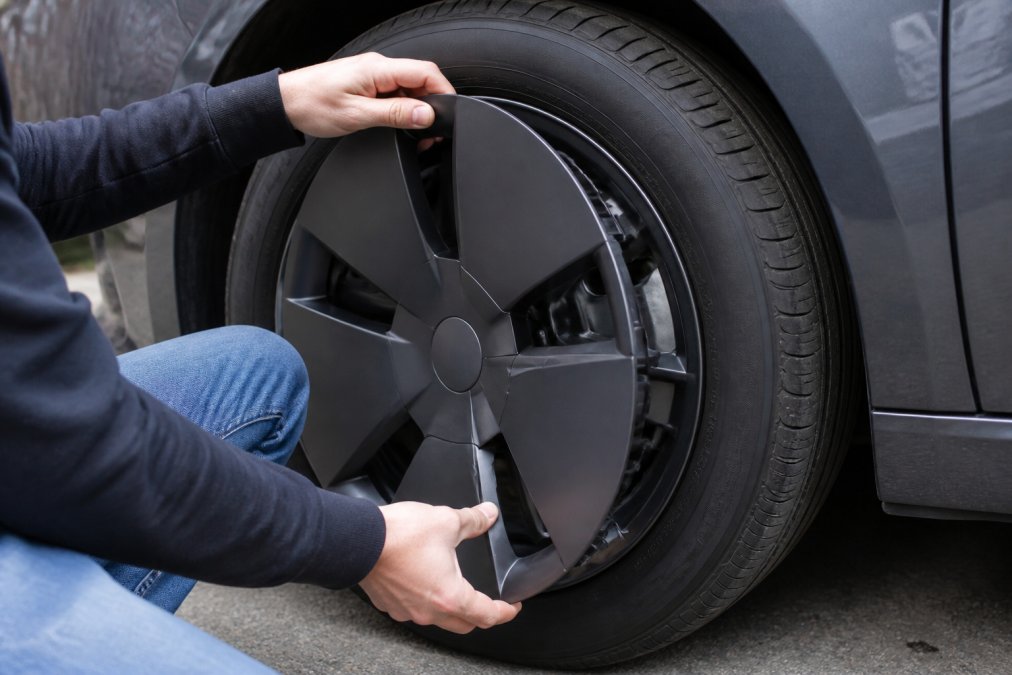
Clean and dry the wheel, then position the cover over the wheel center, aligning mounting holes with the bolt pattern. Most covers use snap-on or clip-on systems requiring only hand pressure.
Press firmly around the perimeter until clips engage. Verify the cover sits flush; gaps indicate misalignment.
Ensure each clip locks securely and test one wheel at speed (20-30 mph) before installing the remaining three.
Most covers release by pressing tabs or gently prying with a plastic tool; avoid metal tools.
EV Range Efficiency Tips Beyond Wheel Covers
Tire pressure is arguably more important than wheel covers; underinflated tires can cost 2-3% range. Check monthly.
Smooth acceleration and deceleration reduce energy waste; aggressive driving can cut range by 20-30%.
Preconditioning while plugged in restores cold battery performance without draining stored energy. Precondition for 10-15 minutes in winter before unplugging.
Every 100 pounds of cargo reduces range by roughly 1-2%. Remove unnecessary items and roof racks when not needed.
Smooth, gradual braking maximizes regenerative energy recovery; anticipate stops and coast when safe.
| Efficiency Factor | Impact on Range | Implementation Difficulty |
|---|---|---|
| Tire pressure | 2-5% | Easy |
| Driving behavior | 10-30% | Moderate |
| Battery preconditioning | 5-10% in cold weather | Easy |
| Vehicle weight reduction | 1-2% per 100 lbs | Moderate |
| Aerodynamic wheel covers | 2-4% | Easy |
| Route optimization | 5-10% | Easy |
Durability, Maintenance, and Heat Dissipation
Heat dissipation is the most overlooked durability factor and directly affects brake safety.
Heat Dissipation and Brake System Impact
Brake rotor temperatures reach 400-600°F during hard stops. Covers that completely seal the wheel trap heat, slowing dissipation and potentially compromising brake performance in repeated braking scenarios.
Lexan and polycarbonate covers trap heat; alloy covers conduct heat away more efficiently, making them best for mountainous terrain or towing.
Choose covers with integrated ventilation holes that allow 60-80% of brake heat to escape naturally while maintaining aerodynamic efficiency. Generic clip-on covers often lack vents.
If you live in mountainous regions or drive heavier EVs like the Rivian R1T or Ford F-150 Lightning, verify ventilation before purchasing.
Material-Specific Durability
Lexan and polycarbonate covers last 5-7 years in moderate climates, 4-5 years in hot regions. They resist impact well for gravel roads. Cost: $120-$250 per set.
Polymer and plastic covers last 3-5 years in moderate climates, 2-3 years in extreme environments. Budget covers lack UV stabilizers. Cost: $60-$120 per set.
Alloy covers last 10+ years but require stainless steel fasteners to resist corrosion. Cost: $250-$450 per set.
Seasonal and Environmental Considerations
In winter climates, remove covers or choose stainless steel hardware. Inspect clips every 3 months for loosening.
In coastal regions, wash covers monthly and apply wax to alloy surfaces. Replace polymer covers every 2-3 years.
In hot climates, choose polycarbonate covers with reinforced ribs or 3-4 mm thickness to resist warping.
Maintenance Best Practices
Wash monthly with mild soap and water. Avoid abrasive cleaners, pressure washers above 1,500 PSI, and harsh chemicals.
Inspect clips quarterly by tugging the cover. Replace damaged clips immediately; they can fail at highway speeds.
Store covers indoors away from direct sunlight during off-season storage.
Choosing the Right Aerodynamic Wheel Covers
The best covers depend on vehicle compatibility, driving patterns, budget, and legal/safety compliance.
Compatibility and Fitment
Your wheel diameter, bolt pattern, and hub design must match the cover exactly to prevent vibration or detachment.
- Wheel diameter: Measure in inches (typically 16-22 for EVs). Covers are model-specific; a 19-inch cover will not fit an 18-inch wheel.
- Bolt pattern: Expressed as 5x120 (five bolts, 120 mm spacing) or similar. This must match exactly.
- Hub bore diameter: The center hole must align with your wheel's hub. Misalignment causes covers to sit off-center, creating drag rather than reducing it.
- Offset and clearance: Some covers interfere with brake calipers or suspension components on lowered vehicles. Check fitment notes for your specific EV model.
Use searchable databases by vehicle year, make, and model to find exact-fit options and eliminate fitment errors.
Legal and Safety Compliance
Aerodynamic wheel covers must meet certain safety standards despite existing in a regulatory gray area.
Wheel balance: After installing covers, have all four wheels rebalanced. Imbalanced wheels cause vibration and increase accident risk.
Weight distribution: Covers add 2-5 pounds per wheel. Test-drive after installation to confirm handling comfort.
Visibility and safety: Covers must not obstruct brake lights or tire visibility. Ensure the valve stem remains accessible.
Road legality: Covers must not create hazards. Choose covers with strong quality control and reviews confirming highway stability.
Contact your local Department of Motor Vehicles if unsure about state regulations.
Driving Patterns and Efficiency ROI
-
Highway-focused (60+ mph average): Covers deliver 2-4% range improvement, paying for themselves in 2-3 years. Prioritize durability and ventilation.
-
City-focused (under 40 mph average): Range gains drop to 0.5-1%. ROI extends to 5+ years; prioritize aesthetics over efficiency.
-
Mixed driving (40-55 mph average): Expect 1-2% range improvement with 3-4 year ROI.
A 2% range improvement on 12,000 annual miles at $0.14 per kWh saves roughly $30-$50 per year in charging costs.
Material and Design Selection
Lexan and polycarbonate: Best for durability and impact resistance. Verify ventilation holes are present. Cost: $120-$250 per set.
Polymer and plastic: Best for budget-conscious buyers. Avoid in coastal or extreme UV environments. Cost: $60-$120 per set.
Alloy: Best for long-term ownership or mountainous terrain. Verify stainless steel fasteners. Cost: $250-$450 per set.
Reading Reviews and Verifying Claims
Prioritize reviews from verified purchasers reporting real-world range changes. Look for reviews mentioning:
- Actual range improvement (not manufacturer claims)
- Vibration or noise at highway speeds
- Durability after 1-2 years
- Heat dissipation and brake performance
Skepticism is warranted for covers claiming 8-10% efficiency gains without third-party testing.
Frequently Asked Questions
Do aerodynamic wheel covers actually increase EV range?
Yes. Aerodynamic wheel covers reduce drag coefficient and rolling resistance, contributing 2% to 4% range improvement for electric vehicles. Real-world testing shows Tesla's factory aero wheel caps reduce energy consumption by 3% at highway speeds. The actual gain depends on driving speed, wheel size, and conditions, but the efficiency benefit is measurable and documented across multiple market studies.
How do I know which aerodynamic wheel covers will fit my electric vehicle?
Check your vehicle's wheel diameter and bolt pattern first. Aerodynamic wheel covers are designed for specific wheel sizes, typically 17 to 21 inches. Verify compatibility by matching your vehicle model, year, and original wheel specifications. Many aftermarket options are engineered for common EV platforms. Always confirm fitment before ordering to avoid installation issues.
What's the difference between hubcaps and aerodynamic wheel covers?
Hubcaps are primarily aesthetic and cover the wheel center. Aerodynamic wheel covers are engineered to reduce drag and improve energy efficiency by optimizing laminar flow around the wheel. They cover the entire wheel face and are designed with aerodynamic efficiency as the primary function, not just appearance. This functional difference makes them especially valuable for electric vehicles where range matters.
Can I install aerodynamic wheel covers myself, or do I need professional help?
Most aerodynamic wheel covers use clip-on or snap-on installation hardware, making DIY installation straightforward. You'll need basic tools and 15-30 minutes per wheel. Ensure wheels are clean and dry before installation. If you're uncomfortable with the process, tire shops and mechanics can install them quickly. Proper installation is important for aerodynamic performance and safety.