

Oct 08, 2026
Are Plastic Wheel Covers Worth It? A 2026 Buyer's Guide
Table of Contents
- Are Plastic Wheel Covers Worth It? The Honest Answer
- Plastic Wheel Cover Disadvantages You Should Know Before Buying
- Do Wheel Covers Increase MPG? What the Testing Actually Shows
- Wheel Covers for Electric Vehicles: Range, Drag, and Real Gains
- Wheel Cover Fitment by Wheel Size: How to Get It Right
- Safety, Unsprung Mass, and Long-Term Wheel Finish
- Verdict: When Plastic Wheel Covers Make Sense
- Frequently Asked Questions
Last Updated: October 7, 2026
Are Plastic Wheel Covers Worth It? The Honest Answer
The global car wheel cover market was valued at USD 2,226.6 million in 2025 and is projected to reach USD 3,500 million by 2035, according to WiseGuyReports market analysis. This guide from WheelCovers.Com, a family-owned supplier with nearly 50 years in the wheel accessory business, breaks down the honest answer.
Plastic wheel covers are worth it if you want a low-cost visual upgrade, protection for plain steel wheels, or a factory-style replacement for a lost hubcap. They are not worth it if you expect aerodynamic gains, structural durability, or long-term performance on a non-aero vehicle.
For most drivers, plastic covers are a cosmetic purchase with modest practical upside.
Plastic Wheel Cover Disadvantages You Should Know Before Buying
The biggest plastic wheel cover disadvantages are fading, cracking, and detachment under stress. According to WheelCovers.com's durability analysis, plastic covers offer limited real-world protection compared to metal components. That doesn't make them worthless. It makes them a wear item, not a permanent fixture.
Fading, Cracking, and Detachment Under Stress
UV exposure and road chemicals break down plastic over time. Cheap covers fade within a season or two, and retention clips lose tension until a cover pops off on a rough road. Choose covers with strong retention hardware and check them after every car wash.
When Plastic Covers Offer Limited Real Protection
On most non-aerodynamic vehicles, wheel covers serve no safety purpose. As noted in Quora discussion on wheel cover function, leaving them off has no effect on driving performance. Their job is appearance and light shielding against brake dust and road debris, nothing more.
Do Wheel Covers Increase MPG? What the Testing Actually Shows
Do wheel covers increase MPG? On a standard gas car, the gain is negligible. Aerodynamic covers can reduce drag, but the effect only becomes measurable on vehicles designed to exploit it. The physics is simple: wheels and brake ducts create turbulence, and smooth covers reduce it, that matters at highway speed and on purpose-built aero wheels, not on a boxy commuter car.
- Gas sedans: little to no measurable MPG change
- Pickup trucks: small gains possible at steady highway speeds
- EVs with aero covers: the most meaningful efficiency effect
Wheel Covers for Electric Vehicles: Range, Drag, and Real Gains
Wheel covers for electric vehicles are the one case where the aerodynamic argument holds up. Testing by Car and Driver's Tesla Model 3 aero test found that aero wheel covers on a Tesla Model 3 yielded up to 10 additional miles of range.
The same principle keeps covers on race cars. As documented in Formula 1 technical discussion, wheel covers remain standard for the 2026 season to prevent wheels and brake ducts from creating outwash.
Wheel Cover Fitment by Wheel Size: How to Get It Right
Fitment is where most plastic wheel cover purchases go wrong, the biggest driver of returns, rattles, and detachment. Getting it right takes about five minutes.
Measure the Wheel, Not the Tire
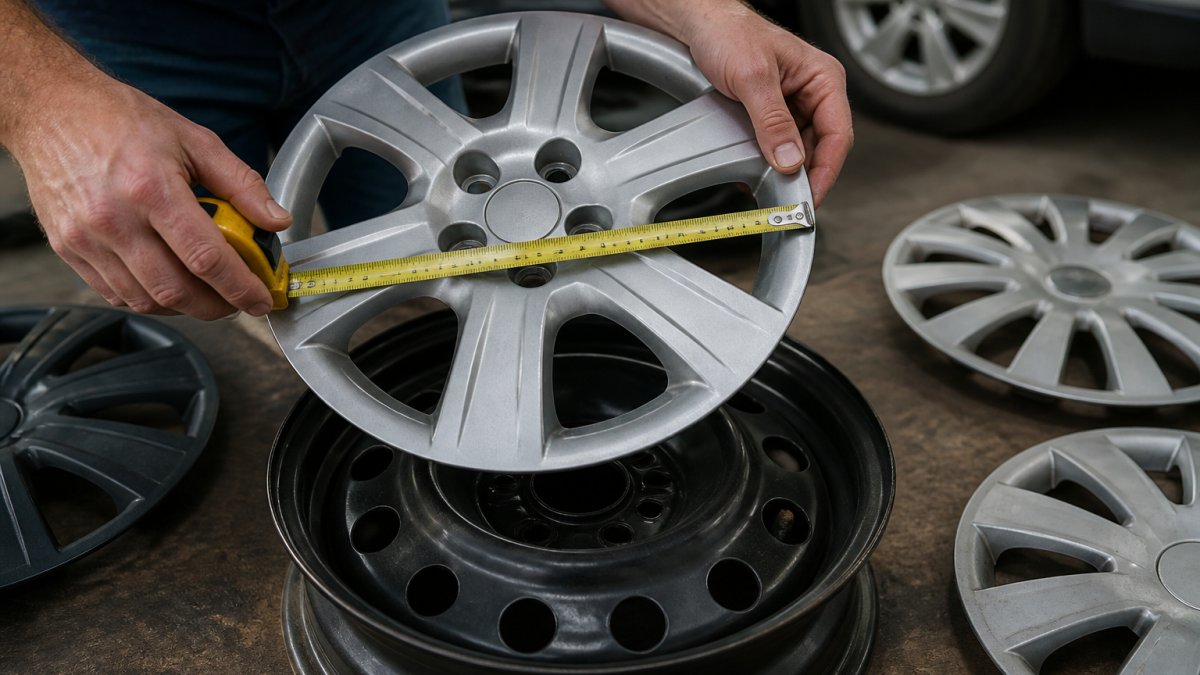
The number on your tire sidewall, the one ending in R15, R16, R17, is the wheel diameter, but it is not a substitute for measuring. The reliable method:
- Measure the steel wheel's outer diameter across the face, from bead seat to bead seat. This is the number the cover must match.
- Count the retention points. Look at the rim for the small tabs or holes the cover's clips engage. The count and spacing must match the cover's clip layout.
Size Reference Table
| Wheel Size | Common Vehicles | Fitment Note |
|---|---|---|
| 14-15 inch | Compact sedans | Match diameter exactly; most use snap-on clips |
| 16-17 inch | Midsize cars, crossovers | Check clip style, some use bolt-on retention |
| 18 inch | SUVs, trucks | Verify bolt-on vs. snap-on; width varies more at this size |
A 15-inch cover will not seat on a 16-inch wheel, no matter how close it looks in a product photo. If you're between sizes, the smaller cover is the wrong choice.
Retention Styles: Snap-On, Bolt-On, and Clip-On
Retention is where cheap covers fail and good ones earn their keep. Three systems are common:
- Snap-on (press-fit). The cover's perimeter clips grip the rim's outer lip. Fast to install, no tools, but the clips are the wear point. These are the covers most likely to detach at speed once the clips relax.
- Bolt-on. The cover secures under the lug nuts, so the wheel's own fasteners hold it. Far more secure, but you need to remove the lug nuts to install or remove the cover, and torque must be reset correctly. Best for trucks and SUVs where detachment risk is highest.
- Clip-on with a center retainer. A hybrid: perimeter clips plus a center ring or spring that adds tension. Common on factory-style replacements and generally the best balance of security and ease of installation.
Zip Ties and Backup Retention
Some drivers add zip ties through the cover's vent openings and around the rim as a backup. This works, but it's a workaround, not a fix: if a cover needs zip ties to stay on, the clips are already worn. Zip ties also trap moisture and abrade the wheel finish.
Installation: The Five-Minute Method
- Clean the wheel face and let it dry. Grit under a cover becomes an abrasive.
- Align the valve stem cutout with the valve stem first, this is the most common installation error.
- Seat the cover at the top, then work around the circumference with firm palm pressure until every clip engages.
- Push at four points around the cover. Any movement means a clip is not seated.
- Spin the wheel by hand (with the car jacked) or drive slowly and listen for rubbing before highway use.
Removal Without Damage
Use a plastic trim tool or a flat-blade screwdriver wrapped in tape, prying a little at each clip rather than forcing one, forcing a single clip bends the cover out of round and guarantees vibration on reinstall. If the cover is stuck, tap a rubber mallet gently around the edge to break the seal.
Safety, Unsprung Mass, and Long-Term Wheel Finish
Most coverage of plastic wheel covers stops at aesthetics. Three topics actually determine whether a cover is worth keeping: detachment safety, unsprung mass, and long-term wheel finish.
Detachment at Speed: The Real Safety Risk
A plastic cover weighs a pound or two, but at 70 mph it carries enough momentum to crack a windshield or startle a driver into a bad reaction. Detachment almost always traces to one of four causes:
- Worn retention clips. The spring steel or plastic fingers that grip the rim lose tension after repeated heat cycles and car washes. Once they relax, the cover only stays on because of friction, until a pothole or crosswind ends that.
- Wrong diameter. A 15-inch cover forced onto a 15-inch wheel of a different profile can seat unevenly and pop free. Diameter matching is necessary but not sufficient; the retention style has to match too.
- Broken or missing valve stem clearance. If the cover presses on the valve stem, it can shear the stem and deflate the tire, a far worse outcome than losing the cover.
A simple pre-drive check: push the cover firmly at four points around the circumference. Any wobble, rattle, or rocking means reseat it or replace the clips before highway driving.
Vibration, Squeaking, and Shimmy: Diagnosis
Noise and vibration from covers fall into three buckets, each with a different fix:
- Squeaking at low speed usually means the cover is rubbing the valve stem or contacting a brake component. Pull the cover and look for scuff marks on the stem or caliper.
- Shimmy at highway speed points to imbalance, either the cover itself is out of round, or it trapped a wheel weight or debris between the cover and the rim. Rebalance with the cover installed if the shop can do it.
- Rattle over bumps is almost always loose retention. Replace the clips or step up to a bolt-on style that secures under the lug nuts.
If a cover cannot be made to seat quietly, it is not worth running. Persistent vibration accelerates wheel bearing and tire wear, which costs far more than the cover.
Unsprung Mass: Does It Actually Matter?
Unsprung mass is the weight not supported by the suspension, wheels, tires, brakes, and anything bolted to them. Reducing it improves how quickly the suspension responds to road input; adding it does the opposite, but the effect scales with how much you add.
A plastic cover adds roughly one to two pounds per wheel, while a typical alloy wheel swap changes unsprung mass by 5 to 10 pounds per corner, the change drivers actually feel.
Long-Term Wheel Finish: Protection vs. Trapped Moisture
A plastic cover does two opposing things to the wheel underneath:
It protects. The cover shields the steel or alloy from brake dust, road salt, and UV, the main drivers of finish degradation, and on a plain steel wheel can slow surface rust at the rim edges.
It traps. The same cover that blocks debris also traps moisture and grit against the wheel face.
The fix is not to skip covers, remove them two or three times a year, wash the wheel face, inspect the clip contact points for rust, and let everything dry before reinstalling. A light coat of wax on the wheel face slows the abrasion.
Resale Value: The Honest Math
Covers help resale only indirectly. A base-trim car with clean, covered steel wheels presents better than the same car with bare, curb-rashed steel wheels, but covers don't add value the way an alloy upgrade does, and a buyer who inspects the wheels will see the clip wear described above. Treat covers as a presentation tool, not an investment.
Verdict: When Plastic Wheel Covers Make Sense
Plastic wheel covers make sense in three situations: you've lost a factory hubcap and want a matching replacement, you're upgrading plain steel wheels on a base trim, or you drive an EV and want aerodynamic covers for range.
They make less sense if you're chasing durability or performance on a standard gas car. There, a metal wheel or alloy upgrade is the better long-term spend.
Frequently Asked Questions
What are the disadvantages of using a wheel cover?
Plastic wheel covers can fade, crack, or detach under heavy stress, and they offer limited real protection compared to metal components. For most non-aerodynamic vehicles, they serve no safety purpose and leaving them off has no effect on driving performance. However, they do hide brake dust, road debris, and scratched steel wheels, which matters for resale value and daily appearance.
Do wheel covers increase MPG?
Aero wheel covers on a Tesla Model 3 yielded up to 10 additional miles of range in Car and Driver testing from 2019. For gas vehicles, gains are smaller because most factory steel wheels are not designed for aerodynamic optimization. If your goal is measurable MPG improvement, aerodynamic covers help most at highway speeds where drag reduction matters.
Can plastic wheel covers improve an electric vehicle's range?
Yes, if they are aerodynamic covers designed to reduce drag. Wheel covers for electric vehicles prevent wheels and brake ducts from creating outwash, a standard maintained in professional racing for 2026. The Tesla Model 3 test showed up to 10 extra miles of range with aero covers installed. Not every plastic cover is aerodynamic, so check the design before buying.
How do you know if a wheel cover fits your car?
Measure your wheel's diameter in inches and match it to the cover's stated size. Check the retention method: snap-on covers use clips that grip the steel wheel rim, while bolt-on styles secure with lug nuts. Wheel cover fitment by wheel size is the single most important spec. If you are unsure, look up your vehicle's year, make, and model to confirm the correct fitment before ordering.
Finding the right cover comes down to fitment, retention, and honest expectations about what plastic can and can't do. WheelCovers.Com has spent nearly 50 years helping drivers match original and custom wheel accessories to their exact vehicle, with a nationwide catalog and straightforward online ordering. Browse our inventory to find the correct size and style for your car, and get a cover that fits right the first time. Shop now at WheelCovers.Com.