

Sep 29, 2026
Are Aftermarket Wheel Covers Good Quality? 2026 Guide
Table of Contents
- What Determines Aftermarket Wheel Cover Quality
- OEM vs Aftermarket Hubcaps: Key Differences
- How to Choose the Right Wheel Cover Size
- Factory Replacement Hubcaps: When to Go OEM Style
- Pros, Cons, and Common Pitfalls of Aftermarket Covers
- Installation, Safety, and Long-Term Care
- Frequently Asked Questions
Last Updated: September 27, 2026
What Determines Aftermarket Wheel Cover Quality
Are aftermarket wheel covers good quality? The honest answer is that it depends almost entirely on two things: the material used in aftermarket wheel covers and how well they attach to your wheel. Get those right, and an aftermarket cover can rival a factory part for years. Get them wrong, and you'll be fishing a hubcap out of a ditch within a week.
This guide from WheelCovers.Com breaks down what actually separates a durable cover from a disposable one, so you can judge quality before you buy. The aftermarket wheel cover market was valued at $3.07 billion and is projected to reach $5.11 billion by 2034, a 5.8% compound annual growth rate, according to Dataintelo's Aero Wheel Cover Market Report. That growth means more options than ever, and more junk mixed in with the good stuff.
Material: ABS Plastic vs Metal
ABS plastic is an impact-resistant thermoplastic blend used in most modern aftermarket covers. It's lightweight, resists heat and weathering, and holds a molded shape well.
Metal covers, usually stainless steel or chrome-plated steel, offer a brighter finish and resist cracking better. The trade-off is weight and cost.
| Material | Durability | Weight | Weather Resistance | Best For |
|---|---|---|---|---|
| Automotive-grade ABS | Good | Light | Good | Daily drivers |
| Chrome-plated steel | Very good | Heavier | Very good | Trucks, older models |
| Basic plastic | Poor | Lightest | Poor | Budget short-term use |
Low-grade plastic covers crack, break, or scratch far more easily than metal alternatives, per Yeslak's accessories upgrade guide. The fix is simple: look for automotive-grade ABS, which is heat-resistant and weatherproof enough to handle rough roads.
Fitment and Retention Clips
Fitment is where cheap covers fail. A cover that doesn't match your wheel diameter will wobble, vibrate, and eventually fly off.
Retention clips and the fastening mechanism matter just as much as material. Steel clips that grip the wheel rim hold better than thin plastic tabs. Lug nut alignment and center cap seating also affect how securely everything sits.
OEM vs Aftermarket Hubcaps: Key Differences
The core difference is that OEM hubcaps are built to the manufacturer's exact specifications, while aftermarket covers vary widely in fit and finish. That gap is narrowing, but it still exists.
Original Equipment Manufacturer parts remain the safest bet for guaranteed fit, according to Autopartex's analysis of OEM versus aftermarket parts. Aftermarket options, meanwhile, range from near-OEM quality to covers you shouldn't mount on a lawn mower.
What most guides miss is that "aftermarket" isn't one category. It's a spectrum:
- OEM-style replacements: Built to match factory specs, often indistinguishable from the original
- Custom covers: Styled differently but engineered for specific wheel diameters
- Generic covers: Universal fit, lowest cost, highest failure rate
A comparative analysis from HaloBLK's OEM vs aftermarket wheel cover study found that specific aftermarket covers stay secure at high speeds and are actually less prone to falling off than some factory alternatives. So the old assumption that OEM always wins doesn't hold up.
For drivers who want the factory look without the factory price, a direct-fit OEM-style cover is usually the smarter buy.
How to Choose the Right Wheel Cover Size
Getting the size right is the single most important step, and it takes about two minutes. Measure your wheel's diameter in inches across the face, then match that number to the cover's listed size.
Here's the process:
- Locate the tire sidewall and read the wheel diameter (the number after "R," e.g., R16)
- Confirm whether your wheel has a steel rim or alloy, since covers fit differently
- Check the cover's retention type: clip-on, bolt-on, or snap-in
- Verify the center cap style matches your vehicle
- Cross-reference the part number against your make, model, and year
Factory Replacement Hubcaps: When to Go OEM Style
Factory replacement hubcaps make sense when you want the original appearance, need a guaranteed fit, or own a vehicle where matching the stock look protects resale value.
Go OEM-style when:
- You're restoring a vehicle to factory condition
- The original part is discontinued and you need a matching replacement
- You want the lowest risk of fitment issues
Go custom or aftermarket when:
- You want a different look at a lower cost
- The OEM part is no longer available new
- You're replacing a cover you expect to lose again
Pros, Cons, and Common Pitfalls of Aftermarket Covers
Aftermarket covers win on price, selection, and availability. They lose on consistency, since quality varies wildly between manufacturers.
Pros:
- Far cheaper than dealer OEM parts
- Huge selection of styles, finishes, and sizes
- Easy to replace if damaged or lost
- Aesthetic upgrade without changing the whole wheel
Cons:
- Fitment can be inconsistent across brands
- Cheap plastic versions crack and fade
- Retention clips vary in quality
- Finish quality ranges from showroom to spray-can
Common pitfalls to avoid:
- Buying on price alone. A $30 set at a parts store often means thin plastic and weak clips.
- Skipping the size check. Wrong diameter equals guaranteed return.
- Ignoring the retention system. A beautiful cover with bad clips is a liability.
- Assuming all aftermarket is equal. It isn't, and the gap is wide.
Installation, Safety, and Long-Term Care
Proper installation takes about ten minutes per wheel and prevents most of the problems people blame on the covers themselves. The rest come down to inspection and cleaning habits that most owners never build.
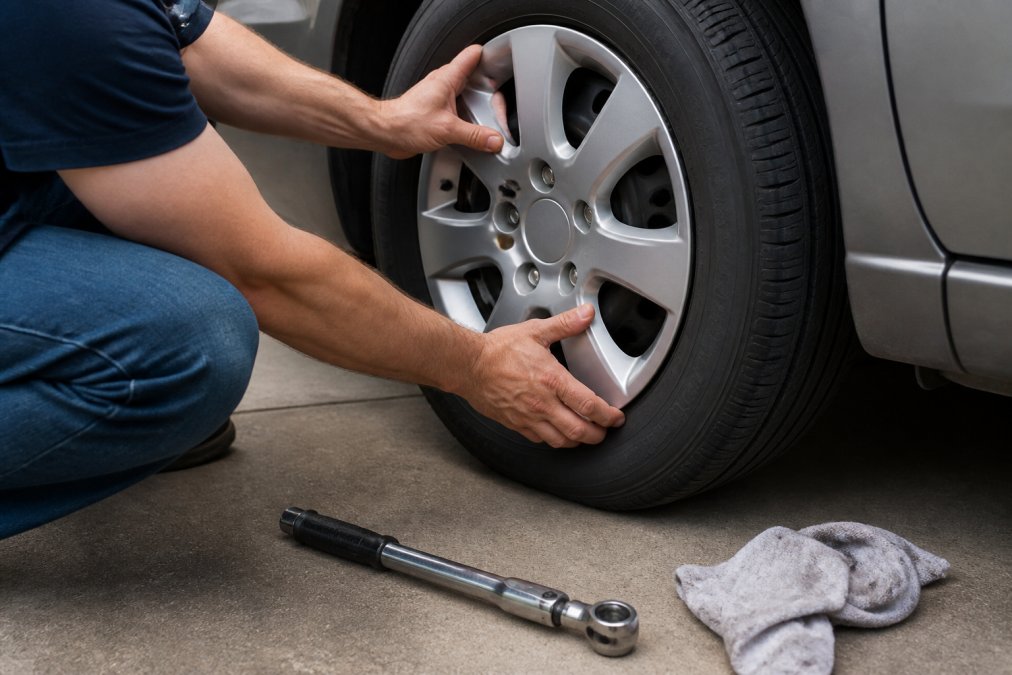
Installation sequence that actually holds
- Clean the wheel rim. Brake dust and road grit keep clips from seating fully. A wire brush on a steel rim and a damp rag on an alloy rim is enough.
- Align the valve stem cutout first. Every cover has one. If it is off by even a quarter inch, the cover will sit cocked and the opposite clips will never fully engage.
- Work around the rim in a star pattern, pressing each clip into place with the heel of your hand. Do not hammer. ABS and polycarbonate crack under point impact.
- Seat the center cap last. On bolt-on and snap-in designs, the center cap often locks the retention ring. If it does not click, the cover is not fully seated.
- Tug test. Grab the cover at 12 and 6 o'clock and pull firmly. Any movement means a clip is not engaged. Re-seat before driving.
Why covers actually come off
Detachment is almost never a single failure. It is a sequence: one clip loses tension from vibration, the cover shifts slightly off-center, the remaining clips take uneven load, and a pothole or expansion joint finishes the job. At 65 mph, a detached cover carries enough energy to crack a windshield or force a swerve. That is the real safety cost of a cheap cover, and it is why retention design matters more than finish.
Inspection and care schedule
- Monthly: Walk the car and press each cover at 12 and 6 o'clock. Any movement means re-seat or replace.
- Every oil change: Check clip tension and look for hairline cracks radiating from the clip mounts. Cracks start at stress points and spread.
- Twice a year: Wash with mild soap and water. Avoid harsh solvents, which strip UV stabilizers and accelerate chalking.
- Before winter: Apply a coat of automotive wax to ABS and polycarbonate covers. It slows road-salt etching and makes spring cleaning easier.
- Before automated car washes: Remove covers if the wash uses aggressive spinning brushes. The brushes catch clip edges and can rip a cover off mid-cycle.
What failure looks like before it happens
Stress cracking and weathering are the two failure modes to watch. Stress cracks appear as fine white lines near clip mounts or the valve stem cutout. Weathering shows as chalky residue, fading, or a surface that feels rough instead of smooth. Either one means the material is past its useful life, even if the cover still looks acceptable from ten feet away.
Frequently Asked Questions
Do aftermarket wheel covers fit as well as OEM?
Fitment varies by brand and manufacturing standard. OEM parts are built to exact factory tolerances, while aftermarket wheel covers range from direct-fit replicas to universal designs that need adjustment. Look for covers made to OEM specifications for your wheel diameter, with retention clips and lug nut alignment that match your vehicle. High-quality aftermarket options can match OEM fit, but lower-cost universal covers often sit unevenly or loosen at highway speeds.
Are aftermarket wheel covers durable enough for daily driving?
Quality aftermarket wheel covers made from automotive-grade ABS plastic handle daily driving well, including heat, road debris, and vibration. The weak points are cheap plastic covers that crack under stress or lose retention clips. Plastic covers may lack the durability of metal alternatives, so check for heat resistance and impact resistance ratings. Covers that stay secure at high speeds and resist weathering typically last several years with basic care.
How can you tell if a wheel cover is high quality?
Check the material, fastening mechanism, and finish quality. Automotive-grade ABS plastic with UV-resistant coating resists paint peeling and stress cracking better than generic plastic. Look for metal retention clips rather than plastic tabs, and confirm the cover is sized to your exact wheel diameter. Reviews mentioning fitment, vibration, and long-term wear are more useful than star ratings alone. A cover that ships with mounting hardware and clear installation instructions is usually a better sign.
Are plastic or metal wheel covers better?
Plastic covers dominate the aftermarket because they are lighter, cheaper, and available in more styles. Metal covers resist cracking and scratching better but cost more and can bend on impact. For most daily drivers, automotive-grade ABS plastic offers the best balance of cost-effectiveness, appearance, and durability. If you frequently drive rough roads or want maximum impact resistance, metal is worth considering. Either way, confirm fitment and retention before buying.