

Sep 29, 2026
Affordable Hubcap Replacements for Sedans: 2026 Guide
Table of Contents
- Why Affordable Hubcap Replacements Make Sense for Sedans
- How to Measure Wheel Size for Hubcaps
- Aftermarket vs OEM Wheel Covers: Which Fits Your Budget
- Hubcap Installation Tips for a Snug, Lasting Fit
- Comparison Table: Matching Cover Type to Your Sedan
- Maintenance, Replacement Cycles, and Disposing of Old Covers
- Frequently Asked Questions
Last Updated: September 17, 2026
Why Affordable Hubcap Replacements Make Sense for Sedans
Losing a hubcap is one of the most common frustrations of sedan ownership, and it rarely happens at a convenient time. At WheelCovers.Com, we've spent nearly 50 years helping drivers replace missing wheel covers without the hassle of sifting through salvage yards. Affordable hubcap replacements for sedans solve a simple problem: they restore your car's appearance and protect the wheel hub underneath, all without the cost of a dealership visit.
That protection matters more than most drivers realize. A bare steel wheel is exposed to road salt, brake dust, and moisture, which speeds up corrosion on the rim and lug nut area. A replacement cover shields those components and keeps the wheel looking finished.
What You Lose When a Hubcap Goes Missing
A missing hubcap isn't just a cosmetic problem. The exposed wheel hub, lug nuts, and tire pressure valve collect grime and moisture that a cover would otherwise block. Over time, that exposure can dull the wheel finish and make the hub harder to keep clean.
How to Spot a Quality Cover Before You Buy
Not all covers are built the same, and the difference shows up within a year or two.
- ABS plastic molding holds its shape better than thin, flexible plastic
- A weatherproof coating resists fading and cracking from sun and road salt
- A retention ring that seats firmly against the rim, not a loose friction fit
- A durable finish that matches the original color instead of a glossy mismatch
How to Measure Wheel Size for Hubcaps
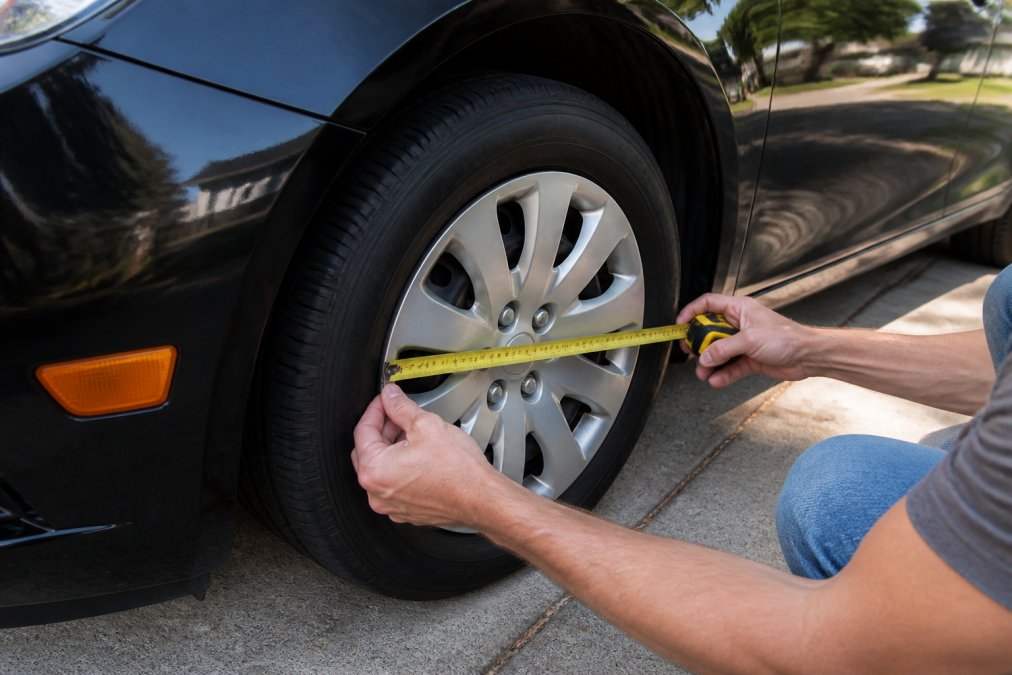
Learning how to measure wheel size for hubcaps takes about five minutes and prevents the single most common ordering mistake. The number you need is the rim diameter, measured in inches, which is stamped on the tire sidewall.
Reading the Sidewall and Finding Rim Diameter
Look at the tire sidewall for a code like P215/60R16. Break it down this way:
- P, passenger vehicle tire
- 215, section width in millimeters
- 60, aspect ratio (sidewall height as a percentage of width)
- R, radial construction
- 16, rim diameter in inches
Measuring the Rim by Hand
If the sidewall is worn, muddy, or unreadable, measure the rim directly. This is the step most buyers skip, and it is where wrong orders come from.
- Park on level ground and set the parking brake.
- Measure straight across the wheel face from the inner edge of the rim lip to the inner edge of the opposite rim lip, not across the tire, and not across the outer face of the wheel.
- Read the tape at the widest point of the metal rim, not the rubber.
Universal vs. OEM-Specific Fitment
Diameter is only half the fitment story. Two covers can both be "16-inch" and still behave very differently on the same wheel.
Checking Retention Rings and Securing Clips
Once you know the diameter and the fitment type, look at how the cover attaches. Most sedan covers use one of two systems:
- Snap-on installation with a steel retention ring that grips the rim edge
- Securing clips that hook into the wheel and hold the cover against rotation
Aftermarket vs OEM Wheel Covers: Which Fits Your Budget
The aftermarket vs OEM wheel covers decision comes down to three factors: fitment, finish, and price. OEM covers are made to the exact factory specification for your sedan's year, trim, and wheel design. Aftermarket covers are produced to fit a range of vehicles, which keeps costs down but requires more care when matching.
Universal vs OEM-Specific Fitment
Universal covers are designed to fit any wheel of a given diameter. They're cost-effective and easy to find, but the fit is generic. On some sedans, a universal cover sits slightly proud of the rim or leaves a small gap at the edge.
Hubcap Installation Tips for a Snug, Lasting Fit
Good hubcap installation tips start with one rule: align before you push. Line up the valve stem cutout with the tire pressure valve first, then work around the rim.
- Clean the rim edge so no dirt sits between the cover and the wheel
- Align the valve stem cutout with the tire pressure valve
- Press the cover on by hand, working evenly around the circumference
- Seat the retention ring or clips with firm, even pressure
- Give the cover a gentle tug to confirm it's locked in place
Comparison Table: Matching Cover Type to Your Sedan
| Cover Type | Best For | Fitment | Installation | Durability |
|---|---|---|---|---|
| OEM-specific | Original wheels, single replacement | Exact | Snap-on | High |
| Universal | Budget full sets | Generic | Snap-on | Moderate |
| Wheel skins | Upgrading steel wheels | Model-specific | Snap-fit | High |
| Trim rings | Restoring wheel trim | Size-based | Clip-on | Moderate |
Wheel skins and trim rings are worth considering if you want an aesthetic upgrade rather than a straight replacement. Wheel skins fit over a steel wheel to mimic an alloy look, while trim rings add a chrome or brushed edge to the rim.
Maintenance, Replacement Cycles, and Disposing of Old Covers
A well-fitted cover lasts several years with basic care, but "basic care" is vague enough that most drivers never do it. Here is a concrete routine.
A Maintenance Cadence That Actually Works
Tie hubcap care to jobs you already do, so it never becomes a separate chore:
- Every car wash, rinse the cover with the same soap and water you use on the body. Brake dust is mildly corrosive and bonds to the finish if it sits.
- Every tire rotation (roughly every 5,000 to 7,500 miles, or per your owner's manual), with the wheel off the car, inspect the retention ring for rust, bends, or flat spots. This is the only time you can see the ring clearly.
- Every tire pressure check, give each cover a firm tug at two opposite points. If it moves more than a hair, the ring is losing tension.
- Twice a year, before and after winter, apply a coat of plastic-safe wax or protectant. Road salt is the main driver of finish failure on covers in cold-weather states.
Signs a Cover Is Near the End of Its Cycle
Covers age from UV exposure and road salt, and the failure is usually visible before it becomes a road hazard:
- Fading or chalky color, the UV stabilizer in the plastic has broken down
- Hairline cracks around the valve stem cutout, the highest-stress point on the cover
- A retention ring that no longer snaps back when you flex it
- A cover that spins freely on the wheel, the clips have worn past their grip
Disposing of Old Covers Without Sending Them to a Landfill
This is the step almost no guide covers, and it is where a little effort goes a long way. Most sedan hubcaps are made from ABS plastic, which is rigid, durable, and, importantly, recyclable in many curbside and drop-off programs.
- Cut down and use as a drip tray under a lawn mower or paint can
- Mount on a garage wall as a hose or extension cord reel
- Use as a shallow planter base for a garage or patio
- Keep one as a spare in the trunk if you drive a route where losses are common
Frequently Asked Questions
How do I know what size hubcap fits my sedan?
Check the tire sidewall for a number like 215/60R16. The last figure, 16, is your rim diameter in inches. Hubcaps are sold by that rim diameter, not by tire width or overall wheel size. You can also measure across the wheel hub with a tape measure. Match that number to the fitment guide for your sedan's year, make, and model before ordering affordable hubcap replacements.
Are aftermarket hubcaps as good as original equipment?
Aftermarket wheel covers often use the same plastic molding and snap-fit retention rings as OEM parts, and many come with a durable finish and corrosion resistance. The main difference is branding and sometimes clip tension. For daily driving, a well-made aftermarket cover protects the wheel hub and improves vehicle aesthetics at a lower cost. Check the fitment guide and reviews before buying.
Can I replace just one hubcap or should I replace all four?
You can replace one, but color and finish can vary between production runs, so a single new cover may not match three older ones exactly. If your covers are faded or scuffed, replacing all four keeps the look consistent. If only one is missing and the rest are in good shape, a single affordable hubcap replacement is fine. Order the same style number to reduce mismatch risk.
Do hubcaps improve fuel efficiency?
Standard hubcaps have a small effect on aerodynamics, but the gain is minimal. Aerodynamic wheel covers, sometimes called wheel simulators, can reduce drag more noticeably on electric and hybrid sedans. Tire pressure affects fuel economy far more than any cover. Keep your tires at the recommended PSI and treat hubcaps mainly as wheel protection and an aesthetic upgrade.